

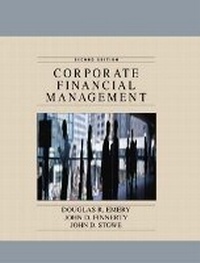
Corporate Financial Management
International Edition
2nd Edition
Published on 17. June 2004
Book
Paperback/Softback
960 pages
978-0-13-183309-8 (ISBN)
Description
MBA and intermediate undergraduate-level corporate finance or financial management courses.
The authors different points of view offers students the benefits of a researcher, a practitioner, and an effective classroom instructor and, thus, is designed to help students develop financial intuition and make better decisions. It modernizes the teaching of finance by integrating the major developments made in finance in the last twenty years, such as options, agency theory and new research about the impact of asymmetric information. The organization weaves new material into the numerous examples and the traditional presentations. This edition reflects changes within the corporate world and the issues students encounter today.
The authors different points of view offers students the benefits of a researcher, a practitioner, and an effective classroom instructor and, thus, is designed to help students develop financial intuition and make better decisions. It modernizes the teaching of finance by integrating the major developments made in finance in the last twenty years, such as options, agency theory and new research about the impact of asymmetric information. The organization weaves new material into the numerous examples and the traditional presentations. This edition reflects changes within the corporate world and the issues students encounter today.
More details
Edition
2nd edition
Language
English
Place of publication
United States
Publishing group
Pearson Education (US)
Target group
Professional and scholarly
Dimensions
Height: 253 mm
Width: 206 mm
Thickness: 34 mm
Weight
1654 gr
ISBN-13
978-0-13-183309-8 (9780131833098)
Copyright in bibliographic data and cover images is held by Nielsen Book Services Limited or by the publishers or by their respective licensors: all rights reserved.
Schweitzer Classification
Other editions
New editions
Douglas R. Emery | John D. Finnerty | John D. Stowe
Corporate Financial Management
International Edition
Book
02/2008
3rd Edition
Pearson
€83.07
Article is exhausted; no reprint
Previous edition

Book
12/1996
Pearson
€49.59
Article exhausted; check for reprint
Persons
Douglas R. Emery is Bank of America Scholar, Professor of Finance, and Finance Department Chair in the School of Business at the University of Miami. For six and a half years, He and John Finnerty were the editors of Financial Management, the signature journal of the Financial Management Association International (FMA). This is their fifth book and their second with John Stowe. Their most recent book together, Debt Management: A Practitioner's Guide, was published by Harvard Business School Press in 2001. In addition to having been an editor, Doug serves or has served as an Associate Editor of Journal of Financial Research, The Financial Review, Journal of Applied Finance, Financial Practice and Education, and FMA Online. He has also served as President of the Southern Finance Association and the Eastern Finance Association, and has been a Director of FMA. His research has been published in a wide variety of journals, including the Journal of Finance, Journal of Financial and Quantitative Analysis, Financial Management, Journal of Financial Research, Journal of Accounting Research, Journal of Banking and Finance, Journal of Applied Corporate Finance, Journal of Applied Finance, Decision Sciences, Psychometrika, and the Journal of Marketing Research.
John D. Finnerty is a Principal of Analysis Group/Economics and a Professor of Finance in the Graduate School of Business Administration at Fordham University. He has previously worked for Morgan Stanley & Co., Lazard Freres & Co., Houlihan Lokey Howard & Zukin, PricewaterhouseCoopers, and was the Chief Financial Officer of the College Savings Bank. He currently serves as an Editor of FMA Online and on the advisory boards of the Journal of Portfolio Management and The Financier. He has served as President of the Fixed Income Analysts Society and has been a Director of the Financial Management Association. He has authored, co-authored, or co-edited nine other books, including Debt Management: A Practitioner's Guide. His research has been published in a wide variety of journals, including the Journal of Money, Credit and Banking, Journal of Financial and Quantitative Analysis, Financial Management, Journal of Applied Finance, Journal of Portfolio Management, and Management Science. He co-holds four patents on financial products.
John D. Stowe is Associate Dean, Professor of Finance, and past chair of the finance department in the College of Business at the University of Missouri-Columbia. He has also taught at the University of Oklahoma, Florida International University, University of California-Irvine, and the University of Houston. He is a CFA charterholder. He currently serves as an associate editor of Financial Review and is a past president of the Southwestern Finance Association. In addition to his books with Doug and John, he has recently co-authored Analysis of Equity Investments: Valuation. He has published his research in several journals, including the Journal of Finance, Journal of Financial and Quantitative Analysis, Financial Management, Journal of Financial Research, Journal of Investing, Journal of Risk and Insurance, Journal of Economics and Business, Journal of Business Finance and Accounting, Managerial and Decision Economics, and Organizational Behavior and Human Decision Processes.
John D. Finnerty is a Principal of Analysis Group/Economics and a Professor of Finance in the Graduate School of Business Administration at Fordham University. He has previously worked for Morgan Stanley & Co., Lazard Freres & Co., Houlihan Lokey Howard & Zukin, PricewaterhouseCoopers, and was the Chief Financial Officer of the College Savings Bank. He currently serves as an Editor of FMA Online and on the advisory boards of the Journal of Portfolio Management and The Financier. He has served as President of the Fixed Income Analysts Society and has been a Director of the Financial Management Association. He has authored, co-authored, or co-edited nine other books, including Debt Management: A Practitioner's Guide. His research has been published in a wide variety of journals, including the Journal of Money, Credit and Banking, Journal of Financial and Quantitative Analysis, Financial Management, Journal of Applied Finance, Journal of Portfolio Management, and Management Science. He co-holds four patents on financial products.
John D. Stowe is Associate Dean, Professor of Finance, and past chair of the finance department in the College of Business at the University of Missouri-Columbia. He has also taught at the University of Oklahoma, Florida International University, University of California-Irvine, and the University of Houston. He is a CFA charterholder. He currently serves as an associate editor of Financial Review and is a past president of the Southwestern Finance Association. In addition to his books with Doug and John, he has recently co-authored Analysis of Equity Investments: Valuation. He has published his research in several journals, including the Journal of Finance, Journal of Financial and Quantitative Analysis, Financial Management, Journal of Financial Research, Journal of Investing, Journal of Risk and Insurance, Journal of Economics and Business, Journal of Business Finance and Accounting, Managerial and Decision Economics, and Organizational Behavior and Human Decision Processes.
Content
I. FOUNDATIONS.
1. Introduction and Overview.
2. The Financial Environment: Concepts and Principles.
3. Accounting, Cash Flows, and Taxes.
II. VALUE AND CAPITAL BUDGETING.
4. The Time Value of Money.
5. Valuing Bonds and Stocks.
6. Business Investment Rules.
7. Capital Budgeting Cash Flows.
8. Capital Budgeting in Practice.
III. RISK AND RETURN.
9. Risk and Return: Stocks.
10. Risk and Return: Asset Pricing Models.
11. Risk, Return, and Capital Budgeting.
12. Risk, Return, and Contingent Outcomes.
13. Risk, Return, and Agency Theory.
IV. CAPITAL STRUCTURE AND DIVIDEND POLICY.
14. Capital Market Efficiency: Explanation & Implications.
15. Capital Structure Policy.
16. Managing Capital Structure.
17. Dividend Policy.
V. LONG-TERM FINANCING.
18. Issuing Securities and the Role of Investment Banking.
19. Long-Term Debt.
20. Leasing and Other Asset-Based Financing.
21. Derivatives and Hedging.
VI. WORKING CAPITAL MANAGEMENT.
22. Cash and Working Capital Management.
23. Accounts Receivable and Inventory.
24. Financial Planning.
VII. SPECIAL TOPICS.
25. Mergers and Acquisitions.
26. Financial Distress.
27. International Corporate Finance.
1. Introduction and Overview.
2. The Financial Environment: Concepts and Principles.
3. Accounting, Cash Flows, and Taxes.
II. VALUE AND CAPITAL BUDGETING.
4. The Time Value of Money.
5. Valuing Bonds and Stocks.
6. Business Investment Rules.
7. Capital Budgeting Cash Flows.
8. Capital Budgeting in Practice.
III. RISK AND RETURN.
9. Risk and Return: Stocks.
10. Risk and Return: Asset Pricing Models.
11. Risk, Return, and Capital Budgeting.
12. Risk, Return, and Contingent Outcomes.
13. Risk, Return, and Agency Theory.
IV. CAPITAL STRUCTURE AND DIVIDEND POLICY.
14. Capital Market Efficiency: Explanation & Implications.
15. Capital Structure Policy.
16. Managing Capital Structure.
17. Dividend Policy.
V. LONG-TERM FINANCING.
18. Issuing Securities and the Role of Investment Banking.
19. Long-Term Debt.
20. Leasing and Other Asset-Based Financing.
21. Derivatives and Hedging.
VI. WORKING CAPITAL MANAGEMENT.
22. Cash and Working Capital Management.
23. Accounts Receivable and Inventory.
24. Financial Planning.
VII. SPECIAL TOPICS.
25. Mergers and Acquisitions.
26. Financial Distress.
27. International Corporate Finance.