


Nature and Selected Essays
Published on 24. April 2003
Book
Paperback/Softback
416 pages
978-0-14-243762-9 (ISBN)
Description
Through his writing and his own personal philosophy, Ralph Waldo Emerson unburdened his young country of Europe's traditional sense of history and showed Americans how to be creators of their own circumstances. His mandate, which called for harmony with, rather than domestication of, nature, and for a reliance on individual integrity, rather than on materialistic institutions, is echoed in many of the great American philosophical and literary works of his time and ours, and has given an impetus to modern political and social activism.
Larzer Ziff's introduction to this collection of fifteen of Emerson's most significant writings provides the important backdrop to the society in which Emerson lived during his formative years.
Larzer Ziff's introduction to this collection of fifteen of Emerson's most significant writings provides the important backdrop to the society in which Emerson lived during his formative years.
More details
Language
English
Place of publication
London
United Kingdom
Publishing group
Penguin Books Ltd
Product notice
Paperback (UK-B)
Dimensions
Height: 125 mm
Width: 196 mm
Thickness: 20 mm
Weight
370 gr
ISBN-13
978-0-14-243762-9 (9780142437629)
Copyright in bibliographic data and cover images is held by Nielsen Book Services Limited or by the publishers or by their respective licensors: all rights reserved.
Schweitzer Classification
Other editions
Additional editions
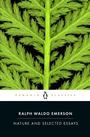
Ralph Waldo Emerson | Larzer Ziff
Nature and Selected Essays
E-Book
05/2003
Penguin Classics
€8.99
Available for download
Previous edition

Ralph Waldo Emerson | Larzer Ziff
Selected Essays
Book
09/1982
Penguin Books Ltd
€31.13
Article exhausted; check for reprint
Person
Ralph Waldo Emerson, the son of a Unitarian minister and a chaplain during the American Revolution, was born in 1803 in Boston. He attended the Boston Latin School, and in 1817 entered Harvard, graduating in 1820. Emerson supported himself as a schoolteacher from 1821-26. In 1826 he was "approbated to preach," and in 1829 became pastor of the Scond Church (Unitarian) in Boston. That same year he married Ellen Louise Tucker, who was to die of tuberculosis only seventeen months later. In 1832 Emerson resigned his pastorate and traveled to Eurpe, where he met Coleridge, Wordsworth, and Carlyle. He settled in Concord, Massachusetts, in 1834, where he began a new career as a public lecturer, and married Lydia Jackson a year later. A group that gathered around Emerson in Concord came to be known as "the Concord school," and included Bronson Alcott, Henry David Thoreau, Nathaniel Hawthorne, and Margaret Fuller. Every year Emerson made a lecture tour; and these lectures were the source of most of his essays. Nature (1836), his first published work, contained the essence of his transcendental philosophy, which views the world of phenomena as a sort of symbol of the inner life and emphasizes individual freedom and self-reliance. Emerson's address to the Phi Beta Kappa society of Harvard (1837) and another address to the graduating class of the Harvard Divinity School (1838) applied his doctrine to the scholar and the clergyman, provoking sharp controversy. An ardent abolitionist, Emerson lectured and wrote widely against slavery from the 1840's through the Civil War. His principal publications include two volumes ofEssays (1841, 1844), Poems (1847), Representative Men (1850), The Conduct of Life (1860), and Society and Solitude (1870). He died of pneumonia in 1882 and was buried in Concord.
Larzer Ziff is a research professor of English at Johns Hopkins University who has written extensively on American literary culture.
Larzer Ziff is a research professor of English at Johns Hopkins University who has written extensively on American literary culture.
Content
Introduction 7
Suggestions for Further Reading 29
A Note on the Text 31Essays
Nature 1836 35
The American Scholar 1837 83
An Address Delivered Before the Senior Class in Divinity College, Cambridge 1838 107
Man the Reformer 1841 129
History (Essays, First Series) 1841 149
Self-Reliance (Essays, First Series) 1841 175
The Over-Soul (Essays, First Series) 1841 205
Circles (Essays, First Series) 1841 225
The Transcendentalist 1842 239
The Poet (Essays, Second Series) 1844 259
Experience (Essays, Second Series) 1844 285
Montaigne; Or, the Skeptic (Representative Men) 1850 313
Napoleon; Or, the Man of the World (Representative Men) 1850 337
Fate (The Conduct of Life) 1860 361
Thoreau 1862 393
Suggestions for Further Reading 29
A Note on the Text 31Essays
Nature 1836 35
The American Scholar 1837 83
An Address Delivered Before the Senior Class in Divinity College, Cambridge 1838 107
Man the Reformer 1841 129
History (Essays, First Series) 1841 149
Self-Reliance (Essays, First Series) 1841 175
The Over-Soul (Essays, First Series) 1841 205
Circles (Essays, First Series) 1841 225
The Transcendentalist 1842 239
The Poet (Essays, Second Series) 1844 259
Experience (Essays, Second Series) 1844 285
Montaigne; Or, the Skeptic (Representative Men) 1850 313
Napoleon; Or, the Man of the World (Representative Men) 1850 337
Fate (The Conduct of Life) 1860 361
Thoreau 1862 393