

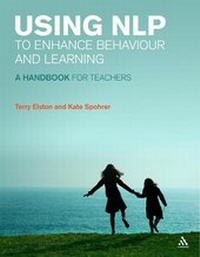
Using NLP to Enhance Behaviour and Learning
A handbook for teachers
Published on 24. August 2009
Book
Paperback/Softback
168 pages
978-1-85539-443-8 (ISBN)
Description
The authors take the reader through the background theory of NLP before providing practical guidance on how to incorporate it into classroom practice. Elston and Sphorer take the reader through the background theory of NLP and provide a wealth of practical guidance on how to incorporate it into classroom practice. It will help all teachers to improve the lives of their students they teach or support as well as their own. NLP offers a ground-breaking method of communication that helps people master the way they think and feel. Many problems arise in classrooms because of inadequate rapport between student and teacher, and between parent and teacher. NLP can assist all who work in classrooms to master ways of creating excellent rapport and understanding.
More details
Language
English
Place of publication
London
United Kingdom
Publishing group
Bloomsbury Publishing PLC
Target group
Professional and scholarly
Illustrations
15
Dimensions
Height: 246 mm
Width: 189 mm
Thickness: 12 mm
ISBN-13
978-1-85539-443-8 (9781855394438)
Copyright in bibliographic data and cover images is held by Nielsen Book Services Limited or by the publishers or by their respective licensors: all rights reserved.
Schweitzer Classification
Other editions
Additional editions
E-Book
08/2009
1st Edition
Network Continuum Education
€21.99
Available for download
Persons
Terry Elston is an international NLP trainer who, by invitation, has been working with schools to solve communication issues inside classrooms. Kate Spohrer is a Behavioural Consultant, ADHD Family Coach and Trainer and an NLP Master Practitioner, as well as a former teacher.
Content
Chapter 1: What is NLP?; Chapter 2: Sensory acuity; Chapter 3: Anchors; Chapter 4: VAKOG - visual, auditory, kinesthetic, olfactory, gustatory - language; Chapter 5: Submodalities - belief change; Chapter 6: Metaphors for learning; Chapter 7; Practice exercises; Ways of questioning; Further applications with children and their parents and carers; Next steps.