

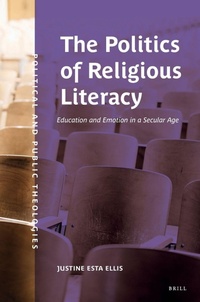
The Politics of Religious Literacy
Education and Emotion in a Secular Age
Published on 10. November 2022
Book
Paperback/Softback
260 pages
978-90-04-51293-1 (ISBN)
Description
Religious Literacy has become a popular concept for navigating religious diversity in public life. Spanning classrooms to boardrooms, The Politics of Religious Literacy challenges commonly held understandings of religious literacy as an inclusive framework for engaging with religion in modern, multifaith democracies. As the first book to rethink religious literacy from the perspective of affect theory and secularism studies, this new approach calls for a constructive reconsideration focused on the often-overlooked feelings and practices that inform our questionably secular age. This study offers fresh insights into the changing dynamics of religion and secularism in the public sphere.
Reviews / Votes
"The Politics of Religious Literacy succeeds as a source of "fresh thinking" about education, religion, and embodiment, and it should interest anyone invested in what Ellis calls "applied religious studies" (4): the fraught ways in which academic debates get translated into policy, pedagogy, and behavior. It shows how hard it is to escape old patterns of religious and secular thinking, but also why it might still be worth trying." Full review available on:https://readingreligion.org/9789004512931/the-politics-of-religious-literacy/ - Joshua T. ParksMore details
Series
Language
English
Place of publication
Leiden
Netherlands
Target group
Professional and scholarly
Product notice
Paperback (trade)
Unsewn / adhesive bound
Dimensions
Height: 234 mm
Width: 155 mm
Thickness: 15 mm
Weight
363 gr
ISBN-13
978-90-04-51293-1 (9789004512931)
Copyright in bibliographic data and cover images is held by Nielsen Book Services Limited or by the publishers or by their respective licensors: all rights reserved.
Schweitzer Classification
Person
Justine Esta Ellis, DPhil (2020), University of Oxford, is an Academic Visitor at the University of Oxford. Previously, she was an American Council of Learned Societies (ACLS) postdoctoral Leading Edge Fellow. She has published articles on religion and policy in journals, including The Journal of Law, Culture and the Humanities and Postscripts: The Journal of Sacred Texts and Contemporary Worlds.
Content
Introduction: Defining the "Religious" in Religious Literacy
? From Secularization to the Secular Body
? Religious Literacy in Context
? Looking Ahead
1 The Rise of Religious Literacy
?1 Values
?2 Content Knowledge
?3 Skills
?4 Critical Responses
?5 Conclusion
2 Public Sphere, Private Choice: Religious Literacy and Public Reason
?1 Secularity 3 and Religious Voluntarism
?2 Taking Religion Seriously
?3 Inclusion in the Public Sphere
?4 The Standard of Democratic Discourse
?5 Conclusion
3 Religious Literacy and Its Limits: Liberalism, Affect, and Pedagogy
?1 "In the Service of Democracy": Secularity, Civics, and Liberal Education
?2 "From Head to Heart": Affect, Autonomy, and the Materialist Shift
?3 "The Integrity of the Teacher": Pedagogy, Neutrality, and Secular Subjectivity
?4 Conclusion
4 Tolerance and Its Discontents: Managing Offense in Religious Literacy Discourse
?1 "Allergic to Controversy": Tolerance, Civility, and Religious Offence in Public Schools
?2 "A Crisis of Civility": Critical Reconsiderations of Tolerance and Civil Discourse
?3 "Vigorous-Yet-Respectful Critique": Religious Literacy's Reframing of Tolerance Discourse
?4 The Limits of the Law: Does Religious Literacy Step in Where the Law Ends?
?5 "Respect Your Neighbor": Agonistic Respect, Deep Equality, and the Self-Regulation Trap
?6 Conclusion
5 The "Post-compliance" Moment: Religious Literacy in the Workplace
?1 Ernst & Young (EY) - Coexist House
?2 The Tanenbaum Center for Interreligious Understanding
?3 The "Post-compliance" Moment
?4 Conclusion
6 "Labels Can Be a Barrier": Religious Literacy and the Question of Category
?1 "Religion is Not a Native Category": Critical Religion and World Religions
?2 Nonreligion as the New Frontier of Interreligious Dialogue and the Seeming Solution of Worldviews
?3 Conclusion
Conclusion: Reforming Religious Literacy
? In Search of the Secular Student Body
? Classroom Critiques
? Teaching the Secular
? Affective Pedagogies
? Liberal Habits
? Conclusion
Bibliography
Index
? From Secularization to the Secular Body
? Religious Literacy in Context
? Looking Ahead
1 The Rise of Religious Literacy
?1 Values
?2 Content Knowledge
?3 Skills
?4 Critical Responses
?5 Conclusion
2 Public Sphere, Private Choice: Religious Literacy and Public Reason
?1 Secularity 3 and Religious Voluntarism
?2 Taking Religion Seriously
?3 Inclusion in the Public Sphere
?4 The Standard of Democratic Discourse
?5 Conclusion
3 Religious Literacy and Its Limits: Liberalism, Affect, and Pedagogy
?1 "In the Service of Democracy": Secularity, Civics, and Liberal Education
?2 "From Head to Heart": Affect, Autonomy, and the Materialist Shift
?3 "The Integrity of the Teacher": Pedagogy, Neutrality, and Secular Subjectivity
?4 Conclusion
4 Tolerance and Its Discontents: Managing Offense in Religious Literacy Discourse
?1 "Allergic to Controversy": Tolerance, Civility, and Religious Offence in Public Schools
?2 "A Crisis of Civility": Critical Reconsiderations of Tolerance and Civil Discourse
?3 "Vigorous-Yet-Respectful Critique": Religious Literacy's Reframing of Tolerance Discourse
?4 The Limits of the Law: Does Religious Literacy Step in Where the Law Ends?
?5 "Respect Your Neighbor": Agonistic Respect, Deep Equality, and the Self-Regulation Trap
?6 Conclusion
5 The "Post-compliance" Moment: Religious Literacy in the Workplace
?1 Ernst & Young (EY) - Coexist House
?2 The Tanenbaum Center for Interreligious Understanding
?3 The "Post-compliance" Moment
?4 Conclusion
6 "Labels Can Be a Barrier": Religious Literacy and the Question of Category
?1 "Religion is Not a Native Category": Critical Religion and World Religions
?2 Nonreligion as the New Frontier of Interreligious Dialogue and the Seeming Solution of Worldviews
?3 Conclusion
Conclusion: Reforming Religious Literacy
? In Search of the Secular Student Body
? Classroom Critiques
? Teaching the Secular
? Affective Pedagogies
? Liberal Habits
? Conclusion
Bibliography
Index