

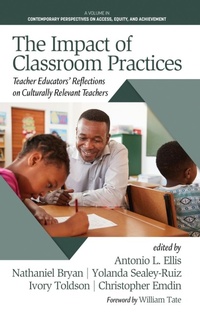
The Impact of Classroom Practices
Educators' Reflections on Culturally Relevant Teachers
Published on 2. February 2021
Book
Hardback
174 pages
978-1-64802-399-6 (ISBN)
Description
Debates regarding the qualities, skills, and dispositions of culturally relevant teachers and teaching have raged in teacher education for several decades. Ladson-Billings' (2009) The Dreamkeepers: Successful Teachers of African American Children was a groundbreaking work that has become a foundational study that informs the work of culturally-relevant (Ladson-Billings, 2009) and culturally-sustaining (Paris & Alim, 2017) teaching. In her book The Dreamkeepers she describes effective teachers who are able to draw from the cultural wealth, knowledges, and heritage of Black communities. The Dreamkeepers ensured that their Black students were academically successful, retained, and grew both in terms of their cultural competence and their sociopolitical awareness. In other words, according to research by Ladson-Billings (2009), effective teachers possessed both pedagogical and relational dispositions, which leave lifelong impacts on the academic and social lives of the students they teach. While being a foundational text, what remains missing from the research on culturally-relevant and even culturally-sustaining teachers are 'narratives' (read: stories, testimonios, etc.) related to how the race of particular E-12 teachers positively impact the lives of their students.
For instance, Dr. Antonio Ellis (the first editor of the proposed book) describes his high school music teacher Mr. Linard McCloud) as 'a highly effective African American music educator who changed the course of his life' (p. 170). Ellis (2016) describes McCloud as being loving, caring, creative, culturally sensitive, attuned, hopeful, flexible, organized, and thoughtful. Because Mr. McCloud possessed the aforementioned characteristics and dispositions, Ellis contends that he was motivated to achieve academically and socially in his urban high school. In addition, according to Ellis (2016), Mr. McCloud was a highly impactful educator because he went beyond the call of duty as a teacher-a practice that is not so common in schools, particularly urban ones. Not only did McCloud teach in the classroom setting, but he also built strong relationships with families, community members, and external stakeholders including local businesses, colleges, and universities. Mr. McCloud used these networks to leverage opportunities for his students academically, personally, and professionally. Like many of his high school classmates, Ellis (2016) contends that he would not have graduated from high school if it were not for the care and mentorship he received from Mr. McCloud. In this proposed edited volume, it is the editors' goal to honor teachers like Mr. McCloud who have made a difference in the lives of their students by learning from their impactful practices.
Employing a 'critical storytelling' methodology (see Hartlep & Hensley, 2015; Hartlep, Hensley, Braniger, & Jennings, 2017), each chapter contributor will use his or her own narrative to show the power of influential teachers in classrooms. While this framework centers race, lived and learned experiences, the storyteller is the most important unit of narrative; hence, The Impact of Classroom Practices: Reflections on Culturally Relevant Teachers will include African-American storytellers who reflect on the impact of classroom practices of teachers from diverse backgrounds who they deemed culturally relevant and responsive to both their academic and social needs. This work will offer recommendations to pre-service teachers and in-service teachers who desire to leave a lasting impact on the students they teach.
For instance, Dr. Antonio Ellis (the first editor of the proposed book) describes his high school music teacher Mr. Linard McCloud) as 'a highly effective African American music educator who changed the course of his life' (p. 170). Ellis (2016) describes McCloud as being loving, caring, creative, culturally sensitive, attuned, hopeful, flexible, organized, and thoughtful. Because Mr. McCloud possessed the aforementioned characteristics and dispositions, Ellis contends that he was motivated to achieve academically and socially in his urban high school. In addition, according to Ellis (2016), Mr. McCloud was a highly impactful educator because he went beyond the call of duty as a teacher-a practice that is not so common in schools, particularly urban ones. Not only did McCloud teach in the classroom setting, but he also built strong relationships with families, community members, and external stakeholders including local businesses, colleges, and universities. Mr. McCloud used these networks to leverage opportunities for his students academically, personally, and professionally. Like many of his high school classmates, Ellis (2016) contends that he would not have graduated from high school if it were not for the care and mentorship he received from Mr. McCloud. In this proposed edited volume, it is the editors' goal to honor teachers like Mr. McCloud who have made a difference in the lives of their students by learning from their impactful practices.
Employing a 'critical storytelling' methodology (see Hartlep & Hensley, 2015; Hartlep, Hensley, Braniger, & Jennings, 2017), each chapter contributor will use his or her own narrative to show the power of influential teachers in classrooms. While this framework centers race, lived and learned experiences, the storyteller is the most important unit of narrative; hence, The Impact of Classroom Practices: Reflections on Culturally Relevant Teachers will include African-American storytellers who reflect on the impact of classroom practices of teachers from diverse backgrounds who they deemed culturally relevant and responsive to both their academic and social needs. This work will offer recommendations to pre-service teachers and in-service teachers who desire to leave a lasting impact on the students they teach.
More details
Series
Language
English
Place of publication
United States
Publishing group
Emerald Publishing Inc
Target group
Professional and scholarly
Dimensions
Height: 240 mm
Width: 161 mm
Thickness: 14 mm
Weight
432 gr
ISBN-13
978-1-64802-399-6 (9781648023996)
Copyright in bibliographic data and cover images is held by Nielsen Book Services Limited or by the publishers or by their respective licensors: all rights reserved.
Schweitzer Classification
Other editions
Additional editions
Christopher Emdin
Impact of Classroom Practices
Teacher Educators' Reflections on Culturally Relevant Teachers
E-Book
01/2021
1st Edition
Information Age Publishing
from
€62.33
Available for download
Content
Foreword; William F. Tate IV.
Chapter 1. Mr. Linard H. McCloud: Clarifying Excellence in Teacher Education Practice; Antonio L. Ellis.
Chapter 2. Turning Up With the Torch: The Transformational Power of a Legacy of Male Warm Demanders; Anthony Broughton.
Chapter 3. Inspiration and Motivation: How One Teacher Changed the Course of My Educational Trajectory; Kenneth D. Brown.
Chapter 4. Defying Media Stereotypes: Resilience and Inspiration Fostered by an African American Teacher; Chaz T. Gipson.
Chapter 5. Ernest Smith: Transforming Students Lives for 50 Years; Cleveland Hayes.
Chapter 6. I am Because You Are: The Importance of Being Given Roots to Grow and Wings to Fly; Tiffany Hollis.
Chapter 7. Trying a Different Approach: The Influential Power of Mrs. Taylor and Mr. Johnson in Seeing an Ugly Duck Turn Into a Swan; James T. Jackson.
Chapter 8. High Expectations: The Key Ingredient to Academic Achievement; Jubria Lewis.
Chapter 9. In Honor of Selma White; Marvin Lynn.
Chapter 10. Music Education as a Vehicle to Dream, Empower, Explore, and Inspire: The Life and Legacy of Mrs. Arcelia Simmons; Brian L. McGowan.
Chapter 11. Mentor Teachers' Impact on Educator Identity and Racial Literacy Development; Yolanda Sealey-Ruiz and Lum Fube.
Chapter 12. A Retrospective Narrative on Effective Teaching After Moving From Segregated to Integrated Schools: Implications for Policy and Practice on Effective Teaching; Zollie Stevenson, Jr.
Chapter 13. Love Many, Trust Few; Learn to Paddle Your Own Canoe: What Teacher Practitioners Can Learn From Racial Counterstories of a "Master Teacher" in Rural North Carolina; Terrell L. Strayhorn.
Chapter 14. Teacher Effectiveness in a Predominantly White Public School in West Virginia; Jason Ottley.
Chapter 15. Afterword: The Impact of Classroom Practices: Teacher Educators' Reflections on Culturally Relevant Teachers; Dawn G. Williams.
About the Editors.
About the Contributors.
Chapter 1. Mr. Linard H. McCloud: Clarifying Excellence in Teacher Education Practice; Antonio L. Ellis.
Chapter 2. Turning Up With the Torch: The Transformational Power of a Legacy of Male Warm Demanders; Anthony Broughton.
Chapter 3. Inspiration and Motivation: How One Teacher Changed the Course of My Educational Trajectory; Kenneth D. Brown.
Chapter 4. Defying Media Stereotypes: Resilience and Inspiration Fostered by an African American Teacher; Chaz T. Gipson.
Chapter 5. Ernest Smith: Transforming Students Lives for 50 Years; Cleveland Hayes.
Chapter 6. I am Because You Are: The Importance of Being Given Roots to Grow and Wings to Fly; Tiffany Hollis.
Chapter 7. Trying a Different Approach: The Influential Power of Mrs. Taylor and Mr. Johnson in Seeing an Ugly Duck Turn Into a Swan; James T. Jackson.
Chapter 8. High Expectations: The Key Ingredient to Academic Achievement; Jubria Lewis.
Chapter 9. In Honor of Selma White; Marvin Lynn.
Chapter 10. Music Education as a Vehicle to Dream, Empower, Explore, and Inspire: The Life and Legacy of Mrs. Arcelia Simmons; Brian L. McGowan.
Chapter 11. Mentor Teachers' Impact on Educator Identity and Racial Literacy Development; Yolanda Sealey-Ruiz and Lum Fube.
Chapter 12. A Retrospective Narrative on Effective Teaching After Moving From Segregated to Integrated Schools: Implications for Policy and Practice on Effective Teaching; Zollie Stevenson, Jr.
Chapter 13. Love Many, Trust Few; Learn to Paddle Your Own Canoe: What Teacher Practitioners Can Learn From Racial Counterstories of a "Master Teacher" in Rural North Carolina; Terrell L. Strayhorn.
Chapter 14. Teacher Effectiveness in a Predominantly White Public School in West Virginia; Jason Ottley.
Chapter 15. Afterword: The Impact of Classroom Practices: Teacher Educators' Reflections on Culturally Relevant Teachers; Dawn G. Williams.
About the Editors.
About the Contributors.