

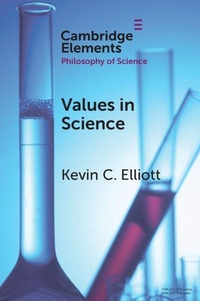
Values in Science
Published on 23. June 2022
Book
Paperback/Softback
82 pages
978-1-009-05563-5 (ISBN)
Description
This Element introduces the philosophical literature on values in science by examining four questions: (1) How do values influence science? (2) Should we actively incorporate values in science? (3) How can we manage values in science responsibly? (4) What are some next steps for those who want to help promote responsible roles for values in science? It explores arguments for and against the "value-free ideal" for science (i.e., the notion that values should be excluded from scientific reasoning) and concludes that it should be rejected. Nonetheless, this does not mean that value influences are always acceptable. The Element explores a range of strategies for distinguishing between appropriate and inappropriate value influences. It concludes by proposing an approach for managing values in science that relies on justifying, prioritising, and implementing norms for scientific research practices and institutions.
More details
Series
Language
English
Place of publication
Cambridge
United Kingdom
Target group
College/higher education
Product notice
Paperback (trade)
Illustrations
Worked examples or Exercises
Dimensions
Height: 226 mm
Width: 150 mm
Thickness: 6 mm
Weight
130 gr
ISBN-13
978-1-009-05563-5 (9781009055635)
Copyright in bibliographic data and cover images is held by Nielsen Book Services Limited or by the publishers or by their respective licensors: all rights reserved.
Schweitzer Classification
Other editions
Additional editions
Kevin C. Elliott
Values in Science
E-Book
06/2022
Cambridge University Press
€15.49
Available for download
Kevin C. Elliott
Values in Science
E-Book
06/2022
Cambridge University Press
€15.49
Available for download
Person
Content
1. Introduction; 2. How Do Values Influence Science?; 3. Should We Actively Incorporate Values in Science?; 4. How Can We Manage Values in Science Responsibly?; 5. What Are Some Next Steps?; 6. Conclusion.