

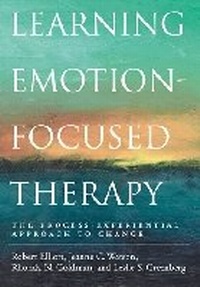
Learning Emotion-Focused Therapy
The Process-Experiential Approach to Change
Published on 1. January 2004
Book
Hardback
366 pages
978-1-59147-080-9 (ISBN)
Description
In Learning Emotion-Focused Therapy, the originators of Process-Experiential Therapy describe in detail the various tasks and techniques of this theoretically grounded, empirically supported, and integrative humanistic therapy, while emphasizing the importance of the therapeutic relationship. The authors, Robert Elliott, Jeanne C. Watson, Leslie S. Greenberg, and Rhonda N. Goldman, well-respected scholars and leading figures in the field, address each major aspect of theory, case formulation, treatment, and research, as well as the nuances of learning and teaching this complex form of therapy. This exceptionally informative book has the potential to be of great practical value to therapists and students learning experiential, humanistic, and integrative therapies, as well as to those who teach this mode of psychotherapy.
More details
Language
English
Place of publication
Washington DC
United States
Target group
Professional and scholarly
College/higher education
ISBN-13
978-1-59147-080-9 (9781591470809)
Copyright in bibliographic data and cover images is held by Nielsen Book Services Limited or by the publishers or by their respective licensors: all rights reserved.
Schweitzer Classification
Other editions
New editions
Robert Kingwill Elliott, Jr. | Jeanne C. Watson | Rhonda N. Goldman
Learning Emotion-Focused Therapy
A Comprehensive Guide
Book
08/2025
2nd Edition
American Psychological Association
€71.00
Available immediately
Content
Introduction; Process-Experiential Theory Made Simple; Research on the Effectiveness of PE Therapy; Client Micro-Processes: What Process-Experiential Therapists Listen For; Therapist Processes in Process-Experiential Therapy; An Overview of Therapeutic Tasks; Empathy and Exploration: The Core of Process-Experiential Therapy; The Care and Feeding of Therapeutic Relationships; Accessing and Allowing Experiencing; Re-Processing Problematic Experiences; Two Chair Work for Conflict Splits; Empty Chair Work for Unfinished Business; Frequently Asked Questions on Applying Process-Experiential Therapy; Adapting Process-Experiential Therapy to Particular Client Problems; The Process of Learning Process-Experiential Therapy