

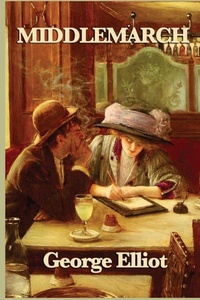
Middlemarch
A Victorian Classic of Provincial Life, Marriage, and Moral Ambition
Published on 27. March 2010
Book
Paperback/Softback
806 pages
978-1-60459-861-2 (ISBN)
Description
Middlemarch is George Eliot's great novel of provincial English life, marriage, ambition, reform, disappointment, and moral growth. Set in the fictional Midlands town of Middlemarch during the years surrounding the Reform Bill, the novel follows Dorothea Brooke, Tertius Lydgate, Rosamond Vincy, Fred Vincy, Mary Garth, and a wide cast of interconnected characters whose private choices are shaped by property, class, religion, gender, medicine, politics, and social expectation. Eliot gives the life of a provincial town the scope of epic fiction, showing how ordinary ambitions, compromises, errors, and acts of sympathy become the substance of history.
Widely regarded as one of the finest novels in English, Middlemarch combines psychological depth, social realism, intellectual seriousness, and humane moral vision. Its portraits of marriage, vocation, failed idealism, reforming energy, and the limits placed upon women remain central to its lasting power. For readers of Victorian literature, English literary classics, realist fiction, nineteenth-century novels, and major works of moral and social fiction, Middlemarch remains one of the essential achievements of the English novel.
More details
Language
English
Product notice
Paperback (trade)
Unsewn / adhesive bound
Illustrations
Illustrations, black and white
Dimensions
Height: 149 mm
Width: 227 mm
Thickness: 43 mm
Weight
1144 gr
ISBN-13
978-1-60459-861-2 (9781604598612)
Copyright in bibliographic data and cover images is held by Nielsen Book Services Limited or by the publishers or by their respective licensors: all rights reserved.
Schweitzer Classification
Other editions
Additional editions
E-Book
06/2015
SMK Books
€1.49
Available for download
Person
George Eliot was the pen name of Mary Ann Evans, one of the major English novelists of the nineteenth century and a central figure in Victorian literature. Born in Warwickshire, she became known for fiction of exceptional psychological insight, moral seriousness, social observation, and intellectual range. Before turning fully to the novel, she worked as a translator, editor, critic, and essayist, engaging deeply with religion, philosophy, history, politics, and European thought. Her decision to publish fiction under a male pen name reflected both the conventions of the period and her desire to have her novels judged seriously in a literary culture often dismissive of women writers.Eliot's major works include Adam Bede, The Mill on the Floss, Silas Marner, Romola, Felix Holt, the Radical, Middlemarch, and Daniel Deronda. Her novels are especially important for their complex treatment of conscience, sympathy, education, vocation, marriage, social change, and the moral consequences of ordinary choices. Unlike many novelists of her period, Eliot often resisted melodrama in favour of careful psychological development and broad social analysis, making her work foundational to English realism and the modern literary novel.Middlemarch is widely considered Eliot's masterpiece and one of the greatest novels in English. Her influence extends across Victorian fiction, literary realism, feminist literary history, ethical criticism, and the development of the social novel. She remains essential to readers of classic literature, nineteenth-century British fiction, women writers, realist novels, and the intellectual history of the Victorian age.