

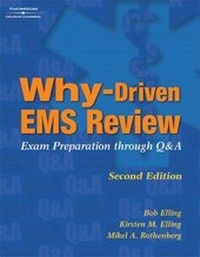
Why-Driven EMS Review
2nd Edition
Published on 1. February 2007
Book
Paperback/Softback
672 pages
978-1-4180-3817-5 (ISBN)
Description
Why-Driven EMS Review, 2E is a series of questions and answers that serves as a supplement, as well as enrichment, to other course materials used in all levels of EMS programs. This supplement follows the DOT Paramedic curriculum objectives and is written in an easy to read style that students of all educational levels will find approachable. Covered topics include the role, responsibility and well being of the EMS provider, general principles of pathology, pharmacology and medicine administration, patient assessment and physical examinations, body system specialties like cardiology and neurology, dealing with various traumas, rescue and crime scene awareness, and the BLS and ACLS information providers need to know. Why-Driven EMS Review, 2E goes beyond the explanations of other EMS text books and offers frank, usable advice on how to handle extreme situations and understand complex material.
Reviews / Votes
The Well-Being of the EMS Provider. EMS Systems, Roles and Responsibilities. Illness and Injury Prevention. Medical/Legal Issues. Ethical Issues for the EMS Provider. General Principles of Pathology. Pharmacology. Medication Administration. Life Span Development. Airway Management and Ventilation. Therapeutic Communications and History Taking. Techniques of Physical Examination. Overview: Patient Assessment. Scene Size-Up, Initial Assessment. Focused History and Physical Exam: Medical. Focused History and Physical Exam: Trauma. Assessment Based Management. Clinical Decision Making and On-Going Assessment. Communications. Documentation. Pulmonary /Respiratory. Cardiology. Neurology. Endocrinology. Allergies and Anaphylaxis. Gastroenterology & Urology. Toxicology. Environmental Conditions. Infectious and Communicable Diseases. Behavioral and Psychiatric Disorders. Hematology. Gynecology and Obstetrics. Trauma Systems and Mechanism of Injury. Hemorrhage and Shock. Soft Tissue Trauma. Burns. Head and Facial Trauma. Spinal Trauma. Thoracic Trauma. Abdominal Trauma. Musculoskeletal Trauma. Neonatology. Pediatrics. Geriatrics. The Challenged Patient. Acute Interventions in the Home Care Patient. Ambulance Operations and Medical Incident Command. Rescue Awareness Operations. Hazardous Materials Awareness, and Operations. Crime Scenes Awareness. Basic Life Support. Advanced Cardiac Life Support. Index.More details
Edition
2nd Revised edition
Language
English
Place of publication
Clifton Park
United States
Publishing group
Cengage Learning, Inc
Target group
Professional and scholarly
Edition type
Revised edition
Dimensions
Height: 274 mm
Width: 213 mm
Thickness: 28 mm
Weight
1412 gr
ISBN-13
978-1-4180-3817-5 (9781418038175)
Copyright in bibliographic data and cover images is held by Nielsen Book Services Limited or by the publishers or by their respective licensors: all rights reserved.
Schweitzer Classification
Content
The Well-Being of the EMS Provider. EMS Systems, Roles and Responsibilities. Illness and Injury Prevention. Medical/Legal Issues. Ethical Issues for the EMS Provider. General Principles of Pathology. Pharmacology. Medication Administration. Life Span Development. Airway Management and Ventilation. Therapeutic Communications and History Taking. Techniques of Physical Examination. Overview: Patient Assessment. Scene Size-Up, Initial Assessment. Focused History and Physical Exam: Medical. Focused History and Physical Exam: Trauma. Assessment Based Management. Clinical Decision Making and On-Going Assessment. Communications. Documentation. Pulmonary /Respiratory. Cardiology. Neurology. Endocrinology. Allergies and Anaphylaxis. Gastroenterology & Urology. Toxicology. Environmental Conditions. Infectious and Communicable Diseases. Behavioral and Psychiatric Disorders. Hematology. Gynecology and Obstetrics. Trauma Systems and Mechanism of Injury. Hemorrhage and Shock. Soft Tissue Trauma. Burns. Head and Facial Trauma. Spinal Trauma. Thoracic Trauma. Abdominal Trauma. Musculoskeletal Trauma. Neonatology. Pediatrics. Geriatrics. The Challenged Patient. Acute Interventions in the Home Care Patient. Ambulance Operations and Medical Incident Command. Rescue Awareness Operations. Hazardous Materials Awareness, and Operations. Crime Scenes Awareness. Basic Life Support. Advanced Cardiac Life Support. Index.