

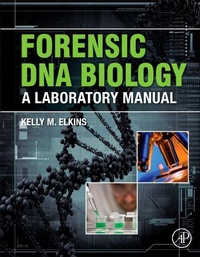
Forensic DNA Biology
A Laboratory Manual
Published on 24. October 2012
Book
Paperback/Softback
224 pages
978-0-12-394585-3 (ISBN)
Description
DNA typing has revolutionized criminal investigations and has become a powerful tool in the identification of individuals in criminal and paternity cases. Forensic DNA Biology: A Laboratory Manual is comprised of up-to-date and practical experiments and step-by-step instructions on how to perform DNA analysis, including pipetting, microscopy and hair analysis, presumptive testing of body fluids and human DNA typing. Modern DNA typing techniques are provided, reflecting real life, where not all institutions and crime labs can afford the same equipment and software. Real case studies will be used throughout.
Reviews / Votes
"This manual presents a collection of novel laboratory experiments intended for advanced undergraduate students and those new to the field of forensic DNA biology and DNA typing." --Evidence Technology Magazine, July-August 2013More details
Language
English
Place of publication
San Diego
United States
Publishing group
Elsevier Science Publishing Co Inc
Target group
Professional and scholarly
Upper-level, undergraduate or graduate students majoring in forensic science, chemistry or biology, academia and newly practicing forensic scientists.
Product notice
Paperback (trade)
Unsewn / adhesive bound
Dimensions
Height: 237 mm
Width: 202 mm
Thickness: 17 mm
Weight
539 gr
ISBN-13
978-0-12-394585-3 (9780123945853)
Copyright in bibliographic data and cover images is held by Nielsen Book Services Limited or by the publishers or by their respective licensors: all rights reserved.
Schweitzer Classification
Other editions
Additional editions
E-Book
08/2012
Academic Press
€38.95
Available for download
Person
Dr. Elkins is Assistant Professor of Chemistry at Towson University where she teaches in the Masters of Science in Forensic Chemistry Program. Previously, she was the Director of Forensic Science and Assistant Professor of Chemistry at Metropolitan State College of Denver. She has her Bachelor of Science in Biology, Bachelor of Arts in Chemistry and her PhD in Chemistry with an emphasis on Biochemistry. Focused on the Forensic DNA field, she has developed a network of contacts in crime laboratories throughout Colorado and the Four Corners region and looks forward to extending her network in the Baltimore/DC area.
Content
1. Pipetting2. Serology3. Sampling Biological Evidence for DNA Extraction4. DNA Extraction5. Determination of quality and quantity of DNA using agarose gel electrophoresis6. Determination of DNA quality and quantity using UV-vis spectroscopy7. Determination of DNA quantity by fluorescence spectroscopy8. Real-time polymerase chain reaction (PCR) quantitation of DNA9. Multiplex polymerase chain reaction (PCR) primer design (in silico)10. Testing designed PCR primers in multiplex reactions11. Multiplex polymerase chain reaction (PCR) amplification of short tandem repeat (STR) loci using a commercial kit12. Capillary electrophoresis of short-tandem repeat (STR) polymerase chain reaction (PCR) products from a commercial multiplex kit13. Computing random match probability from DNA profile data using population databases14. Mitochondrial deoxyribonucleic acid (mtDNA) single nucleotide polymorphism (SNP) detection15. Analysis of deoxyribonucleic acid (DNA) sequence data using bioedit16. Ribonucleic acid (RNA) extraction17. Y-STR PCR amplification18. Human genetic analysis: paternity or missing persons cases and statistics19. Low copy number stochastic results20. Using in silico methods to construct a short tandem repeat (STR) deoxyribonucleic acid (DNA) sequence for cloning21. Deoxyribonucleic acid (DNA) extraction from botanical material and polymerase chain reaction (PCR) amplification22. Social, ethical and regulatory concerns23. Selected forensic DNA biology case studiesAppendix: Allele frequencies of CODIS loci