


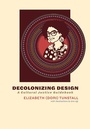
Decolonizing Design
A Cultural Justice Guidebook
Published on 27. January 2026
Book
Paperback/Softback
136 pages
978-0-262-55137-3 (ISBN)
Description
A guidebook to the institutional transformation of design theory and practice by restoring the long-excluded cultures of Indigenous, Black, and People of Colour communities. From the excesses of world expositions to myths of better living through technology, modernist design, in its European-based guises, has excluded and oppressed the very people whose lands and lives it reshaped. Decolonizing Design first asks how modernist design has encompassed and advanced the harmful project of colonization then shows how design might address these harms by recentering its theory and practice in global Indigenous cultures and histories. A leading figure in the movement to decolonize design, Dori Tunstall uses hard-hitting real-life examples and case studies drawn from over fifteen years of working to transform institutions to better reflect the lived experiences of Indigenous, Black, and People of Color communities. Her book is at once enlightening, inspiring, and practical, interweaving her lived experiences with extensive research to show what decolonizing design means, how it heals, and how to practice it in our institutions today. For leaders and practitioners in design institutions and communities, Tunstall s work demonstrates how we can transform the way we imagine and remake the world, replacing pain and repression with equity, inclusion, and diversity in short, she shows us how to realize the infinite possibilities that decolonized design represents.
Reviews / Votes
Included in Fast Company's "7 design books to look forward to in 2023""Tunstall gives step-by-step instructions for reducing bigotry's impact on the built environment"
-The New York Times Book Review
"A crusader for equity in teaching design [who] finds a formula that works across borders and sectors, with critical importance for society as a whole."
-The Times Higher Education
"The design field has historically been dominated by a narrow Eurocentric set of perspectives. This has resulted in a string of harmful stereotypes, biases, and the culture-erasing homogenization of design. Here to dismantle these power structures is design anthropologist Dori Tunstall, who is also dean of design at OCAD University. In her book, Decolonizing Design, Tunstall explores how modernist design has perpetuated colonial thinking, and how design can help abolish it."
-Fast Company
"In Decolonizing Design Tunstall offers an on-the-ground look at the ways modernist design has colonized and oppressed Indigenous, Black, Asian, and Latinx communities, and offers practical and forward-looking ways of rethinking design. Tunstall is clear-eyed in her account of the difficulty of the work and the wounds it might open in the effort to heal and connect."
-The Boston Globe
More details
Language
English
Place of publication
Cambridge (Massachusetts)
United States
Publishing group
MIT Press Ltd
Product notice
Paperback (trade)
Illustrations
6 BLACK AND WHITE ILLUS.
Dimensions
Height: 194 mm
Width: 132 mm
Thickness: 12 mm
Weight
140 gr
ISBN-13
978-0-262-55137-3 (9780262551373)
Copyright in bibliographic data and cover images is held by Nielsen Book Services Limited or by the publishers or by their respective licensors: all rights reserved.
Schweitzer Classification
Other editions
Additional editions
Book
02/2023
MIT Press
€23.00
Shipment within 10-20 days
E-Book
02/2023
MIT Press
€19.49
Available for download
Persons
Elizabeth (Dori) Tunstall is Dean of the Faculty of Design at Ontario College of Art and Design University, Toronto, the first Black person to hold such a post in the world. Her work has been featured in Print magazine, Fast Company, AIGA s Eye on Design, and Design Observer, among other venues. She was awarded the Sir Misha Black Medal in 2022.
Content
Introduction Decolonizing Design: What Might It Mean?
Chapter 1: Putting Indigenous First
Chapter 2: Dismantling the Tech Bias in the European Modernist Project
Chapter 3: Dismantling the Racist Bias in the European Modernist Project
Chapter 4: Making Amends is More than Diversity, Inclusion, and Equity
Chapter 5: Reprioritizing Existing Resources to Decolonize
List of All the Key Take-Aways
Acknowledgements
Notes
Chapter 1: Putting Indigenous First
Chapter 2: Dismantling the Tech Bias in the European Modernist Project
Chapter 3: Dismantling the Racist Bias in the European Modernist Project
Chapter 4: Making Amends is More than Diversity, Inclusion, and Equity
Chapter 5: Reprioritizing Existing Resources to Decolonize
List of All the Key Take-Aways
Acknowledgements
Notes