

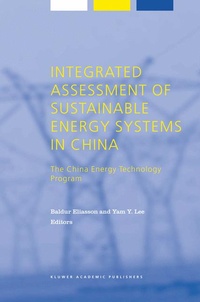
Integrated Assessment of Sustainable Energy Systems in China, The China Energy Technology Program
A Framework for Decision Support in the Electric Sector of Shandong Province
1st Edition
Published on 30. April 2003
Book
Mixed media product
LIV, 819 pages
978-1-4020-1198-6 (ISBN)
Description
There is no progress without access to energy and no energy use without supporting technology. Only one sixth of the earth's population has an easy access to sufficient energy. The other five sixth will increase their demand for energy in the future. The global environmental problems we face will increasingly affect our daily life. Adjust and fair price for energy is necessary for comparing the pros and cons of energy technology application. The road to an objective analysis of an energy system is called "Integrated Energy Analysis" and covers a cradle-to-grave system approach. This book contains such an analysis of the electricity energy system in Shandong-Province, one of China's 32 Provinces. It also presents a decision support analysis tool. It should allow decision makers in China to choose the right system of electricity supply with minimum environmental impact and/or minimum "true" cost.
The methodology presented in this book is easily applicable to other Provinces in China and also other countries and regions. This research presents a pioneering effort in bringing together the three essential partners for any such research program, Industry, Academia and the Stakeholders, i.e. prospective users of the results. An important aspect of this international program with 75 participants was the leadership provided by a dedicated and professional Program Management Team from Industry.
Developing a sustainable energy supply in China is an essential part of a global strategy to promote development while mitigating environmental pollution and the effect of greenhouse gas emissions.
More details
Series
Edition
1., 2003
Language
English
Place of publication
Dordrecht
United States
Target group
College/higher education
Professional and scholarly
Research
Illustrations
LIV, 1136 p. With DVD.
11 black & white illustrations
Dimensions
Height: 240 mm
Width: 160 mm
Weight
1648 gr
ISBN-13
978-1-4020-1198-6 (9781402011986)
DOI
10.1007/978-94-010-0153-3
Schweitzer Classification
Other editions
Additional editions
B. Eliasson | Y. Lee
Integrated Assessment of Sustainable Energy Systems in China, The China Energy Technology Program
A Framework for Decision Support in the Electric Sector of Shandong Province
E-Book
12/2012
Springer
€319.93
Available for download
B. Eliasson | Y. Lee
Integrated Assessment of Sustainable Energy Systems in China, The China Energy Technology Program
A Framework for Decision Support in the Electric Sector of Shandong Province
Book
04/2003
Kluwer Academic Publishers
€319.93
Shipment within 15-20 days
Content
Preface. Foreword I. Foreword II.
1: Introduction. The AGS/ABB Collaboration. The CETP Story. The CETP Idea. A Living Program. The Structure Of The Program. An Idea For The Future. References. Notes.
2: General Description/Approach And Methodology. 1. General Description. 2. Shandong Province. 3. Operation Of CETP. 4. Components Of The Program. 5. Conclusion. References.
3: Data Collection And Database Development. 1. The Data Collection Task. 2. Database Development. Notes.
4: Demand Forecasting. 1. Geographic, Social, And Economic Characteristics. 2. Shandong's Energy Profile. 3. Goals And Methodology. 4. Scenario Construction. 5. Important Assumptions In Energy Demand Forecasting. 6. The Primary Sector. 7. The Industrial Sector. 8. Construction. 9. Transportation. 10. Services. 11. Households. 12. Evolution Of Electricity Consumption. 13. Assumptions D In Forecasting Electricity Demand In The Additional Scenarios. 14. Forecasting Results And Analysis. 15. Conclusions. References.
5: Energy Economy Modeling Scenarios For China And Shandong. 1. Introduction. 2. General Background About China And Shandong Province. 3. Energy And Economy Modeling (EEM) Approach. 4. Model Results: MARKAL. 5. CRETM For Both China And Shandong Province. 6. Integration Of Results. 7. Findings, Conclusions, And Recommendations. References. Notes.
6: Electric Sector Simulation: A Tradeoff Analysis Of Shandong Province's Electric Service Options. 1. Introduction. 2. Scenario-Based Multi-Attribute Tradeoff Analysis. 3. Electric Sector Simulation. 4. Overview Of The ESS Scenarios. 5. Shandong Uncertainties And Futures. 6. Shandong Options And Strategies. 7. The Reference Strategy And The Impact Of Growth And Fuel Cost Uncertainties. 8. Performance Of ESS Scenarios. 9. Extending The Range Of Options. 10. Encompassing Greater Uncertainties. 11. Conclusions. References.
7: Energy Transportation Modeling. 1. Introduction. 2. Model Description. 3. Scenario Analysis With ETM. 4. Concluding Remarks. References.
8: Life Cycle Assessment. 1. Introduction. 2. The Coal Chain. 3. The Natural Gas Chain. 4. The Nuclear Chain. 5. Wind Power. 6. Comparison Of Current And Future Energy Chains. 7. Sensitivity Analysis For The Energy Chains. 8. Analysis Of Scenarios Selected For The MCDA Task. 9. Conclusions. 10. Outlook. References. Notes.
9: Environmental Impact And External Cost Assessment. 1. Introduction. 2. Objectives, Scope And Sub-Tasks. 3. External Cost Assessment. 4. Acidification In China And Shandong. 5. Conclusions. References. Notes.
10: Assessment Of Severe Accident Risks. 1. Introduction. 2. Objectives And Scope. 3. Information Sources. 4. Evaluations For Specific Energy Chains. 5. Energy Chain Comparisons. 6. Conclusions. References.
11: Multicriteria Output Integration Analysis. 1. The Contexts Of The Multicriteria Decision Aiding Approach In The CETP Project. 2. The Stakeholders Advisory Group (SAG). 3. The "Potential Actions" Or "Decision Scenarios". 4. The Criteria. 5. Tihe Aggregation Method. 6. The Weighting Process. 7. The Performance Matrix. 8. Analysis Of The MCDA Results. References. Notes.
12: Comparison And Integration Of CETP Tasks. 1. Introduction. 2. Comparison Of Electric Sector Methodologies. 3. DVD Tool For Documentation, Exploration And Decision Support. 4. Program Management For Integration.
13: Conclusions And Recommendations. 1. Introduction. 2. The Analytic Framework. 3. Energy And Elecfricity Demand Forecasting. 4. Environmental Damage, Health And Accident Risk. 5. Energy Supply And Use. 6. Sustainability And Stakeholder Perspectives. 7. Recommendations. 8. Overall Remarks And Future Outlook.
Appendix A: Structure Of CETP.
Appendix B: Steering Committee. Stakeholder Advisory Group. Technical Advisory Board.
Appendix C: List Of CETP Participants.
Appendix D (Chapter 1): Task Description.
Appendix E (Chapter 1): ABB In China.
Appendix F (Chapter 4): Additional Tables Of Data.
Appendix G (Chapter 7): Mathematical Description Of The Model.
Acronyms And Abbreviations. Units. Index.