

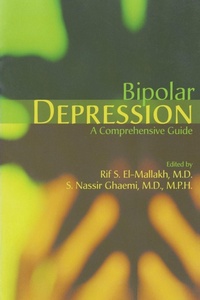
Bipolar Depression
A Comprehensive Guide
Published on 2. July 2006
Book
Paperback/Softback
277 pages
978-1-58562-171-2 (ISBN)
Description
Although depression is the most common presentation of
bipolar disorder, correct diagnosis generally requires a history of mania
and thus presents a formidable challenge. This book provides clinicians with
the necessary guidance to distinguish this illness and pursue an appropriate
therapeutic course. It brings together a team of clinical investigators who
offer cutting-edge research on the topic and address the most critical
concerns regarding its treatment.
Bipolar Depression first
introduces a hierarchical model for diagnosis to allow the clinician to
distinguish between bipolar and unipolar depression, addressing problems of
misdiagnosis and overdiagnosis as well as differentiating
attention-deficit/hyperactivity disorder (ADHD) and bipolar disorder. Early
chapters review the neurobiology and genetics of this highly heritable
condition, presenting studies of neurotransmitter function and brain imaging
studies and documenting the susceptibility of specific chromosomes as loci
for bipolar disorder. Other chapters address the particular issues of
bipolar depression in children, for whom a diagnosis is especially
problematic, and suicide, focusing on the need for assessment during both
acute and maintenance treatment with interventions appropriate to a
patient's symptoms and history. Bipolar Depression offers critiques
of specific treatment approaches:
* Lithium and antiepileptic drugs: featuring a review of the
most recent research on the use of lithium, in which higher doses are shown
to be effective, plus coverage of lamotrigine, valproic acid, carbamazepine,
oxcarbazepine, and topiramate.
* Antidepressants: offering new
perspectives on a complex field, including a discussion of the randomized
clinical trial literature and observational studies on their use, and citing
cautions regarding side effects.
* Antipsychotics: evaluating the
difference between first- and second-generation medications and discussing
their role in controlling acute depressions.
* Novel approaches to
treatment: including the use of atypical neuroleptics,
electroconvulsive therapy, transcranial magnetic stimulation, vagus nerve
stimulation, ketogenic diet, omega-3 fatty acids, myo-inositol, and dopamine
agonists.
* Psychological interventions: focusing on the
inclusion of cognitive-behavioral therapy or interpersonal social rhythm
therapy for nonmelancholic depressions in patients who had previously
received psychoeducation.
Despite the past decade's advances in
practice and research, there remains much room for progress in understanding
and treating bipolar depression. This book blazes a trail toward that goal,
opening new doors in recognizing differences between bipolar and unipolar
forms of depression while offering both researchers and clinicians key
insights into this troubling illness.
bipolar disorder, correct diagnosis generally requires a history of mania
and thus presents a formidable challenge. This book provides clinicians with
the necessary guidance to distinguish this illness and pursue an appropriate
therapeutic course. It brings together a team of clinical investigators who
offer cutting-edge research on the topic and address the most critical
concerns regarding its treatment.
Bipolar Depression first
introduces a hierarchical model for diagnosis to allow the clinician to
distinguish between bipolar and unipolar depression, addressing problems of
misdiagnosis and overdiagnosis as well as differentiating
attention-deficit/hyperactivity disorder (ADHD) and bipolar disorder. Early
chapters review the neurobiology and genetics of this highly heritable
condition, presenting studies of neurotransmitter function and brain imaging
studies and documenting the susceptibility of specific chromosomes as loci
for bipolar disorder. Other chapters address the particular issues of
bipolar depression in children, for whom a diagnosis is especially
problematic, and suicide, focusing on the need for assessment during both
acute and maintenance treatment with interventions appropriate to a
patient's symptoms and history. Bipolar Depression offers critiques
of specific treatment approaches:
* Lithium and antiepileptic drugs: featuring a review of the
most recent research on the use of lithium, in which higher doses are shown
to be effective, plus coverage of lamotrigine, valproic acid, carbamazepine,
oxcarbazepine, and topiramate.
* Antidepressants: offering new
perspectives on a complex field, including a discussion of the randomized
clinical trial literature and observational studies on their use, and citing
cautions regarding side effects.
* Antipsychotics: evaluating the
difference between first- and second-generation medications and discussing
their role in controlling acute depressions.
* Novel approaches to
treatment: including the use of atypical neuroleptics,
electroconvulsive therapy, transcranial magnetic stimulation, vagus nerve
stimulation, ketogenic diet, omega-3 fatty acids, myo-inositol, and dopamine
agonists.
* Psychological interventions: focusing on the
inclusion of cognitive-behavioral therapy or interpersonal social rhythm
therapy for nonmelancholic depressions in patients who had previously
received psychoeducation.
Despite the past decade's advances in
practice and research, there remains much room for progress in understanding
and treating bipolar depression. This book blazes a trail toward that goal,
opening new doors in recognizing differences between bipolar and unipolar
forms of depression while offering both researchers and clinicians key
insights into this troubling illness.
More details
Language
English
Place of publication
VA
United States
Target group
Professional and scholarly
US School Grade: College Graduate Student and over
Product notice
Paperback (trade)
Illustrations
15 Tables, unspecified; 4 Line drawings, black and white
Dimensions
Height: 229 mm
Width: 152 mm
Thickness: 15 mm
Weight
377 gr
ISBN-13
978-1-58562-171-2 (9781585621712)
Copyright in bibliographic data and cover images is held by Nielsen Book Services Limited or by the publishers or by their respective licensors: all rights reserved.
Schweitzer Classification
Other editions
Additional editions
E-Book
12/2006
1st Edition
American Psychiatric Publishing
€58.49
Available for download
Persons
Rif S. El-Mallakh, M.D., is Director of the Mood
Disorders Research Program and Associate Professor in the Department of
Psychiatry and Behavioral Sciences at the University of Louisville School of
Medicine in Louisville, Kentucky.
S. Nassir Ghaemi, M.D., is
Director of the Bipolar Disorder Research Program and Associate Professor of
Psychiatry and Public Health in the Department of Psychiatry and Behavioral
Sciences at Emory University in Atlanta, Georgia.
Disorders Research Program and Associate Professor in the Department of
Psychiatry and Behavioral Sciences at the University of Louisville School of
Medicine in Louisville, Kentucky.
S. Nassir Ghaemi, M.D., is
Director of the Bipolar Disorder Research Program and Associate Professor of
Psychiatry and Public Health in the Department of Psychiatry and Behavioral
Sciences at Emory University in Atlanta, Georgia.
Content
Contributors
Diagnosis of Bipolar
Depression
Chapter 1. Diagnosis of bipolar depression
Biology of
Bipolar Depression
Chapter 2. Neurobiology of bipolar
depression
Chapter 3. Genetics of bipolar depression
Special Topics
in Bipolar Depression
Chapter 4. Pediatric bipolar
depression
Chapter 5. Suicide in bipolar depression
Treatment and
Prevention of Bipolar Depression
Chapter 6. Lithium and antiepileptic
drugs in bipolar depression
Chapter 7. Antidepressants in bipolar
depression
Chapter 8. Antipsychotics in bipolar depression
Chapter
9. Novel treatments in bipolar depression
Chapter 10. Psychological
interventions in bipolar depression
Chapter 11. Future directions for
practice and research
Index
Diagnosis of Bipolar
Depression
Chapter 1. Diagnosis of bipolar depression
Biology of
Bipolar Depression
Chapter 2. Neurobiology of bipolar
depression
Chapter 3. Genetics of bipolar depression
Special Topics
in Bipolar Depression
Chapter 4. Pediatric bipolar
depression
Chapter 5. Suicide in bipolar depression
Treatment and
Prevention of Bipolar Depression
Chapter 6. Lithium and antiepileptic
drugs in bipolar depression
Chapter 7. Antidepressants in bipolar
depression
Chapter 8. Antipsychotics in bipolar depression
Chapter
9. Novel treatments in bipolar depression
Chapter 10. Psychological
interventions in bipolar depression
Chapter 11. Future directions for
practice and research
Index