

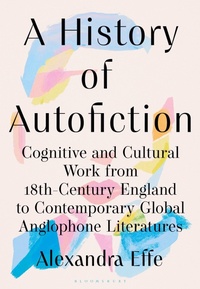
A History of Autofiction
Cognitive and Cultural Work from 18th-Century England to Contemporary Global Anglophone Literatures
Published on 30. October 2025
Book
Hardback
392 pages
978-1-350-53957-0 (ISBN)
Description
Mapping the largely neglected history of autofictional literature, and describing developments against socio-historical changes, cultural trends, and philosophical-psychological discussions around self and mind, this book both explores and historicizes autofiction's contemporary boom. Beginning with the genre's emergence in 18th-century England against changes in publishing culture and author concept, and then tracing forms and functions of autofictional literature up to the contemporary moment, A History of Autofiction highlights why select narrative strategies are abandoned, transformed, or repurposed; which forms, affordances, and effects of autofictional modes are persistent; and which were particular to a given period. With focus on salient authors and texts from anglophone autofiction around the world, and shining spotlights on insightful socio-historical and biographical contexts, Alexandra Effe foregrounds autofictional elements of works not previously considered for these dimensions and offers fresh perspectives on a range of canonical autofictional texts.
interdisciplinary in approach, the book sheds light on autofictional phenomena through research in neuroscience, psychology and philosophy of mind while demonstrating that autofictional literature holds insights for cognitive science. Developing a cognitive-holistic approach to the triad of author, text, and reader, the book allows for a novel and more encompassing understanding of an important current cultural trend and of its diachronic development.
interdisciplinary in approach, the book sheds light on autofictional phenomena through research in neuroscience, psychology and philosophy of mind while demonstrating that autofictional literature holds insights for cognitive science. Developing a cognitive-holistic approach to the triad of author, text, and reader, the book allows for a novel and more encompassing understanding of an important current cultural trend and of its diachronic development.
Reviews / Votes
Effe provides a much-needed historical perspective to the study of autofiction, a genre that has been dismissed as mere current fashion or postmodern posturing. In demonstrating that the autofictional has existed since the origin of the English novel, Effe paints a deeper, broader, and more historically-accurate portrayal of the field. * Chloe Green, Lecturer in English, Australian National University, Australia * A History of Autofiction is a timely and valuable book. Not only does it chime in with the recent upsurge of interest in this form of life writing, but by projecting the concept of autofiction back to the eighteenth century it generates a much richer, deeper and more nuanced pre-history for the field than has previously been attempted. Working in a chronological way through the 18th,19th and 20th centuries up to the present, Effe generates detailed close readings of representative works from each of these periods. When these are read in relation to each other, what emerges is a cumulative sense of how autofiction has emerged over the long term, thus taking a highly innovative approach to the book's historical handling of autofiction. * Hywel Dix, Bournemouth University, UK; Author of Autofiction and Cultural Memory *More details
Language
English
Place of publication
London
United Kingdom
Publishing group
Bloomsbury Publishing PLC
Target group
Professional and scholarly
Illustrations
4 bw illus
Dimensions
Height: 250 mm
Width: 175 mm
Thickness: 26 mm
Weight
857 gr
ISBN-13
978-1-350-53957-0 (9781350539570)
Copyright in bibliographic data and cover images is held by Nielsen Book Services Limited or by the publishers or by their respective licensors: all rights reserved.
Schweitzer Classification
Person
Alexandra Effe is Postdoctoral Fellow at the Centre for Literature, Cognition and Emotions at the University of Oslo, Norway, and teaches Anglophone and comparative literature at the Department of Literature, Area Studies and European Languages. She is the author of J. M. Coetzee and the Ethics of Narrative Transgression: A Reconsideration of Metalepsis (2017) co-editor of The Autofictional: Approaches, Affordances, Forms (2021) and Autofiction, Emotions, and Humour: A Playfully Serious Affective Mode (2023). As Visiting Scholar at the Oxford Centre for Life-Writing, she co-convened the project "Autofiction in Global Perspective."
Content
Introduction 1
What Is Autofiction and What Can It Do? 17
1. A Cognitive Perspective on Fictionality 19
2. Autofiction as Cognitive Duality and Textual Doubling 31
3. Affordances and Effects 41
Part I-Claiming a Voice: Eighteenth-Century Autofictional Beginnings 57
4. Marketing a Mutable Author Persona: "Romantick Names, and a feign'd
Scene of Action" in Delarivier Manley's Adventures of Rivella 69
5. Claiming the Right to Self-Publishing and Self-Editing: Alexander Pope's
"disguises ... of sentiment [and] style" 83
6. Shaping a Private Self Publicly: Lady Mary Wortley Montagu's Turkish
Embassy Letters and Eighteenth-Century Epistolary Culture 93
7. Deliberating "ornament of stile or diction, or even of circumstance": Henry
Fielding's Journal of a Voyage to Lisbon 101
8. Living Alternative Lives in Writing: Laurence Sterne and Tristram Shandy
"shall lead a couple of fine lives together" 113
Coda: From Letters, Diaries, and Transcripts to Books 125
Part II-Hiding in Plain Sight: Autofictional Experiments of the Long
Nineteenth Century 129
9. Romantic Freedoms in the Search for Generic Conventions 137
10. Self-Formation within Victorian (Generic) Constraints 175
11. Fin-de-siecle Transgressions of Identities and Generic Modes 197
Coda: From Pseudo-Disguise to Explicit Displacement 219
Part III-Reimagining Selves and Genres: Twentieth- and Twenty-First-Century
Autofictional Innovations 223
12. Late Modernist Explorations of Genre and Self 235
13. Postmodernist Self-Creation and Self-Negation 265
14. Post-Postmodernist Collaborative World-Building 293
Coda: From Reader Observation to Collaboration 327
Conclusion 331
What Is Autofiction and What Can It Do? 17
1. A Cognitive Perspective on Fictionality 19
2. Autofiction as Cognitive Duality and Textual Doubling 31
3. Affordances and Effects 41
Part I-Claiming a Voice: Eighteenth-Century Autofictional Beginnings 57
4. Marketing a Mutable Author Persona: "Romantick Names, and a feign'd
Scene of Action" in Delarivier Manley's Adventures of Rivella 69
5. Claiming the Right to Self-Publishing and Self-Editing: Alexander Pope's
"disguises ... of sentiment [and] style" 83
6. Shaping a Private Self Publicly: Lady Mary Wortley Montagu's Turkish
Embassy Letters and Eighteenth-Century Epistolary Culture 93
7. Deliberating "ornament of stile or diction, or even of circumstance": Henry
Fielding's Journal of a Voyage to Lisbon 101
8. Living Alternative Lives in Writing: Laurence Sterne and Tristram Shandy
"shall lead a couple of fine lives together" 113
Coda: From Letters, Diaries, and Transcripts to Books 125
Part II-Hiding in Plain Sight: Autofictional Experiments of the Long
Nineteenth Century 129
9. Romantic Freedoms in the Search for Generic Conventions 137
10. Self-Formation within Victorian (Generic) Constraints 175
11. Fin-de-siecle Transgressions of Identities and Generic Modes 197
Coda: From Pseudo-Disguise to Explicit Displacement 219
Part III-Reimagining Selves and Genres: Twentieth- and Twenty-First-Century
Autofictional Innovations 223
12. Late Modernist Explorations of Genre and Self 235
13. Postmodernist Self-Creation and Self-Negation 265
14. Post-Postmodernist Collaborative World-Building 293
Coda: From Reader Observation to Collaboration 327
Conclusion 331