

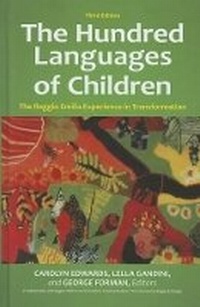
The Hundred Languages of Children
The Reggio Emilia Experience in Transformation
3rd Edition
Published on 13. December 2011
Book
Hardback
440 pages
978-0-313-35961-3 (ISBN)
Description
Why does the city of Reggio Emilia in northern Italy feature one of the best public systems of early education in the world? This book documents the comprehensive and innovative approach that utilizes the "hundred languages of children" to support their well-being and foster their intellectual development.
Educators in Reggio Emilia, Italy, use a distinctive innovative approach that supports children's well-being and fosters their intellectual development through a systematic focus on symbolic representation. From birth through age six, young children are encouraged to explore their environment and express their understanding through many modes of expression or "languages," including verbal communication, movement, drawing, painting, sculpture, shadow play, collage, and music. This organic strategy has been shown to be highly effective, as the children in Reggio Emilia display surprising examples of symbolic skill and creativity.
This book describes how the world-renowned preschool services and accompanying practical strategies for children under six in Reggio Emilia have evolved in response to the community's demographic and political transformations, and to generational changes in both the educators and the parents of the children. The authors provide the reader with a comprehensive introduction to the Reggio Emilia experience, and address three of the most important central themes of the work in Reggio in detail: teaching and learning through relationships; the hundred languages of children, and how this concept has evolved; and integrating documentation into the process of observing, reflecting, and communicating.
Educators in Reggio Emilia, Italy, use a distinctive innovative approach that supports children's well-being and fosters their intellectual development through a systematic focus on symbolic representation. From birth through age six, young children are encouraged to explore their environment and express their understanding through many modes of expression or "languages," including verbal communication, movement, drawing, painting, sculpture, shadow play, collage, and music. This organic strategy has been shown to be highly effective, as the children in Reggio Emilia display surprising examples of symbolic skill and creativity.
This book describes how the world-renowned preschool services and accompanying practical strategies for children under six in Reggio Emilia have evolved in response to the community's demographic and political transformations, and to generational changes in both the educators and the parents of the children. The authors provide the reader with a comprehensive introduction to the Reggio Emilia experience, and address three of the most important central themes of the work in Reggio in detail: teaching and learning through relationships; the hundred languages of children, and how this concept has evolved; and integrating documentation into the process of observing, reflecting, and communicating.
Reviews / Votes
"An impressive collection of essays on the Reggio system. . . . This book is highly recommended, without qualification, to a wide readership." - ChoiceMore details
Edition
3rd edition
Language
English
Place of publication
United States
Publishing group
Bloomsbury Publishing Plc
Target group
Professional and scholarly
Interest Age: From 7 to 17 years
Dimensions
Height: 235 mm
Width: 156 mm
Weight
624 gr
ISBN-13
978-0-313-35961-3 (9780313359613)
Copyright in bibliographic data and cover images is held by Nielsen Book Services Limited or by the publishers or by their respective licensors: all rights reserved.
Schweitzer Classification
Other editions
Additional editions
Carolyn Edwards | Lella Gandini | George Forman
The Hundred Languages of Children
The Reggio Emilia Experience in Transformation
E-Book
12/2011
3rd Edition
Praeger Publishers Inc
€39.49
Available for download
Carolyn Edwards | Lella Gandini | George Forman
The Hundred Languages of Children
The Reggio Emilia Experience in Transformation
E-Book
12/2011
3rd Edition
Praeger Publishers Inc
€39.49
Available for download
Persons
Carolyn Pope Edwards is a Willa Cather professor at the University of Nebraska, Lincoln, with joint appointments in the Departments of Psychology and Child, Youth, and Family Studies.
Lella Gandini is Reggio Children liaison in the United States for the Dissemination of the Reggio Emilia Approach and associate editor of Innovations in Early Education: The International Reggio Exchange.
George Forman is professor emeritus of education at the University of Massachusetts, Amherst and president of Videatives, Inc.
Lella Gandini is Reggio Children liaison in the United States for the Dissemination of the Reggio Emilia Approach and associate editor of Innovations in Early Education: The International Reggio Exchange.
George Forman is professor emeritus of education at the University of Massachusetts, Amherst and president of Videatives, Inc.
Content
Acknowledgments
About the Contributors
Foreword
Howard Gardner
Preface: Reggio: A City of Courtesy, Curiosity, and Imagination
Jerome Bruner
Part I: Starting Points
No Way. The Hundred is There.
Loris Malaguzzi
1. Introduction: Background and Starting Points
Carolyn Edwards, Lella Gandini, and George Forman
2. History, Ideas, and Basic Principles: An Interview with Loris Malaguzzi
Lella Gandini
3. Malaguzzi's Story, Other Stories, and Respect for Children
David Hawkins
4. Our Responsibility toward Young Children and toward Their Community
Graziano Delrio
5. Reggio Emilia: A Transforming City
Sandra Piccinini and Claudia Giudici
6. Micro-Project and Macro-Policy: Learning through Relationships
Peter Moss
Part II: Teaching and Learning through Relationships
7. Parent Participation in the Governance of the Schools: An Interview with Sergio Spaggiari
Lella Gandini
8. The Pedagogical Coordinating Team and Professional Development
Paola Cagliari, Tiziana Filippini, Elena Giacopini, Simona Bonilauri, and Deanna Margini
9. Teacher and Learner, Partner and Guide: The Role of the Teacher
Carolyn Edwards
10. The Observant Teacher: Observation as a Reciprocal Tool of Professional Development: An Interview with Amelia Gambetti
Lella Gandini
11. The Inclusive Community
Ivana Soncini
Interlude. From Messages to Writing: Experiences in Literacy
Laura Rubizzi and Simona Bonilauri Describe Their Research
Part III: Documentation as an Integrated Process of Observing, Reflecting, and Communicating
12. Pedagogical Documentation: A Practice for Negotiation and Democracy
Gunilla Dahlberg
13. The Pedagogy of Listening: The Listening Perspective from Reggio Emilia
Carlina Rinaldi
14. Negotiated Learning through Design, Documentation, and Discourse
George Forman and Brenda Fyfe
15. The Relationship between Documentation and Assessment
Brenda Fyfe
Part IV: The Idea of the Hundred Languages of Children and Its Evolution
16. Is Beauty a Way of Knowing?
Margie Cooper
17. The Atelier: A Conversation with Vea Vecchi
Lella Gandini
18. Connecting through Caring and Learning Spaces
Lella Gandini
19. The Use of Digital Media in Reggio Emilia
George Forman
20. The Loris Malaguzzi International Center
Carlina Rinaldi and Sandra Piccinini
Part V: Conclusion
21. Final Reflections and Guiding Strategies for Teaching
Carolyn Edwards, Lella Gandini, and George Forman
Glossary of Terms Used by Educators in Reggio Emilia
Additional Resources
Illustration Credits
Author Index
Subject Index
About the Contributors
Foreword
Howard Gardner
Preface: Reggio: A City of Courtesy, Curiosity, and Imagination
Jerome Bruner
Part I: Starting Points
No Way. The Hundred is There.
Loris Malaguzzi
1. Introduction: Background and Starting Points
Carolyn Edwards, Lella Gandini, and George Forman
2. History, Ideas, and Basic Principles: An Interview with Loris Malaguzzi
Lella Gandini
3. Malaguzzi's Story, Other Stories, and Respect for Children
David Hawkins
4. Our Responsibility toward Young Children and toward Their Community
Graziano Delrio
5. Reggio Emilia: A Transforming City
Sandra Piccinini and Claudia Giudici
6. Micro-Project and Macro-Policy: Learning through Relationships
Peter Moss
Part II: Teaching and Learning through Relationships
7. Parent Participation in the Governance of the Schools: An Interview with Sergio Spaggiari
Lella Gandini
8. The Pedagogical Coordinating Team and Professional Development
Paola Cagliari, Tiziana Filippini, Elena Giacopini, Simona Bonilauri, and Deanna Margini
9. Teacher and Learner, Partner and Guide: The Role of the Teacher
Carolyn Edwards
10. The Observant Teacher: Observation as a Reciprocal Tool of Professional Development: An Interview with Amelia Gambetti
Lella Gandini
11. The Inclusive Community
Ivana Soncini
Interlude. From Messages to Writing: Experiences in Literacy
Laura Rubizzi and Simona Bonilauri Describe Their Research
Part III: Documentation as an Integrated Process of Observing, Reflecting, and Communicating
12. Pedagogical Documentation: A Practice for Negotiation and Democracy
Gunilla Dahlberg
13. The Pedagogy of Listening: The Listening Perspective from Reggio Emilia
Carlina Rinaldi
14. Negotiated Learning through Design, Documentation, and Discourse
George Forman and Brenda Fyfe
15. The Relationship between Documentation and Assessment
Brenda Fyfe
Part IV: The Idea of the Hundred Languages of Children and Its Evolution
16. Is Beauty a Way of Knowing?
Margie Cooper
17. The Atelier: A Conversation with Vea Vecchi
Lella Gandini
18. Connecting through Caring and Learning Spaces
Lella Gandini
19. The Use of Digital Media in Reggio Emilia
George Forman
20. The Loris Malaguzzi International Center
Carlina Rinaldi and Sandra Piccinini
Part V: Conclusion
21. Final Reflections and Guiding Strategies for Teaching
Carolyn Edwards, Lella Gandini, and George Forman
Glossary of Terms Used by Educators in Reggio Emilia
Additional Resources
Illustration Credits
Author Index
Subject Index