

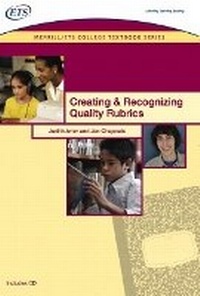
Creating and Recognizing Quality Rubrics
Published on 6. September 2007
Book
Paperback/Softback
272 pages
978-0-13-513420-7 (ISBN)
Description
This book helps teachers choose or develop sound instructional rubrics, use rubrics effectively with students to maximize learning, convert rubric scores to grades, and communicate with parents about the use of rubrics in the classroom.
The authors speak from direct experience in examining hundreds of rubrics for classroom use, developing rubrics for classroom use and state assessments, using rubrics in the classroom to help students learn, and speaking with parents, teachers, and students about rubrics.
The authors speak from direct experience in examining hundreds of rubrics for classroom use, developing rubrics for classroom use and state assessments, using rubrics in the classroom to help students learn, and speaking with parents, teachers, and students about rubrics.
More details
Language
English
Place of publication
United States
Publishing group
Pearson Education (US)
Target group
Professional and scholarly
Dimensions
Height: 229 mm
Width: 152 mm
Weight
336 gr
ISBN-13
978-0-13-513420-7 (9780135134207)
Copyright in bibliographic data and cover images is held by Nielsen Book Services Limited or by the publishers or by their respective licensors: all rights reserved.
Schweitzer Classification
Persons
Judy Arter brings a national reputation for assessment expertise and more than 30 years of experience in professional development to this interactive training. She has developed state and district assessments, directed large-scale writing assessments, developed numerous assessment training materials, and conducted hundreds of training sessions for educators across the country.
A former elementary school teacher, Jan Chappuis has worked at the district, regional and state levels to develop curriculum and strengthen teaching and assessment practices. She currently works with ETS, developing materials and offering training in the field of student-involved classroom assessment.
A former elementary school teacher, Jan Chappuis has worked at the district, regional and state levels to develop curriculum and strengthen teaching and assessment practices. She currently works with ETS, developing materials and offering training in the field of student-involved classroom assessment.
Content
1 Defining Rubric
2 What a Good Rubric Looks Like
3 How to Develop a General Rubric
4 Quality Performance Tasks
5 How to Convert Rubric Scores to Grades
6 Tasks and Rubrics as Assessment for Learning
7 Communicating with Parents about Rubrics
Glossary
Bibliography
Appendix A Rubric for Rubrics
Appendix B Rubric Sampler Table of Contents
Appendix C Rubric Sampler Rubrics Referenced in the Text
Appendix D Rubric for Tasks
Appendix E CD Table of Contents
2 What a Good Rubric Looks Like
3 How to Develop a General Rubric
4 Quality Performance Tasks
5 How to Convert Rubric Scores to Grades
6 Tasks and Rubrics as Assessment for Learning
7 Communicating with Parents about Rubrics
Glossary
Bibliography
Appendix A Rubric for Rubrics
Appendix B Rubric Sampler Table of Contents
Appendix C Rubric Sampler Rubrics Referenced in the Text
Appendix D Rubric for Tasks
Appendix E CD Table of Contents