

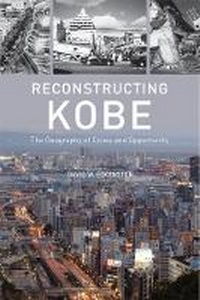
Reconstructing Kobe
The Geography of Crisis and Opportunity
Will be published approx. on 15. March 2010
Book
Hardback
328 pages
978-0-7748-1756-1 (ISBN)
Description
Six thousand people died and hundreds of thousands lost their homes when an earthquake hit Kobe in January 1995. The Hanshin Earthquake was the largest disaster to affect postwar Japan and one of the most destructive postwar natural disasters to strike a developed country. Although the media focused on the disaster's immediate effects, the long-term reconstruction efforts have gone largely unexplored.
Based on fieldwork and interviews with planners, activists, and bureaucrats, Reconstructing Kobe records the first ten years of reconstruction and recovery and offers detailed descriptions of the geography of crisis and opportunity. Which districts were most vulnerable to the quake and why? Did planners successfully exploit opportunities to revitalize the city and make it more sustainable and disaster proof? David Edgington's intricate investigation of one of the largest redevelopments in recent history offers a compelling post-disaster case study for planners and policy makers and is essential reading for students and scholars of Japanese urban and planning history.
Based on fieldwork and interviews with planners, activists, and bureaucrats, Reconstructing Kobe records the first ten years of reconstruction and recovery and offers detailed descriptions of the geography of crisis and opportunity. Which districts were most vulnerable to the quake and why? Did planners successfully exploit opportunities to revitalize the city and make it more sustainable and disaster proof? David Edgington's intricate investigation of one of the largest redevelopments in recent history offers a compelling post-disaster case study for planners and policy makers and is essential reading for students and scholars of Japanese urban and planning history.
Reviews / Votes
David Edgington's fine analysis of the Kobe earthquake (officially known as the Hanshin Awaji Great Earthquake) places the event within a wider context of urban planning and disaster planning in Japan and examines the long-term impact of the earthquake. In so doing, it provides the reader with one of the most precise dissections of the Japanese planning system that has yet been written, as well as furnishing a profound insight into the various aspects of urban Japan.- Paul Waley (Urban Studies, 49:1151-1153) Edgington presents a richly descriptive account, based on meticulous data collection, of the urban planning and urban management aspects of Kobe's long-term recovery from the Hanshin earthquake. The painstaking quality of the research is evident throughout the book, which imparts the key lessons of Kobe's experience with disaster recovery. - Keiichi Sato, University of Tokyo (Translated from the Japanese by Margaret Gibbons) (Social Science Japan Journal, vol 14, no 2, Summer 2011)
More details
Language
English
Place of publication
Vancouver
Canada
Target group
College/higher education
Professional and scholarly
Product notice
sewn/stitched
Illustrations
45 b&w photos, 21 maps, 28 charts, 27 tables
Dimensions
Height: 229 mm
Width: 152 mm
Weight
600 gr
ISBN-13
978-0-7748-1756-1 (9780774817561)
Copyright in bibliographic data and cover images is held by Nielsen Book Services Limited or by the publishers or by their respective licensors: all rights reserved.
Schweitzer Classification
Person
David W. Edgington is a former director of the Centre for Japanese Research and an associate professor of geography at the University of British Columbia.
Content
Preface
1 Introduction
2 Earthquakes and Urban Reconstruction
2.1 The Problem of Post-Disaster Reconstruction
2.2 Japanese Planning and Administrative Practice
3 Kobe and the Hanshin Earthquake
3.1 Kobe up to the Time of the Earthquake
3.2 The Geography of Crisis
4 The Planning and Reconstruction Response
4.1 Actions Taken by the National Government
4.2 Actions Taken by Local Government
5 Protest, Participation, and the Phoenix Plan
5.1 The Citizens' Protest
5.2 The City's Response and the Commencement of "Machizukuri" Planning
5.3 The Phoenix Reconstruction Plan
5.4 Review by the National Government
6 Neighbourhood Case Studies
6.1 Shin-Nagata in Western Kobe
6.2 Moriminami in Eastern Kobe
7 Symbolic Projects and the Local Economy
7.1 Funding for the Symbolic Projects
7.2 Kobe's Economy and the Plight of Small Firms
7.3 The Chemical Shoes Industry
7.4 Attracting New Industries and Firms
7.5 The Kobe Airport and the City's Debt
8 Conclusion
8.1 Was the Ten-Year Reconstruction Plan Successful?
8.2 What Were the Major Influences on Kobe's Reconstruction?
8.3 The Geographies of Crisis and Opportunity
8.4 Lessons for Japanese Cities
8.5 Are There Lessons for Other Cities?
Notes
References
Index
1 Introduction
2 Earthquakes and Urban Reconstruction
2.1 The Problem of Post-Disaster Reconstruction
2.2 Japanese Planning and Administrative Practice
3 Kobe and the Hanshin Earthquake
3.1 Kobe up to the Time of the Earthquake
3.2 The Geography of Crisis
4 The Planning and Reconstruction Response
4.1 Actions Taken by the National Government
4.2 Actions Taken by Local Government
5 Protest, Participation, and the Phoenix Plan
5.1 The Citizens' Protest
5.2 The City's Response and the Commencement of "Machizukuri" Planning
5.3 The Phoenix Reconstruction Plan
5.4 Review by the National Government
6 Neighbourhood Case Studies
6.1 Shin-Nagata in Western Kobe
6.2 Moriminami in Eastern Kobe
7 Symbolic Projects and the Local Economy
7.1 Funding for the Symbolic Projects
7.2 Kobe's Economy and the Plight of Small Firms
7.3 The Chemical Shoes Industry
7.4 Attracting New Industries and Firms
7.5 The Kobe Airport and the City's Debt
8 Conclusion
8.1 Was the Ten-Year Reconstruction Plan Successful?
8.2 What Were the Major Influences on Kobe's Reconstruction?
8.3 The Geographies of Crisis and Opportunity
8.4 Lessons for Japanese Cities
8.5 Are There Lessons for Other Cities?
Notes
References
Index