

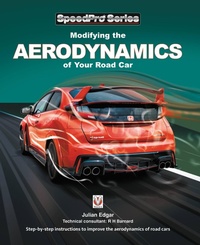
Modifying the Aerodynamics of Your Road Car
Published on 15. October 2018
Book
Paperback/Softback
248 pages
978-1-78711-283-4 (ISBN)
Description
This unique handbook assumes no starting knowledge of vehicle aerodynamics. It begins with simple ideas and finishes with sophisticated and effective aerodynamic modifications that work.
Three major chapters cover on-road testing techniques that give you all the information you need to decide what modifications you should make - and, after you've made them, how well they work.
Low-cost techniques allow you to visualise the patterns of airflow over your car so that you can actually see the problem areas that need improvement. Uniquely, you're also shown how to measure aerodynamic pressures, so you can determine which body surfaces are creating lift, drag and downforce. Want to work out where a wing should be placed? On-road testing to find that out is covered as well. The book also shows you how to measure downforce to see if that wing is actually working!
If you wish to reduce drag, more than ten different areas are covered. Reducing frontal area, lowering cooling system drag, optimising vehicle ride height and rake, reducing the strength of the wake, achieving clean airflow separation and optimising wheel designs - they're all covered using the latest research findings.
And if you're a performance driver, there's a major chapter devoted to reducing lift and improving stability. This chapter includes the design and development of undertrays and diffusers, wings and spoilers. The example car developed measurable downforce when fitted with an undertray and rear diffuser, something that transformed its on-road handling.
The author has been writing about the aerodynamics of road cars for more than 25 years. He is also an experienced and proficient car modifier who has performed numerous aerodynamic modifications and upgrades to his own cars. The book's technical consultant, RH Barnard, is an acknowledged world leading automotive aerodynamicist.
If you want a practical, hands-on guide that demystifies and explains car aerodynamics, and shows you how to make effective aerodynamic modifications to your car, this book is for you.
Three major chapters cover on-road testing techniques that give you all the information you need to decide what modifications you should make - and, after you've made them, how well they work.
Low-cost techniques allow you to visualise the patterns of airflow over your car so that you can actually see the problem areas that need improvement. Uniquely, you're also shown how to measure aerodynamic pressures, so you can determine which body surfaces are creating lift, drag and downforce. Want to work out where a wing should be placed? On-road testing to find that out is covered as well. The book also shows you how to measure downforce to see if that wing is actually working!
If you wish to reduce drag, more than ten different areas are covered. Reducing frontal area, lowering cooling system drag, optimising vehicle ride height and rake, reducing the strength of the wake, achieving clean airflow separation and optimising wheel designs - they're all covered using the latest research findings.
And if you're a performance driver, there's a major chapter devoted to reducing lift and improving stability. This chapter includes the design and development of undertrays and diffusers, wings and spoilers. The example car developed measurable downforce when fitted with an undertray and rear diffuser, something that transformed its on-road handling.
The author has been writing about the aerodynamics of road cars for more than 25 years. He is also an experienced and proficient car modifier who has performed numerous aerodynamic modifications and upgrades to his own cars. The book's technical consultant, RH Barnard, is an acknowledged world leading automotive aerodynamicist.
If you want a practical, hands-on guide that demystifies and explains car aerodynamics, and shows you how to make effective aerodynamic modifications to your car, this book is for you.
Reviews / Votes
A great read for anyone interest in car aerodynamics. tkc (Totalkitcarhttp:/)this is a great practical guide to road car aerodynamics, simply explained, and backed up with plenty of references to industry sources and papers for those who want to find out more. www.silhouet.com. a fascinating book Iain P W Robertson - FreelanceMore details
Series
Language
English
Place of publication
United Kingdom
Publishing group
David & Charles
Dimensions
Height: 251 mm
Width: 210 mm
Thickness: 22 mm
Weight
883 gr
ISBN-13
978-1-78711-283-4 (9781787112834)
Copyright in bibliographic data and cover images is held by Nielsen Book Services Limited or by the publishers or by their respective licensors: all rights reserved.
Schweitzer Classification
Other editions
Additional editions
Julian Edgar | Richard H. Barnard
Modifying the Aerodynamics of Your Road Car
E-Book
01/2022
NYU Press
€18.49
Available for download
Persons
Julian Edgar has worked as a teacher, writer, editor and photographer. His varied career has included editing a national automotive magazine, and writing for various online and print magazines for many years.
An enthusiast for all things mechanical and electronic, Julian is a hands-on car modifier, working from his own well-equipped home workshop, focusing mainly on suspension, engine management and aerodynamics. He is also a keen cyclist, and he has designed and built his own bikes and trikes.
He has written several books about car modifications, aerodynamics and electronics, as well as more general interest books about engineering and small-wheeled bicycles, Julian has also made a series of YouTube videos that discuss the subjects of his books.
He lives and works in New South Wales, Australia.
An enthusiast for all things mechanical and electronic, Julian is a hands-on car modifier, working from his own well-equipped home workshop, focusing mainly on suspension, engine management and aerodynamics. He is also a keen cyclist, and he has designed and built his own bikes and trikes.
He has written several books about car modifications, aerodynamics and electronics, as well as more general interest books about engineering and small-wheeled bicycles, Julian has also made a series of YouTube videos that discuss the subjects of his books.
He lives and works in New South Wales, Australia.
Content
Chapter 1 - Theory
* Wake drag
* Viscous drag
* Body pressures causing drag and lift
* Interference drag
* Attached and separated flows
* Reynolds numbers
* Trailing vortices
* Undercar flows
* Drag and lift coefficients
* Yaw
* Dynamic and static pressures
Chapter 2 - Aerodynamic vehicles
* Rumpler Tropfenwagen
* Opel RAK II winged rocket car
* Tatra T87
* Porsche Type 64
* Volkswagen Transporter
* NSU Ro80
* Dodge Charger Daytona & Plymouth Roadrunner Superbird
* Holden Special Vehicles Group A Commodore
* Opel Calibra
* General Motors EV1
* General Motors Chevrolet Volt
* Volkswagen XL-1
Chapter 3 - Flow visualisation
* On-road flow testing
* Visualisation techniques
* Wool-tufting
* Smoke streams
* Eroding clay
* Dust
Chapter 4 - Pressure measurement
* Pressure measurement aims
* Measuring instruments
* Magnehelic gauges
* Pressure probes
* Measuring pressures with a Magnehelic gauge
* Step-by-step pressure measurement
* Using pressure measurement data
* Using pitot tubes to measure airspeed
Chapter 5 - Measuring drag and lift
* Measuring drag
* Required power testing
* Coast-down testing
* Fuel economy testing
* Measuring lift and downforce on the road
Chapter 6 - Reducing drag
* Reducing frontal area
* Reducing rear vison mirror drag
* Reducing cooling drag
* Ride height and rake
* Reducing the area of the wake
* Reducing the strength of the wake
* Achieving clean separation
* Reducing separation bubbles
* Undertrays
* Wheels, tyres and wheel arches
* Reducing drag - development of a new car
Chapter 7 - Reducing lift and improving stability
* Causes of lift
* Stability
* Determining the centre of pressure and centre of gravity
* Lateral forces
* Undertrays and diffusers
* Spoilers
* Wings
* Reducing trailing vortices
* Active aerodynamics
Chapter 8 - Improving flow through heat exchangers
* Pressure differentials
* Improving underbonnet intercooler airflow
* Testing a diesel intercooler
* Designing and installing an alternator cooling duct
* Turning vanes
* Bonnet (hood) vents and ducts
Chapter 9 - Engine intakes
* Benefits
* Measuring pressures
* Measuring engine intakes
* Building a new engine intake
Chapter 10 - Reducing aerodynamic noise
* Causes of aerodynamic noise
* Testing and measurement
* Decreasing noise production
* Decreasing noise transmission
* Modifications to reduce noise
* Wake drag
* Viscous drag
* Body pressures causing drag and lift
* Interference drag
* Attached and separated flows
* Reynolds numbers
* Trailing vortices
* Undercar flows
* Drag and lift coefficients
* Yaw
* Dynamic and static pressures
Chapter 2 - Aerodynamic vehicles
* Rumpler Tropfenwagen
* Opel RAK II winged rocket car
* Tatra T87
* Porsche Type 64
* Volkswagen Transporter
* NSU Ro80
* Dodge Charger Daytona & Plymouth Roadrunner Superbird
* Holden Special Vehicles Group A Commodore
* Opel Calibra
* General Motors EV1
* General Motors Chevrolet Volt
* Volkswagen XL-1
Chapter 3 - Flow visualisation
* On-road flow testing
* Visualisation techniques
* Wool-tufting
* Smoke streams
* Eroding clay
* Dust
Chapter 4 - Pressure measurement
* Pressure measurement aims
* Measuring instruments
* Magnehelic gauges
* Pressure probes
* Measuring pressures with a Magnehelic gauge
* Step-by-step pressure measurement
* Using pressure measurement data
* Using pitot tubes to measure airspeed
Chapter 5 - Measuring drag and lift
* Measuring drag
* Required power testing
* Coast-down testing
* Fuel economy testing
* Measuring lift and downforce on the road
Chapter 6 - Reducing drag
* Reducing frontal area
* Reducing rear vison mirror drag
* Reducing cooling drag
* Ride height and rake
* Reducing the area of the wake
* Reducing the strength of the wake
* Achieving clean separation
* Reducing separation bubbles
* Undertrays
* Wheels, tyres and wheel arches
* Reducing drag - development of a new car
Chapter 7 - Reducing lift and improving stability
* Causes of lift
* Stability
* Determining the centre of pressure and centre of gravity
* Lateral forces
* Undertrays and diffusers
* Spoilers
* Wings
* Reducing trailing vortices
* Active aerodynamics
Chapter 8 - Improving flow through heat exchangers
* Pressure differentials
* Improving underbonnet intercooler airflow
* Testing a diesel intercooler
* Designing and installing an alternator cooling duct
* Turning vanes
* Bonnet (hood) vents and ducts
Chapter 9 - Engine intakes
* Benefits
* Measuring pressures
* Measuring engine intakes
* Building a new engine intake
Chapter 10 - Reducing aerodynamic noise
* Causes of aerodynamic noise
* Testing and measurement
* Decreasing noise production
* Decreasing noise transmission
* Modifications to reduce noise