

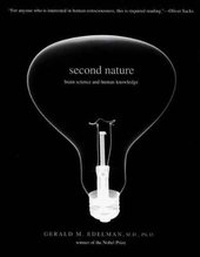
Second Nature
Brain Science and Human Knowledge
Published on 16. November 2007
Book
Paperback/Softback
224 pages
978-0-300-12594-8 (ISBN)
Description
A renowned neuroscientist explains how our brains and bodies give rise to knowledge, creativity, and mental experience
Burgeoning advancements in brain science are opening up new perspectives on how we acquire knowledge. Indeed, it is now possible to explore consciousness-the very center of human concern-by scientific means. In this illuminating book, Dr. Gerald M. Edelman offers a new theory of knowledge based on striking scientific findings about how the brain works. And he addresses the related compelling question: Does the latest research imply that all knowledge can be reduced to scientific description?
Edelman's brain-based approach to knowledge has rich implications for our understanding of creativity, of the normal and abnormal functioning of the brain, and of the connections among the different ways we have of knowing. While the gulf between science and the humanities and their respective views of the world has seemed enormous in the past, the author shows that their differences can be dissolved by considering their origins in brain functions. He foresees a day when brain-based devices will be conscious, and he reflects on this and other fascinating ideas about how we come to know the world and ourselves.
Burgeoning advancements in brain science are opening up new perspectives on how we acquire knowledge. Indeed, it is now possible to explore consciousness-the very center of human concern-by scientific means. In this illuminating book, Dr. Gerald M. Edelman offers a new theory of knowledge based on striking scientific findings about how the brain works. And he addresses the related compelling question: Does the latest research imply that all knowledge can be reduced to scientific description?
Edelman's brain-based approach to knowledge has rich implications for our understanding of creativity, of the normal and abnormal functioning of the brain, and of the connections among the different ways we have of knowing. While the gulf between science and the humanities and their respective views of the world has seemed enormous in the past, the author shows that their differences can be dissolved by considering their origins in brain functions. He foresees a day when brain-based devices will be conscious, and he reflects on this and other fascinating ideas about how we come to know the world and ourselves.
Reviews / Votes
"'It was William James's dream that physiology, psychology and philosophy be joined into a single discipline, and in Second Nature, the latest volume in Gerald M. Edelman's seminal series of books on Neural Darwinism, this dream of a brain-based epistemology is brought closer than ever to realization. For anyone who is interested in human consciousness, this is required reading.' Oliver Sacks, author of The Man Who Mistook His Wife for a Hat"More details
Language
English
Place of publication
United States
Target group
College/higher education
Product notice
Paperback (trade)
Illustrations
3 b-w illus.
Dimensions
Height: 171 mm
Width: 148 mm
Weight
204 gr
ISBN-13
978-0-300-12594-8 (9780300125948)
Copyright in bibliographic data and cover images is held by Nielsen Book Services Limited or by the publishers or by their respective licensors: all rights reserved.
Schweitzer Classification
Person
Gerald M. Edelman, M.D., Ph.D., is director, The Neurosciences Institute; president, Neurosciences Research Foundation; and chairman, Department of Neurobiology, The Scripps Research Institute. He has received many honors and awards, including the Nobel Prize for Physiology or Medicine. He lives in La Jolla, CA.