

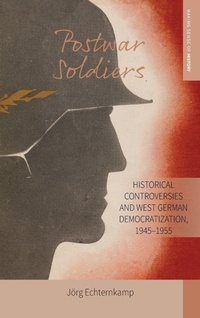
Postwar Soldiers
Historical Controversies and West German Democratization, 1945-1955
1st Edition
Published on 20. March 2020
Book
Hardback
570 pages
978-1-78920-557-2 (ISBN)
Description
Contemporary historians have transformed our understanding of the German military in World War II, debunking the "clean Wehrmacht" myth that held most soldiers innocent of wartime atrocities. Considerably less attention has been paid to those soldiers at the end of hostilities. In Postwar Soldiers, Joerg Echternkamp analyzes three themes in the early history of West Germany: interpretations of the war during its conclusion and the occupation period; military veteran communities' self-perceptions; and the public rehabilitation of the image of the German soldier. As Echternkamp shows, public controversies around these topics helped to drive the social processes that legitimized the democratic postwar order.
Reviews / Votes
Reviews for the German Edition:"Echternkamp successfully applies the concept of collective representation to the three fields of conflict he has selected. His research clarifies the extent to which the collective representations of war and military have enabled and contributed to political and cultural change." * Sehepunkte
"Joerg Echternkamp's convincing study fulfills its promise of methodologically complex differentiation... This differentiated view of the historical "gaps" and ambiguities offers ways to understand the German victims of the war as well as the (German) perpetrators...To this end, Echternkamp's interpretation of the history of war and the military produces an important contribution." * H-Soz-Kult
More details
Series
Language
English
Place of publication
Oxford
United Kingdom
Target group
Professional and scholarly
Product notice
Library binding
Illustrations
Bibliography; Index
Dimensions
Height: 235 mm
Width: 157 mm
Thickness: 35 mm
Weight
969 gr
ISBN-13
978-1-78920-557-2 (9781789205572)
DOI
10.3167/9781789205572
Copyright in bibliographic data and cover images is held by Nielsen Book Services Limited or by the publishers or by their respective licensors: all rights reserved.
Schweitzer Classification
Other editions
Additional editions
Joerg Echternkamp
Postwar Soldiers
Historical Controversies and West German Democratization, 1945-1955
E-Book
03/2020
1st Edition
Berghahn Books
€28.99
Available for download
Jörg Echternkamp
Postwar Soldiers
Historical Controversies and West German Democratization, 1945-1955
E-Book
03/2020
1st Edition
Berghahn Books
€28.99
Available for download
Person
Joerg Echternkamp is Research Director at the Center for Military History and Social Sciences (ZMSBw) and Associate Professor of Modern History at Martin Luther University Halle-Wittenberg. He is co-editor of the journal Militaergeschichtliche Zeitschrift. Echternkamp was awarded the "Geisteswissenschaften International" translation grant in 2017.
Content
Acknowledgments
List of Abbreviations
Introduction: The Problem: Paths Out of the War
Part I: Forms of Consciousness and Prospects for Experience before 1945
Chapter 1. Heroic Images of War in the Age of Wars
Chapter 2. Shared Prospects of Experience in Total War
Chapter 3. The End of the War on the Horizon of Expectation, 1944-1945
Part II: A Criminal War?
Chapter 4. The Postwar Period as a Backdrop for Experience
Chapter 5. Demilitarization as an Allied Political Program
Chapter 6. Representation as a Legal Issue: The Military Leadership on Trial, 1945-1946
Chapter 7. Conflicting Ideas: The Wehrmacht between Elucidation and Myth
Chapter 8. Provisional Assessment
Part III: Veterans - an Experiential Community of "Victims"?
Chapter 9. Self-Organization among Former Soldiers
Chapter 10. Internal and External Perceptions of Veterans: Victims and Achievers
Chapter 11. The Presence of the Absent: The Symbolic Representation and the Political Instrumentalization of Prisoners of War
Chapter 12. Experience versus. Expectation: Consumption Critique and War Captivity
Chapter 13. Remembering the Fallen: Historical Signification between Commemorative Ceremony and Grave Care
Part IV: Competing Interpretations and Conferring Meaning: War Stories of "Others"
Chapter 14. The Military Resistance: Fostering Tradition as a Political Act and Biographical Challenge
Chapter 15. Defectors, Deserters, War Criminals: Mirroring Self-Images
Chapter 16. The Fuehrer Abroad: Defense by Demarcation
Chapter 17. Traitors, Spies, and Other "Loners": The War's Trivialization in the Media
Chapter 18. Provisional Assessment
Part V: Historically Armed: Images of War and Soldiers in Military Leadership Philosophy and Political Public Relations Work
Chapter 19. Military Self-Understanding between the "Old" and "New" Wehrmacht
Chapter 20. The Adenauer Government's Efforts at Integration in the Pre-political Realm
Chapter 21. Moral Rearmament: The Party Soldiers of the Free Democratic Party
Chapter 22. The Political Functionality of "Wartime Experience" in the Cold War
Chapter 23. Remilitarization as a Field of Tension in Collective Representations
Chapter 24. Provisional Assessment
Conclusion: A Prospective View and Summary
Bibliography
Index
List of Abbreviations
Introduction: The Problem: Paths Out of the War
Part I: Forms of Consciousness and Prospects for Experience before 1945
Chapter 1. Heroic Images of War in the Age of Wars
Chapter 2. Shared Prospects of Experience in Total War
Chapter 3. The End of the War on the Horizon of Expectation, 1944-1945
Part II: A Criminal War?
Chapter 4. The Postwar Period as a Backdrop for Experience
Chapter 5. Demilitarization as an Allied Political Program
Chapter 6. Representation as a Legal Issue: The Military Leadership on Trial, 1945-1946
Chapter 7. Conflicting Ideas: The Wehrmacht between Elucidation and Myth
Chapter 8. Provisional Assessment
Part III: Veterans - an Experiential Community of "Victims"?
Chapter 9. Self-Organization among Former Soldiers
Chapter 10. Internal and External Perceptions of Veterans: Victims and Achievers
Chapter 11. The Presence of the Absent: The Symbolic Representation and the Political Instrumentalization of Prisoners of War
Chapter 12. Experience versus. Expectation: Consumption Critique and War Captivity
Chapter 13. Remembering the Fallen: Historical Signification between Commemorative Ceremony and Grave Care
Part IV: Competing Interpretations and Conferring Meaning: War Stories of "Others"
Chapter 14. The Military Resistance: Fostering Tradition as a Political Act and Biographical Challenge
Chapter 15. Defectors, Deserters, War Criminals: Mirroring Self-Images
Chapter 16. The Fuehrer Abroad: Defense by Demarcation
Chapter 17. Traitors, Spies, and Other "Loners": The War's Trivialization in the Media
Chapter 18. Provisional Assessment
Part V: Historically Armed: Images of War and Soldiers in Military Leadership Philosophy and Political Public Relations Work
Chapter 19. Military Self-Understanding between the "Old" and "New" Wehrmacht
Chapter 20. The Adenauer Government's Efforts at Integration in the Pre-political Realm
Chapter 21. Moral Rearmament: The Party Soldiers of the Free Democratic Party
Chapter 22. The Political Functionality of "Wartime Experience" in the Cold War
Chapter 23. Remilitarization as a Field of Tension in Collective Representations
Chapter 24. Provisional Assessment
Conclusion: A Prospective View and Summary
Bibliography
Index