

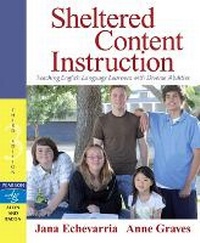
Sheltered Content Instruction
Teaching English Language Learners with Diverse Abilities
3rd Edition
Published on 19. September 2006
Book
Paperback/Softback
208 pages
978-0-205-49325-8 (ISBN)
Description
This book clearly defines, "sheltered instruction," or Specially Designed Academic Instruction in English (SDAIE), and provides strategies for its successful implementation in the K-12 classroom.
Unlike any other book on the market, this popular resource focuses on using sheltered instruction with students of varying abilities, making it a unique tool for teachers. Renowned authors Jana Echevarria and Anne Graves address the important overlap between sheltered instruction and special education adaptations.
The Third Edition of Sheltered Content Instruction captures the vitality of modern classrooms by speaking specifically to instruction in the content areas and confronting the fact that students learning English might struggle in those subjects. The authors provide practical methods that demonstrate how to implement this type of instruction with a full range of learners.
A classic text in the field, the Third Edition of Sheltered Content Instruction is comprehensively revised and updated in a new, full workbook-size format. One important function of the Third Edition is to provide teachers with the support and direction needed to undertake the sheltered approach. Specific examples of sheltered content instruction and scenarios depicting classroom interaction during this type of instruction provide models for teachers and those preparing to teach. Case studies and vignettes illustrate this interaction for the reader.
Unlike any other book on the market, this popular resource focuses on using sheltered instruction with students of varying abilities, making it a unique tool for teachers. Renowned authors Jana Echevarria and Anne Graves address the important overlap between sheltered instruction and special education adaptations.
The Third Edition of Sheltered Content Instruction captures the vitality of modern classrooms by speaking specifically to instruction in the content areas and confronting the fact that students learning English might struggle in those subjects. The authors provide practical methods that demonstrate how to implement this type of instruction with a full range of learners.
A classic text in the field, the Third Edition of Sheltered Content Instruction is comprehensively revised and updated in a new, full workbook-size format. One important function of the Third Edition is to provide teachers with the support and direction needed to undertake the sheltered approach. Specific examples of sheltered content instruction and scenarios depicting classroom interaction during this type of instruction provide models for teachers and those preparing to teach. Case studies and vignettes illustrate this interaction for the reader.
More details
Edition
3rd edition
Language
English
Place of publication
United States
Publishing group
Pearson Education (US)
Target group
Professional and scholarly
Dimensions
Height: 232 mm
Width: 191 mm
Weight
358 gr
ISBN-13
978-0-205-49325-8 (9780205493258)
Copyright in bibliographic data and cover images is held by Nielsen Book Services Limited or by the publishers or by their respective licensors: all rights reserved.
Schweitzer Classification
Other editions
New editions
Jana Echevarria | Anne Graves
Sheltered Content Instruction
Teaching English Language Learners with Diverse Abilities
Book
01/2010
4th Edition
Pearson
€42.08
Article exhausted; check for reprint
Previous edition
Jana Echevarria | Anne Graves
Sheltered Content Instruction
Teaching English-Language Learners with Diverse Abilities
Book
07/2003
2nd Edition
Pearson
€59.60
Article exhausted; check for reprint
Persons
Jana Echevarria, Ph.D., Professor Emerita at California State University, Long Beach, has taught in special education, English as a Second Language and bilingual programs. She has lived in Taiwan and Mexico where she taught ESL and second language acquisition courses at the university level, as well as in Spain where she conducted research on instructional programs for immigrant students. She is an internationally known expert on second language learners and her research and publications focus on effective instruction for English learners, including those with learning disabilities. Selected publications include the books, Making Content Comprehensible for English Learners: The SIOP Model and Sheltered Content Instruction:
Teaching Students With Diverse Abilities, both published by Allyn & Bacon. The SIOP Model of instruction is used widely in all 50 states and a number of countries. Currently, she is a Fulbright Specialist and is Co-Principal Investigator with the Center for Research on the Educational Achievement and Teaching of English Language Learners (CREATE) funded by the U.S. Department of Education. In 2005, Dr.
Echevarria was selected as Outstanding Professor at CSULB.
Anne W. Graves, Ph. D. is a Professor and Chair of the Department of Special Education at San Diego State University. She has teaching and research experience in the schools since 1975. She has conducted numerous research projects on the effects of reading and writing instruction with particular focus on ethnolinguistically diverse students. Her major focus is to develop improved teaching practices for English learners.
Teaching Students With Diverse Abilities, both published by Allyn & Bacon. The SIOP Model of instruction is used widely in all 50 states and a number of countries. Currently, she is a Fulbright Specialist and is Co-Principal Investigator with the Center for Research on the Educational Achievement and Teaching of English Language Learners (CREATE) funded by the U.S. Department of Education. In 2005, Dr.
Echevarria was selected as Outstanding Professor at CSULB.
Anne W. Graves, Ph. D. is a Professor and Chair of the Department of Special Education at San Diego State University. She has teaching and research experience in the schools since 1975. She has conducted numerous research projects on the effects of reading and writing instruction with particular focus on ethnolinguistically diverse students. Her major focus is to develop improved teaching practices for English learners.
Content
All chapters conclude with "Summary," "Activities," and "References."
Preface.
1. Teaching English-Language Learners with Diverse Abilities.
Native Language Knowledge.
English Language Knowledge.
Academic Background and School Experience.
Learning and Behavior Challenges.
Search for Interventions: A 3-Tiered Model.
Student Profiles Revisited.
2. Theoretical and Historical Foundations.
History of Education of Students Learning English in School.
Teaching English Language Learners: Theory to Practice.
Theories of Second-Language Acquisition.
The Contributions of Cummins.
Factors That Affect Second-Language Acquisition.
3. Sheltered Instruction in the Content Areas.
Components of Sheltered Instruction.
Sheltered Instruction and Effective Instruction.
A Comparative Case Study.
4. Affective Issues.
Providing Constructivist Reading and Writing Activities.
Providing Ample Practice and Careful Corrections.
Focusing on Relevant Background Knowledge.
Actively Involving Learners.
Using Alternative Grouping Strategies.
Providing Native Language Support.
Focusing on Content and on Activities That Are Meaningful to Students.
Creating Roles in the Classroom for Family and Community Members.
Holding High Expectations for All Learners.
Being Responsive to Cultural and Personal Diversity.
5. Learning Strategies.
Types of Learning Strategies.
Guidelines for Selecting a Learning Strategy.
Lesson Phases When Teaching Learning Strategies.
Presentation Methods Used to Teach Learning Strategies.
Examples of Specific Strategies in Teaching Reading and Writing in Content Areas.
Teaching Reading Strategies in Content Area Classes.
Teaching Writing Strategies in Content Area Classes.
6. Curriculum Adaptations.
Demonstrating Sensitivity to Cultural and Linguistic Diversity.
Providing Adequate Background Knowledge.
Categorizing Materials as Either Content Knowledge or Academic Proficiency.
Including Both Language Development and Content Vocabulary Development.
Modifying Plans and Texts.
Modifying Assignments.
Assigning Notetaking, Report Writing, Study Sheets and Homework, and Progress Checks.
Using Study Resource Guides.
7. Adjusting Discourse to Enhance Learning.
The Discourse of Sheltered Instruction.
The Discourse of Instructional Conversations.
Theoretical Background.
8. Self Evaluation and Collaborative Implementation.
Self Evaluation and Goal Setting.
Collaboration with School Personnel or Peers.
Index.
Preface.
1. Teaching English-Language Learners with Diverse Abilities.
Native Language Knowledge.
English Language Knowledge.
Academic Background and School Experience.
Learning and Behavior Challenges.
Search for Interventions: A 3-Tiered Model.
Student Profiles Revisited.
2. Theoretical and Historical Foundations.
History of Education of Students Learning English in School.
Teaching English Language Learners: Theory to Practice.
Theories of Second-Language Acquisition.
The Contributions of Cummins.
Factors That Affect Second-Language Acquisition.
3. Sheltered Instruction in the Content Areas.
Components of Sheltered Instruction.
Sheltered Instruction and Effective Instruction.
A Comparative Case Study.
4. Affective Issues.
Providing Constructivist Reading and Writing Activities.
Providing Ample Practice and Careful Corrections.
Focusing on Relevant Background Knowledge.
Actively Involving Learners.
Using Alternative Grouping Strategies.
Providing Native Language Support.
Focusing on Content and on Activities That Are Meaningful to Students.
Creating Roles in the Classroom for Family and Community Members.
Holding High Expectations for All Learners.
Being Responsive to Cultural and Personal Diversity.
5. Learning Strategies.
Types of Learning Strategies.
Guidelines for Selecting a Learning Strategy.
Lesson Phases When Teaching Learning Strategies.
Presentation Methods Used to Teach Learning Strategies.
Examples of Specific Strategies in Teaching Reading and Writing in Content Areas.
Teaching Reading Strategies in Content Area Classes.
Teaching Writing Strategies in Content Area Classes.
6. Curriculum Adaptations.
Demonstrating Sensitivity to Cultural and Linguistic Diversity.
Providing Adequate Background Knowledge.
Categorizing Materials as Either Content Knowledge or Academic Proficiency.
Including Both Language Development and Content Vocabulary Development.
Modifying Plans and Texts.
Modifying Assignments.
Assigning Notetaking, Report Writing, Study Sheets and Homework, and Progress Checks.
Using Study Resource Guides.
7. Adjusting Discourse to Enhance Learning.
The Discourse of Sheltered Instruction.
The Discourse of Instructional Conversations.
Theoretical Background.
8. Self Evaluation and Collaborative Implementation.
Self Evaluation and Goal Setting.
Collaboration with School Personnel or Peers.
Index.