

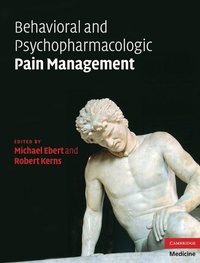
Behavioral and Psychopharmacologic Pain Management
Published on 25. November 2010
Book
Hardback
506 pages
978-0-521-88434-1 (ISBN)
Description
Pain is the most common symptom bringing a patient to a physician's attention. Physicians training in pain medicine may originate from different disciplines and approach the field with varying backgrounds and experience. This book captures the theory and evidence-based practice of behavioral, psychotherapeutic and psychopharmacological treatments in modern pain medicine. The book's contributors span the fields of psychiatry, psychology, anesthesia, neurology, physical medicine and rehabilitation, and nursing. Thus the structure and content of the book convey the interdisciplinary approach that is the current standard for the successful practice of pain management. The book is designed to be used as a text for training fellowships in pain medicine, as well as graduate courses in psychology, nursing, and other health professions.
Reviews / Votes
'Tables and figures throughout the book enhance its value as a reference for any clinician, and it is reasonably priced for a large and comprehensive review of the area. This volume would be my choice to utilize as a text for a seminar on pain. Drs Ebert and Kerns have done our profession a great service by developing such a textbook ...' Journal of Clinical PsychiatryMore details
Language
English
Place of publication
Cambridge
United Kingdom
Target group
Professional and scholarly
Illustrations
45 Tabellen, 24 s/w Abbildungen
45 Tables, black and white; 3 Halftones, black and white; 21 Line drawings, black and white
Dimensions
Height: 260 mm
Width: 208 mm
Thickness: 32 mm
Weight
1296 gr
ISBN-13
978-0-521-88434-1 (9780521884341)
Copyright in bibliographic data and cover images is held by Nielsen Book Services Limited or by the publishers or by their respective licensors: all rights reserved.
Schweitzer Classification
Other editions
Additional editions
Michael H. Ebert | Robert D. Kerns
Behavioral and Psychopharmacologic Pain Management
E-Book
12/2010
1st Edition
Cambridge University Press
€93.49
Available for download
Persons
Michael H. Ebert is Chief of Staff, VA Connecticut Healthcare System, and Associate Dean for VA Affairs and Professor of Psychiatry, Yale University School of Medicine, Guilford, CT, USA. Robert D. Kerns is Professor of Psychiatry, Neurology and Psychology, Yale University, National Program Director for Pain Management, Veterans Health Administration, and Director, Pain Research, Informatics, Medical Comorbidities, and Education (PRIME) Center, VA Connecticut Healthcare System, CT, USA.
Content
Part I. The Basis of Pain Management: 1. Introduction Michael H. Ebert and Robert D. Kerns; 2. The process of pain management June Dahl; 3. The biopsychosocial model of pain and pain management Dennis C. Turk, Hilary Wilson and Kimberly S. Swanson; Part II. The Assessment of Pain: 4. Comprehensive pain assessment: the integration of biopsychosocial principles John J. Sellinger, Stephanie C. Wallio, Elizabeth A. Clark and Robert D. Kerns; 5. Assessment of functioning and disability in pain syndromes Stacy C. Parenteau and Jennifer A. Haythornthwaite; 6. Assessment of pain and psychiatric comorbidities Jon Streltzer; 7. Assessment of emotional functioning in persons with pain Robert D. Kerns and Renata Okonkwo; Part III. Psychopharmacological, Behavioral, and Psychotherapeutic Approaches: 8. Interdisciplinary pain rehabilitation programs Cynthia O. Townsend, Jeffrey D. Rome, Barbara K. Bruce and W. Michael Hooten; 9. Pharmacological approaches to pain management Robin M. Gallagher; 10. Chronic opioid therapy in pain management Howard S. Smith and Charles E. Argoff; 11. Behavioral therapeutic interventions in pain management Steven H. Sanders; 12. Cognitive behavioral therapy in pain management John D. Otis, Donna B. Pincus and Mary E. Murawski; 13. Non-pharmacological neuromodulatory approaches to pain management Gabriel Tan, Mark P. Jensen, Tam K. Dao, Brenda Stoelb and Jay Gunkelman; 14. Cognitive coping strategies in pain management Laura E. Pence, Beverly E. Thorn and Amber M. Davis; 15. Couple and family psychotherapeutic approaches to pain management Annmarie Cano, Jaclyn Heller Issner and Courtney L. Dixon; 16. Psychopharmacological and psychotherapeutic approaches to pain management Raphael J. Leo and Wendy J. Quinton; Part IV. Integrative Approaches to the Management of Painful Medical Conditions: 17. Management of spinal pain Gerald W. Grass; 18. Management of musculoskeletal pain Akiko Okifuji and Bradford D. Hare; 19. Management of pain in arthritis Raphael J. Leo and Thomas J. Romano; 20. Management of neuropathic pain Robert L. Ruff and Suzanne S. Ruff; 21. Management of headache pain Donald B. Penzien, Morris Maizels and Jeanetta C. Rains; 22. Management of pain in palliative medicine Victor T. Chang, Brooke Myers-Sorger, Lawrence J. Weinberger, Mark E. Jones and Ellyn Poltrock Stein; 23. Pain-associated disability syndrome in children and adolescents Gerard A. Banez; 24. Management of pain in geriatric patients Stephen Thielke and M. Carrington Reid; Part V. Practice, Policy, and Research: 25. Policy and practice issues in pain management Samantha Boris-Karpel; 26. Diversity and disparities in pain management Carmen R. Green and Alexandra S. Bullough; 27. Directions in pain research: contemporary questions and methods David A. Williams and Daniel J. Clauw; 28. Ethics and pain management Ingra Schellenberg and Mark D. Sullivan; 29. Future directions of the field of pain management Michael H. Ebert and Robert D. Kerns; Index.