

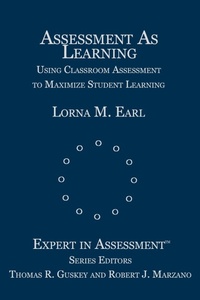
Assessment As Learning
Using Classroom Assessment to Maximize Student Learning
1st Edition
Published on 12. August 2003
Book
Hardback
152 pages
978-0-7619-4625-0 (ISBN)
Description
Take the confusion out of assessment, and make it work to enhance the learning process-every day!
Assessment and evaluation are central to educational reform, and they represent major shifts in thinking about learning, about schools, and about teaching. Assessment as Learning represents one of these crucial changes, but it encompasses more than just using a variety of new techniques. The concept of Assessment as Learning allows teachers to use their judgment about children's understanding to inform the teaching process and to determine what to do for individual children.
This timely resource takes the mystery and confusion out of assessment by reframing its purpose in student evaluation and learning. It will provide teachers and school and district administrators with:
Mechanisms for effective use of assessment as learning in a variety of contexts
Compelling, real-life examples and case studies drawn from the author's own experiences
Sample rubrics and lesson plans as well as "Ideas for Follow-up" at the end of each chapter
An understanding of the possible confusion surrounding assessment and its place in the learning process
A detailed discussion of the changing role of schooling and our increasing knowledge about the complex nature of learning
Learn to embrace assessment, not just as a tool for student evaluation, but as a valuable strategy for everyday classroom learning.
Assessment and evaluation are central to educational reform, and they represent major shifts in thinking about learning, about schools, and about teaching. Assessment as Learning represents one of these crucial changes, but it encompasses more than just using a variety of new techniques. The concept of Assessment as Learning allows teachers to use their judgment about children's understanding to inform the teaching process and to determine what to do for individual children.
This timely resource takes the mystery and confusion out of assessment by reframing its purpose in student evaluation and learning. It will provide teachers and school and district administrators with:
Mechanisms for effective use of assessment as learning in a variety of contexts
Compelling, real-life examples and case studies drawn from the author's own experiences
Sample rubrics and lesson plans as well as "Ideas for Follow-up" at the end of each chapter
An understanding of the possible confusion surrounding assessment and its place in the learning process
A detailed discussion of the changing role of schooling and our increasing knowledge about the complex nature of learning
Learn to embrace assessment, not just as a tool for student evaluation, but as a valuable strategy for everyday classroom learning.
More details
Series
Edition
First Edition
Language
English
Place of publication
Thousand Oaks
United States
Target group
Professional and scholarly
Dimensions
Height: 260 mm
Width: 183 mm
Thickness: 13 mm
Weight
494 gr
ISBN-13
978-0-7619-4625-0 (9780761946250)
Copyright in bibliographic data and cover images is held by Nielsen Book Services Limited or by the publishers or by their respective licensors: all rights reserved.
Schweitzer Classification
Other editions
Additional editions
Book
08/2003
1st Edition
Corwin Press Inc
€30.60
Article exhausted; check for reprint
Person
Lorna M. Earl is a director of Aporia Consulting Ltd. and a retired associate professor from the Department of Theory and Policy Studies at the Ontario Institute for Studies in Education of the University of Toronto. She was the first director of assessment for the Ontario Education Quality and Accountability Office, and she as been a researcher and research director in school districts for over 20 years.
Throughout her career, Earl has concentrated her efforts on policy and program evaluations as a vehicle to enhance learning for pupils and for organizations. She has done extensive work in the areas of literacy and the middle years, but has concentrated her efforts on issues related to evaluation of large-scale reform and assessment (large-scale and classroom) in many venues around the world. She has worked extensively in schools and school boards, and has been involved in consultation, research, and staff development with teachers' organizations, ministries of education, school districts, and charitable foundations. Earl holds a doctorate in epidemiology and biostatistics, as well as degrees in education and psychology.
Throughout her career, Earl has concentrated her efforts on policy and program evaluations as a vehicle to enhance learning for pupils and for organizations. She has done extensive work in the areas of literacy and the middle years, but has concentrated her efforts on issues related to evaluation of large-scale reform and assessment (large-scale and classroom) in many venues around the world. She has worked extensively in schools and school boards, and has been involved in consultation, research, and staff development with teachers' organizations, ministries of education, school districts, and charitable foundations. Earl holds a doctorate in epidemiology and biostatistics, as well as degrees in education and psychology.
Content
Series Editors' Introduction
Preface
About the Author
1. The Evolution of Assessment
"The Case of Standards-Based Assessment"
Defining the Future
Ideas for Follow-Up
2. Rethinking Assessment
A Brief History of Assessment
Looking for Change in All the Wrong Places
Rethinking Assessment for Real Change
Purpose is Everything
Taking Up the Challenge
Classroom Assessment and Large-Scale Reform
Ideas for Follow-Up
3. Assessment of Learning, for Learning, and as Learning
Assessment of Learning
Assessment for Learning
Assessment as Learning
Getting the Balance Right
Ideas for Follow-Up
4. A Focus on Learning
Learning for Understanding
Learning Is Hard Work
Learning Happens in Context
Ideas for Follow-Up
5. Assessment and Learning
How Does Assessment Contribute to Learning?
This is Not Just About Assessment
Ideas for Follow-Up
6. Using Assessment to Identify What Students Believe to Be True
"The Case of the Pool Table"
Start With What Students Believe to Be True
"The Case of the Bog"
Ideas for Follow-Up
7. Using Assessment to Motivate Learning
Assessment That Motivates
"The Case of Othello"
Assessment to Reverse Socialization
Ideas for Follow-Up
8. Using Assessment to Make Connections
Curricula as Visible Targets for Learning
Plan Learning, Plan Assessment, and Expect the Unexpected
"The Case of the Literacy Hour"
Differentiation
Ideas for Follow-Up
9. Using Assessment to Extend Learning
Feedback for Learning
Rubrics and Exemplars as Tools
"The Case of the Brass Band"
Ideas, Connections and Extensions (ICE)
Ideas for Follow-Up
10. Using Assessment for Reflection And Self-Monitoring
"The Case of Jojo"
Students as Their Own Best Assessors
Developing Self-Evaluation Habits of Mind
"The Case of Choices"
Ideas for Follow-Up
11.Using Assessment for Optimum Learning
Think About What You Believe to Be True
Learn About Learning
Know Your Subject
Be an Expert Teacher
Work Together
Be Gentle With Yourself, But Don't Give Up
Self-Monitoring and Self-Development for You, Too
Get the Support You Need
Put It All Together
References
Index
Preface
About the Author
1. The Evolution of Assessment
"The Case of Standards-Based Assessment"
Defining the Future
Ideas for Follow-Up
2. Rethinking Assessment
A Brief History of Assessment
Looking for Change in All the Wrong Places
Rethinking Assessment for Real Change
Purpose is Everything
Taking Up the Challenge
Classroom Assessment and Large-Scale Reform
Ideas for Follow-Up
3. Assessment of Learning, for Learning, and as Learning
Assessment of Learning
Assessment for Learning
Assessment as Learning
Getting the Balance Right
Ideas for Follow-Up
4. A Focus on Learning
Learning for Understanding
Learning Is Hard Work
Learning Happens in Context
Ideas for Follow-Up
5. Assessment and Learning
How Does Assessment Contribute to Learning?
This is Not Just About Assessment
Ideas for Follow-Up
6. Using Assessment to Identify What Students Believe to Be True
"The Case of the Pool Table"
Start With What Students Believe to Be True
"The Case of the Bog"
Ideas for Follow-Up
7. Using Assessment to Motivate Learning
Assessment That Motivates
"The Case of Othello"
Assessment to Reverse Socialization
Ideas for Follow-Up
8. Using Assessment to Make Connections
Curricula as Visible Targets for Learning
Plan Learning, Plan Assessment, and Expect the Unexpected
"The Case of the Literacy Hour"
Differentiation
Ideas for Follow-Up
9. Using Assessment to Extend Learning
Feedback for Learning
Rubrics and Exemplars as Tools
"The Case of the Brass Band"
Ideas, Connections and Extensions (ICE)
Ideas for Follow-Up
10. Using Assessment for Reflection And Self-Monitoring
"The Case of Jojo"
Students as Their Own Best Assessors
Developing Self-Evaluation Habits of Mind
"The Case of Choices"
Ideas for Follow-Up
11.Using Assessment for Optimum Learning
Think About What You Believe to Be True
Learn About Learning
Know Your Subject
Be an Expert Teacher
Work Together
Be Gentle With Yourself, But Don't Give Up
Self-Monitoring and Self-Development for You, Too
Get the Support You Need
Put It All Together
References
Index