

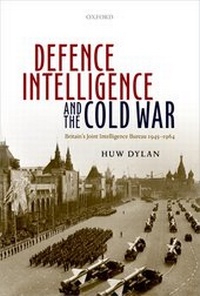
Defence Intelligence and the Cold War
Britain's Joint Intelligence Bureau 1945-1964
Published on 30. October 2014
Book
Hardback
258 pages
978-0-19-965702-5 (ISBN)
Description
During the Second World War British intelligence provided politicians and soldiers with invaluable knowledge. Britain was determined to maintain this advantage following victory, but the wartime machinery was uneconomical, unwieldy, and unsuitable for peace. Drawing on oral testimony, international archives, and private papers, Defence Intelligence and the Cold War provides the first history of the hitherto little-known organisation designed to preserve and advance British capability in military and military-related intelligence for the Cold War: the Joint Intelligence Bureau (JIB).
Headed by General Eisenhower's wartime intelligence man, Major General Kenneth Strong, the JIB was central to the mission to spy on and understand the Soviet Union, and the broader Communist world. It did so from its creation in 1946 to its end in 1964, when it formed a central component of the new Defence Intelligence Staff. This volume reveals hitherto hidden aspects of Britain's mission to map the Soviet Union for nuclear war, the struggle to understand and contain the economies of the USSR, China, and North Korea in peace and during the Korean War, and the urgent challenge to understand the nature and scale of the Soviet bomber and missile threat in the 1950s and 1960s. The JIB's dedicated work in these fields won it the support of some politicians and military men, but the enmity of others who saw the centralised organisation as a threat to traditional military intelligence. The intelligence officers of the JIB waged Cold War not only with Communist adversaries but also in Whitehall.
Headed by General Eisenhower's wartime intelligence man, Major General Kenneth Strong, the JIB was central to the mission to spy on and understand the Soviet Union, and the broader Communist world. It did so from its creation in 1946 to its end in 1964, when it formed a central component of the new Defence Intelligence Staff. This volume reveals hitherto hidden aspects of Britain's mission to map the Soviet Union for nuclear war, the struggle to understand and contain the economies of the USSR, China, and North Korea in peace and during the Korean War, and the urgent challenge to understand the nature and scale of the Soviet bomber and missile threat in the 1950s and 1960s. The JIB's dedicated work in these fields won it the support of some politicians and military men, but the enmity of others who saw the centralised organisation as a threat to traditional military intelligence. The intelligence officers of the JIB waged Cold War not only with Communist adversaries but also in Whitehall.
Reviews / Votes
well researched, using a rich pool of sources and seeming to overcome the inherent difficulties of accessing material related to intelligence issues ... a well written and thorough treatise of a not well known area of British intelligence * Paschalis Pechlivanis, European University Institute, European Review of History *More details
Language
English
Place of publication
Oxford
United Kingdom
Target group
College/higher education
Illustrations
1 black and white image
Dimensions
Height: 241 mm
Width: 162 mm
Thickness: 22 mm
Weight
548 gr
ISBN-13
978-0-19-965702-5 (9780199657025)
Copyright in bibliographic data and cover images is held by Nielsen Book Services Limited or by the publishers or by their respective licensors: all rights reserved.
Schweitzer Classification
Other editions
Additional editions
E-Book
10/2014
1st Edition
OUP eBook
€64.49
Available for download
Person
He received his PhD from the University of Aberystwyth in 2010.
Content
Introduction ; 1. All-source intelligence for the post-war world: Creating the JIB ; 2. Mapping the enemy: The JIB and topographical intelligence in the early Cold War, 1948-1953 ; 3. Starving the Bear and the Dragon: The JIB and British export controls, 1948-1954 ; 4. The Soviet airborne threat: The JIB on bombers and missiles, 1946-1954 ; 5. The age of vulnerability and 'gaps': The JIB on bombers and missiles, 1954-1961 ; 6. Networks, connections, and links: The international JIB ; 7. The merger of JIB with service intelligence and the creation of the Defence Intelligence Staff ; Conclusion