

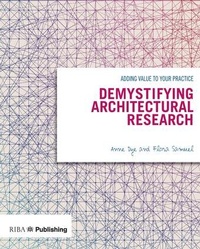
Demystifying Architectural Research
Adding value to your practice
1st Edition
Published on 9. November 2015
Book
Paperback/Softback
176 pages
978-1-85946-578-3 (ISBN)
Description
This practical, hands on introduction guides you through the basics of undertaking research in day-to-day architectural practice helping you to exploit the growing opportunities on offer. It explores how developing a research specialism can improve the quality of your projects, help to define your brand and generate new channels of revenue with innovative services for clients.
The text is divided into four sections focussing on different types of Architecture Research Practice; commercial, cultural, social and technology. Each section includes a series of inspiring case studies written by practitioners themselves on the way in which research benefits their business as well as an essay by an expert which sets these projects in their methodological context. In this way the book highlights the broad spectrum of research being undertaken and the practical implications for the practice and their projects.
This is designed for architects and practices who want to develop a clear specialism that adds brand value and will enable them to access new funding streams as well as students of architecture who are getting to grips with architectural research. This book will inspire cutting edge and innovative architectural practice that can clearly demonstrate its impact and value to non-architect clients.
The text is divided into four sections focussing on different types of Architecture Research Practice; commercial, cultural, social and technology. Each section includes a series of inspiring case studies written by practitioners themselves on the way in which research benefits their business as well as an essay by an expert which sets these projects in their methodological context. In this way the book highlights the broad spectrum of research being undertaken and the practical implications for the practice and their projects.
This is designed for architects and practices who want to develop a clear specialism that adds brand value and will enable them to access new funding streams as well as students of architecture who are getting to grips with architectural research. This book will inspire cutting edge and innovative architectural practice that can clearly demonstrate its impact and value to non-architect clients.
More details
Language
English
Place of publication
London
United Kingdom
Target group
College/higher education
Professional and scholarly
Professional Practice & Development
Dimensions
Height: 216 mm
Width: 170 mm
Weight
364 gr
ISBN-13
978-1-85946-578-3 (9781859465783)
Copyright in bibliographic data and cover images is held by Nielsen Book Services Limited or by the publishers or by their respective licensors: all rights reserved.
Schweitzer Classification
Other editions
Additional editions
E-Book
07/2019
1st Edition
RIBA Publishing
€43.49
Available for download
E-Book
07/2019
1st Edition
RIBA Publishing
€43.49
Available for download
Persons
Anne Dye is Head of Technical Research at the RIBA, responsible for delivering the research agenda in alliance with the RIBA Research and Innovation Group. This includes the development, support and promotion of a range of strategic built-environment research projects both within the RIBA, in partnership with other organisations and within the wider research community, as well as providing advocacy for research to key stakeholders. Flora Samuel is an Architect and Professor of Architecture at the University of Sheffield and formerly Head of School. Her mission is supporting architectural practitioners in evidencing and communicating their value through research. She is leader of the Arts and Humanities Research Council funded 'Evidencing and Communicating the Value of Architects'. Her last project 'Home Improvements' - shortlisted for the 2014 RIBA President's Awards for Research - funded the production of the RIBA's Report on Housing Research in Practice, the RIBA Practice Research Guide, the RIBA/SCHOSA Guide to University Located Research as well as three practice collaborative projects with Urbed, Ash Sakula and Satellite Architects. Samuel is incoming Chair of the RIBA Research and Innovation Group and the European research network ARENA where her specialist area is Architecture Practice Research. She has also published five books on Le Corbusier, two of them shortlisted for RIBA Research Awards. She also works as a consultant in developing research in practice.
Content
Foreword
Preface
Introduction
Part 1: Social Architecture Research Practice
Chapter 1: Visioning - John Sampson, Urbed
Chapter 2: Neighbourhood retrofitting - Irena Bauman, Bauman Lyons
Chapter 4: Co-design for new lifestyles - Jane Burnside, Jane D Burnside Architects
Chapter 5: Collective Architecture - Jude Barber, Collective Architecture
Chapter 6: Specific Strategies in Practice - Richard Cottrell, Cottrell and Vermeulen
Chapter 7: Methods in social architecture research practice, Julia Udall
Part 2: Technology
Chapter 8: Angela Carter Close - Anne Thorne, Cartwright Pickard
Chapter 9: Information systems for sustainable design - Merritt Bucholz, Bucholz McEvoy
Chapter 10: Lime and Materials --Ian Standen, Stride Treglown
Chapter 11: Sustainable building materials for commercial projects - Chris Halligan, Steven George and Partners
Chapter 12: Sandal Magna School - Sarah Wigglesworth, Architects
Chapter 13: Methods progressing technology, Fionn Stevenson
Part 3: Commercial practice
Chapter 14: Procurement - Walter Menteth, Walter Menteth Architects
Chapter 15: Marketing architecture - Paul Iddon, Kernel Sympatico
Chapter 16: Working as an expert witness - Gordon Gibb, Gibb Architects
Chapter 17: Commercial methods - Peter Oborn and Anne Dye
Part 4: Cultural
Chapter 18: Sculpture and architecture in the modern city - Patrick Lynch, Lynch Architects
Chapter 19: Performance and art - Helen Stratford, Mole architects
Chapter 20: Pop-up buildings in the city - Tony Broomhead, Broomheads Homemade
Chapter 21: Responding to the Welsh landscape at Stormy Castle - Dan Benham, Loyn & Co.
Chapter 22: Neo-Vernacular Housing - Gillian Horne, Penoyre and Prasad
Chapter 23: Cultural methods - Steven Walker
Conclusion
Useful resources
Bibliography
Preface
Introduction
Part 1: Social Architecture Research Practice
Chapter 1: Visioning - John Sampson, Urbed
Chapter 2: Neighbourhood retrofitting - Irena Bauman, Bauman Lyons
Chapter 4: Co-design for new lifestyles - Jane Burnside, Jane D Burnside Architects
Chapter 5: Collective Architecture - Jude Barber, Collective Architecture
Chapter 6: Specific Strategies in Practice - Richard Cottrell, Cottrell and Vermeulen
Chapter 7: Methods in social architecture research practice, Julia Udall
Part 2: Technology
Chapter 8: Angela Carter Close - Anne Thorne, Cartwright Pickard
Chapter 9: Information systems for sustainable design - Merritt Bucholz, Bucholz McEvoy
Chapter 10: Lime and Materials --Ian Standen, Stride Treglown
Chapter 11: Sustainable building materials for commercial projects - Chris Halligan, Steven George and Partners
Chapter 12: Sandal Magna School - Sarah Wigglesworth, Architects
Chapter 13: Methods progressing technology, Fionn Stevenson
Part 3: Commercial practice
Chapter 14: Procurement - Walter Menteth, Walter Menteth Architects
Chapter 15: Marketing architecture - Paul Iddon, Kernel Sympatico
Chapter 16: Working as an expert witness - Gordon Gibb, Gibb Architects
Chapter 17: Commercial methods - Peter Oborn and Anne Dye
Part 4: Cultural
Chapter 18: Sculpture and architecture in the modern city - Patrick Lynch, Lynch Architects
Chapter 19: Performance and art - Helen Stratford, Mole architects
Chapter 20: Pop-up buildings in the city - Tony Broomhead, Broomheads Homemade
Chapter 21: Responding to the Welsh landscape at Stormy Castle - Dan Benham, Loyn & Co.
Chapter 22: Neo-Vernacular Housing - Gillian Horne, Penoyre and Prasad
Chapter 23: Cultural methods - Steven Walker
Conclusion
Useful resources
Bibliography