

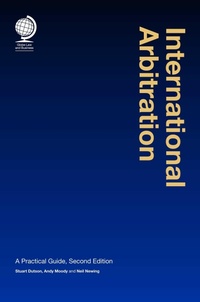
International Arbitration
A Practical Guide, 2nd ed
2nd Edition
Published on 31. January 2019
Book
Hardback
298 pages
978-1-78742-160-8 (ISBN)
Description
The global increase in cross-border transactions has led to a rising trend in international disputes. International arbitration has become the preferred dispute resolution method, as companies and individuals increasingly favour a neutral international tribunal over foreign domestic courts.
This new edition provides a practical guide to international arbitration. Written by leading experts Stuart Dutson from Simmons & Simmons, Andy Moody from Baker McKenzie and Neil Newing from Signature Litigation, this title explains the stages of the arbitration process in a straightforward manner and from a practitioner's perspective. The authors provide guidance on drafting the arbitration agreement, commencing arbitration, selecting the arbitral tribunal, drafting pleadings and evidence, managing oral hearings, liaising with the tribunal throughout the arbitral process and enforcing the final award.
Numerous tips, examples and precedents are included to help the new practitioner or interested student understand each stage of the arbitration proceedings.
The second edition provides an update to take into account the rule changes that have been adopted by arbitral institutions in the six years since the first edition was published, and to include up-to-date guidance on topical issues such as: third party funding in international arbitration; the increase in the number of multi-party arbitrations; procedural trends including the adoption of expedited timetables and guidance around the use of tribunal secretaries; and issues of ethics applicable to counsel and tribunals in cross-border disputes.
This new edition provides a practical guide to international arbitration. Written by leading experts Stuart Dutson from Simmons & Simmons, Andy Moody from Baker McKenzie and Neil Newing from Signature Litigation, this title explains the stages of the arbitration process in a straightforward manner and from a practitioner's perspective. The authors provide guidance on drafting the arbitration agreement, commencing arbitration, selecting the arbitral tribunal, drafting pleadings and evidence, managing oral hearings, liaising with the tribunal throughout the arbitral process and enforcing the final award.
Numerous tips, examples and precedents are included to help the new practitioner or interested student understand each stage of the arbitration proceedings.
The second edition provides an update to take into account the rule changes that have been adopted by arbitral institutions in the six years since the first edition was published, and to include up-to-date guidance on topical issues such as: third party funding in international arbitration; the increase in the number of multi-party arbitrations; procedural trends including the adoption of expedited timetables and guidance around the use of tribunal secretaries; and issues of ethics applicable to counsel and tribunals in cross-border disputes.
Reviews / Votes
Written with the practitioner in mind, the book is logically organised, with a detailed table of contents and index, plus the time-saving feature of useful tips galore, highlighted in boxed shaded sections throughout. -- Phillip Taylor MBE * Richmond Chambers *More details
Edition
2nd edition
Language
English
Place of publication
London
United Kingdom
Target group
Professional and scholarly
Product notice
sewn/stitched
Cloth over boards
Dimensions
Height: 234 mm
Width: 156 mm
Thickness: 24 mm
Weight
607 gr
ISBN-13
978-1-78742-160-8 (9781787421608)
Copyright in bibliographic data and cover images is held by Nielsen Book Services Limited or by the publishers or by their respective licensors: all rights reserved.
Schweitzer Classification
Other editions
Additional editions
E-Book
01/2019
2nd Edition
Globe Law and Business
€173.99
Available for download
Previous edition
Book
01/2013
1st Edition
Globe Law and Business Ltd
€175.30
Article exhausted; check for reprint
Persons
By Stuart Dutson; Andy Moody and Neil Newing
Content
Preface 5
1. What is international arbitration? 7
1. The difference between arbitration and other methods of dispute resolution . . . . . . . . . . . . . . . . . 8
2. Why use international arbitration? . . . . . . . . . . . . . . . . . . . . . . . . . . . . . . 15
3. Types of international arbitration . . . . . . . . . . . . . . . . . . . . . . . . . . . . . . . . 20
4. Diversity in international arbitration . . . . . . . . . . . . . . . . . . . . . . . . . . . . . . . . 23
2. The legal framework 25
1. The New York Convention . . . . 25
2. National arbitration laws . . . . . . . 27
3. Major institutional arbitration rules . . . . . . . . . . . . . . . . . . . . . . . 30
4. Internationally accepted rules and guidelines . . . . . . . . . . . . . . . . 40
3. The legal effect of agreeing to arbitrate 45
1. The arbitration agreement . . . . . 45
2. The legal effect of agreeing to arbitration . . . . . . . . . . . . . . . . . . . . . . . . . . . 48
3. Jurisdiction and an arbitrator's powers . . . . . . . . . . . . . . . . . . 49
4. Arbitrability . . . . . . . . . . . . . . . . . . . . . . . . . . . . . 53
4. Drafting arbitration clauses 55
1. Essential matters to include in an arbitration clause . . . . . . . . . . 55
2. Optional matters to include in an arbitration clause . . . . . . . . . . 64
3. Pathological arbitration agreements . . . . . . . . . . . . . . . . . . . . . . . . . . . . . . . 72
4. Model arbitration clauses . . . . . . . 73
5. Expedited arbitration . . . . . . . . . . . . . . 73
5. Pre-commencement of arbitral proceedings 83
1. Introduction . . . . . . . . . . . . . . . . . . . . . . . . . . . . 83
2. When to commence arbitration . . . . . . . . . . . . . . . . . . . . . . . . . . . . . . . . 83
3. Gathering evidence . . . . . . . . . . . . . . . . . 91
4. Other pre-commencement steps . . . . . . . . . . . . . . . . . . . . . . . . . . . . . . . . . . . . . . . . . . 99
6. Commencing an arbitration 111
1. Whether to be claimant or respondent . . . . . . . . . . . . . . . . . . . . . . . . 111
2. How to start an arbitration proceeding . . . . . . . . . . . . . . . . . . . . . . . . . . . . . 112
3. Jurisdictional challenges . . . . . . 119
4. Urgent interlocutory relief: emergency measures and emergency arbitrators . . . . . . . . . . . 124
7. Selecting the tribunal or arbitrator 131
1. Criteria required from arbitrators . . . . . . . . . . . . . . . . . . . . . . . . . . . . . . 131
2. How to choose an arbitrator . . . . . . . . . . . . . . . . . . . . . . . . . . . . . . . . 135
3. Number of arbitrators . . . . . . . . . . 137
4. Methods of selection . . . . . . . . . . . . 138
5. Frustration, delay and default . . . . . . . . . . . . . . . . . . . . . . . . . . . . . . . . . . . . 141
6. Confirmation of appointment and constitution of the tribunal . . . . . . . . . . . . . . . . . . . . . . . . . . . . 141
8. Dealing with the tribunal 143
1. Contacting the tribunal . . . . . . . 143
2. Administrative secretaries . . . . 145
3. Keeping the tribunal informed . . . . . . . . . . . . . . . . . . . . . . . . . . . . . . . . 145
4. Unresponsive tribunals . . . . . . . . 147
5. Suspicions of bribery, corruption or money laundering . . . . . . . . . . . . . . . . . . . . . . . . . . . . . 147
9. Establishing procedure 151
1. Establishing the procedural timetable and conduct of the arbitration . . . . . . . . . . . . . . . . . . . . . . . 151
2. ICC Terms of Reference . . . . . . . . 152
3. Agreeing the procedural timetable . . . . . . . . . . . . . . . . . . . . . . . . . . . . . . . . 159
4. Amendments to theprocedural timetable . . . . . . . . . . . . 172
10. Interlocutory applications and provisional measures 179
1. Interim, conservatory or provisional measures . . . . . . . . . . . . 179
2. Court or tribunal? . . . . . . . . . . . . . . . . . 180
3. Types of application . . . . . . . . . . . . . 181
4. Making the application . . . . . . . . 183
5. Default and summary procedures . . . . . . . . . . . . . . . . . . . . . . . . . . . . . 188
11. Developing the case 189
1. Written submissions . . . . . . . . . . . . . 189
2. Evidence . . . . . . . . . . . . . . . . . . . . . . . . . . . . . . . . . 200
12. The hearing 217
1. Practical arrangements for the hearing . . . . . . . . . . . . . . . . . . . . . . 217
2. Procedure at the hearing . . . . . . 221
3. Closing oral submissions versus written post-hearing submissions . . . . . . . . . . . . . . . . . . . . . . . . . . . 227
13. Costs 237
1. Overview . . . . . . . . . . . . . . . . . . . . . . . . . . . . . . . . 237
2. Costs of arbitration . . . . . . . . . . . . . . . 238
3. Applications for costs . . . . . . . . . . . 240
14. After the hearing 251
1. The award . . . . . . . . . . . . . . . . . . . . . . . . . . . . . . 251
2. Enforcing the award . . . . . . . . . . . . . 253
3. Challenging enforcement at the place where it is sought . . . . . . . . . . . . . . . . . . . . . . . . . . . . . . . . . 257
4. Challenging the award at the seat of arbitration . . . . . . 262
5. Correcting an award . . . . . . . . . . . . . 268
15. Table comparing key provisions of arbitration rules 271
About the authors 287
Index 289
1. What is international arbitration? 7
1. The difference between arbitration and other methods of dispute resolution . . . . . . . . . . . . . . . . . 8
2. Why use international arbitration? . . . . . . . . . . . . . . . . . . . . . . . . . . . . . . 15
3. Types of international arbitration . . . . . . . . . . . . . . . . . . . . . . . . . . . . . . . . 20
4. Diversity in international arbitration . . . . . . . . . . . . . . . . . . . . . . . . . . . . . . . . 23
2. The legal framework 25
1. The New York Convention . . . . 25
2. National arbitration laws . . . . . . . 27
3. Major institutional arbitration rules . . . . . . . . . . . . . . . . . . . . . . . 30
4. Internationally accepted rules and guidelines . . . . . . . . . . . . . . . . 40
3. The legal effect of agreeing to arbitrate 45
1. The arbitration agreement . . . . . 45
2. The legal effect of agreeing to arbitration . . . . . . . . . . . . . . . . . . . . . . . . . . . 48
3. Jurisdiction and an arbitrator's powers . . . . . . . . . . . . . . . . . . 49
4. Arbitrability . . . . . . . . . . . . . . . . . . . . . . . . . . . . . 53
4. Drafting arbitration clauses 55
1. Essential matters to include in an arbitration clause . . . . . . . . . . 55
2. Optional matters to include in an arbitration clause . . . . . . . . . . 64
3. Pathological arbitration agreements . . . . . . . . . . . . . . . . . . . . . . . . . . . . . . . 72
4. Model arbitration clauses . . . . . . . 73
5. Expedited arbitration . . . . . . . . . . . . . . 73
5. Pre-commencement of arbitral proceedings 83
1. Introduction . . . . . . . . . . . . . . . . . . . . . . . . . . . . 83
2. When to commence arbitration . . . . . . . . . . . . . . . . . . . . . . . . . . . . . . . . 83
3. Gathering evidence . . . . . . . . . . . . . . . . . 91
4. Other pre-commencement steps . . . . . . . . . . . . . . . . . . . . . . . . . . . . . . . . . . . . . . . . . . 99
6. Commencing an arbitration 111
1. Whether to be claimant or respondent . . . . . . . . . . . . . . . . . . . . . . . . 111
2. How to start an arbitration proceeding . . . . . . . . . . . . . . . . . . . . . . . . . . . . . 112
3. Jurisdictional challenges . . . . . . 119
4. Urgent interlocutory relief: emergency measures and emergency arbitrators . . . . . . . . . . . 124
7. Selecting the tribunal or arbitrator 131
1. Criteria required from arbitrators . . . . . . . . . . . . . . . . . . . . . . . . . . . . . . 131
2. How to choose an arbitrator . . . . . . . . . . . . . . . . . . . . . . . . . . . . . . . . 135
3. Number of arbitrators . . . . . . . . . . 137
4. Methods of selection . . . . . . . . . . . . 138
5. Frustration, delay and default . . . . . . . . . . . . . . . . . . . . . . . . . . . . . . . . . . . . 141
6. Confirmation of appointment and constitution of the tribunal . . . . . . . . . . . . . . . . . . . . . . . . . . . . 141
8. Dealing with the tribunal 143
1. Contacting the tribunal . . . . . . . 143
2. Administrative secretaries . . . . 145
3. Keeping the tribunal informed . . . . . . . . . . . . . . . . . . . . . . . . . . . . . . . . 145
4. Unresponsive tribunals . . . . . . . . 147
5. Suspicions of bribery, corruption or money laundering . . . . . . . . . . . . . . . . . . . . . . . . . . . . . 147
9. Establishing procedure 151
1. Establishing the procedural timetable and conduct of the arbitration . . . . . . . . . . . . . . . . . . . . . . . 151
2. ICC Terms of Reference . . . . . . . . 152
3. Agreeing the procedural timetable . . . . . . . . . . . . . . . . . . . . . . . . . . . . . . . . 159
4. Amendments to theprocedural timetable . . . . . . . . . . . . 172
10. Interlocutory applications and provisional measures 179
1. Interim, conservatory or provisional measures . . . . . . . . . . . . 179
2. Court or tribunal? . . . . . . . . . . . . . . . . . 180
3. Types of application . . . . . . . . . . . . . 181
4. Making the application . . . . . . . . 183
5. Default and summary procedures . . . . . . . . . . . . . . . . . . . . . . . . . . . . . 188
11. Developing the case 189
1. Written submissions . . . . . . . . . . . . . 189
2. Evidence . . . . . . . . . . . . . . . . . . . . . . . . . . . . . . . . . 200
12. The hearing 217
1. Practical arrangements for the hearing . . . . . . . . . . . . . . . . . . . . . . 217
2. Procedure at the hearing . . . . . . 221
3. Closing oral submissions versus written post-hearing submissions . . . . . . . . . . . . . . . . . . . . . . . . . . . 227
13. Costs 237
1. Overview . . . . . . . . . . . . . . . . . . . . . . . . . . . . . . . . 237
2. Costs of arbitration . . . . . . . . . . . . . . . 238
3. Applications for costs . . . . . . . . . . . 240
14. After the hearing 251
1. The award . . . . . . . . . . . . . . . . . . . . . . . . . . . . . . 251
2. Enforcing the award . . . . . . . . . . . . . 253
3. Challenging enforcement at the place where it is sought . . . . . . . . . . . . . . . . . . . . . . . . . . . . . . . . . 257
4. Challenging the award at the seat of arbitration . . . . . . 262
5. Correcting an award . . . . . . . . . . . . . 268
15. Table comparing key provisions of arbitration rules 271
About the authors 287
Index 289