

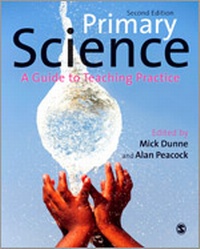
Primary Science
A Guide to Teaching Practice
2nd Edition
Published on 7. November 2014
Book
Hardback
312 pages
978-1-4462-9508-3 (ISBN)
Description
Why is science hard to teach? What types of scientific investigation can you use in the primary classroom?
Touching on current curriculum concerns and the wider challenges of developing high-quality science education, this book is an indispensable overview of important areas of teaching every aspiring primary school teacher needs to understand including: the role of science in the curriculum, communication and literacy in science teaching, science outside the classroom, transitional issues and assessment.
Key features of this second edition include:
* A new chapter on science in the Early Years
* A new practical chapter on how to work scientifically
* Master's-level 'critical reading' boxes in every chapter linking topics to relevant specialist literature
* Expanded coverage of creativity, and link science to numeracy and computing
This is essential reading for all students studying primary science on initial teacher education courses, including undergraduate (BEd, BA with QTS), postgraduate (PGCE, School Direct, SCITT), and also NQTs.
Mick Dunne is Senior Lecturer in Science Education at Manchester Metropolitan University
Alan Peacock is Honorary Research Fellow at the University of Exeter
Touching on current curriculum concerns and the wider challenges of developing high-quality science education, this book is an indispensable overview of important areas of teaching every aspiring primary school teacher needs to understand including: the role of science in the curriculum, communication and literacy in science teaching, science outside the classroom, transitional issues and assessment.
Key features of this second edition include:
* A new chapter on science in the Early Years
* A new practical chapter on how to work scientifically
* Master's-level 'critical reading' boxes in every chapter linking topics to relevant specialist literature
* Expanded coverage of creativity, and link science to numeracy and computing
This is essential reading for all students studying primary science on initial teacher education courses, including undergraduate (BEd, BA with QTS), postgraduate (PGCE, School Direct, SCITT), and also NQTs.
Mick Dunne is Senior Lecturer in Science Education at Manchester Metropolitan University
Alan Peacock is Honorary Research Fellow at the University of Exeter
Reviews / Votes
What a helpful book. It covers the current issues in primary science education, providing an overview and dealing with the detail, identifying the areas that teachers and student teachers find most challenging and offering valuable guidance. It is challenging and reassuring, thought-provoking and enjoyable. I can't recommend it too highly. -- Stuart Naylor What a good read. This book covers everything an aspiring teacher would want from a Primary Science publication. Inspirational writers, clearly defined introductions to each chapter, insight into a range of issues linked to Primary Science. Opportunities for self reflection supported by references to current and relevant research all in one place. Perfect.-- Kathy Schofield This book is invaluable in supporting trainee teachers at all stages of their degree programme in their teaching of science in the primary classroom. It covers a broad range of topics incorporating all aspects of science teaching and learning across the primary age range. There are ample opportunities throughout the book for the reader to reflect in order to develop themselves further as an effective teacher of primary science. -- Louise Hawxwell This book is extremely useful for trainees to use as reference material for assignments as it covers all of the main issues in science education today. Moreover, every chapter has a further reading list, reference list and web links. I would recommend this book to my peers, but also to teachers who feel less confident in teaching science. An accessible read, quickly digested and easy to understand with the depth of content needed for advanced study. -- Rachelle Louise Blagdon
More details
Edition
2nd Revised edition
Language
English
Place of publication
London
United Kingdom
Target group
Professional and scholarly
Edition type
Revised edition
Dimensions
Height: 232 mm
Width: 186 mm
Weight
703 gr
ISBN-13
978-1-4462-9508-3 (9781446295083)
Copyright in bibliographic data and cover images is held by Nielsen Book Services Limited or by the publishers or by their respective licensors: all rights reserved.
Schweitzer Classification
Other editions
Additional editions
E-Book
11/2014
2nd Edition
SAGE Publications Ltd
€61.49
Available for download
Book
11/2014
2nd Edition
SAGE Publications Ltd
€70.40
Shipment within 15-20 days
E-Book
11/2014
2nd Edition
SAGE Publications Ltd
€61.49
Available for download
Previous edition
Book
11/2011
1st Edition
SAGE Publications Ltd
€107.90
Article exhausted; check for reprint
Persons
Alan Peacock is Honorary University Fellow at the Graduate School of Education, University of Exeter, and until recently was Editor of Primary Science journal for six years. He has worked in teaching, training and research in science education for over 40 years, in various regions of the UK and overseas. He has carried out primary science consultancy work for the British Council, UNESCO, the EU, The National Trust, various environmental groups and numerous NGOs in Africa, including in Kenya, South Africa, Namibia, Botswana, Senegal and Mozambique. His publications include Science Skills: A Problem-Solving Activities Book (Taylor & Francis); Science in Primary Schools: The Multicultural Dimension (Routledge); Opportunities for Science in the Primary School (Trentham); Teaching Primary Science (Macmillan Education) and Eco-literacy for Primary Schools (Trentham). He has also written and edited the Sayansi (Science) series of pupils' science texts for Tanzanian schools, and recently chaired the UNESCO working group on 'Guidelines for enhancing quality education through textbooks'.
Content
The Current Context of Primary Science Teaching - Alan Peacock and Mick Dunne
Why is Science Hard to Teach? - Alan Peacock and Mick Dunne
Doing Science - Mick Dunne and Rania Maklad
Play-based Science - Eleanor Hoskins
Linking Science to the Wider Curriculum - Richard Watkins
Science and Computing - Malcolm Smith, Liz Flintoft and Robert Collins
Science and Mathematics Connections - Dave Howard, Ashlee Perry and Jill Todd
Learning Science Beyond the Classroom - Leigh Hoath
Learning Science Through Talk - Sarah Earle and Natasha Serret
Tricky Topics and How to Teach Them - Mick Dunne and Dave Howard
Planning for Assessment for Learning - Tara Lievesley, Mick Dunne and Sarah Earle
Transitions in Science Education - Leigh Hoath and Tanya Shields
Effective Inclusive Practice in Primary Science - Dave Howard and Ashlee Perry
A Way Forward - Alan Peacock and Mick Dunne
Why is Science Hard to Teach? - Alan Peacock and Mick Dunne
Doing Science - Mick Dunne and Rania Maklad
Play-based Science - Eleanor Hoskins
Linking Science to the Wider Curriculum - Richard Watkins
Science and Computing - Malcolm Smith, Liz Flintoft and Robert Collins
Science and Mathematics Connections - Dave Howard, Ashlee Perry and Jill Todd
Learning Science Beyond the Classroom - Leigh Hoath
Learning Science Through Talk - Sarah Earle and Natasha Serret
Tricky Topics and How to Teach Them - Mick Dunne and Dave Howard
Planning for Assessment for Learning - Tara Lievesley, Mick Dunne and Sarah Earle
Transitions in Science Education - Leigh Hoath and Tanya Shields
Effective Inclusive Practice in Primary Science - Dave Howard and Ashlee Perry
A Way Forward - Alan Peacock and Mick Dunne