

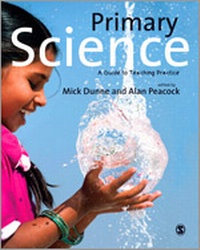
Primary Science
A Guide to Teaching Practice
1st Edition
Published on 11. November 2011
Book
Hardback
208 pages
978-0-85702-505-0 (ISBN)
Description
What is science? What is good science education? How can science be intelligently linked to the wider primary curriculum?
Becoming a confident and informed teacher of primary science requires a strong understanding of the key practical, conceptual and pedagogical issues that underpin science education in the primary school. Touching on current curriculum concerns and the wider challenges of developing good practice in science education Primary Science provides an indispensable overview of important areas of teaching every aspiring primary school teacher needs to understand.
Written directly for initial teacher education students this textbook supports classroom practice and provides a broad survey of key aspects of primary science teaching including the role of science in the curriculum, communication and literacy in science teaching, science outside the classroom, transitional issues and assessment.
This is essential reading for all students studying primary science on primary initial teacher education courses, including undergraduate (BEd, BA with QTS), postgraduate (PGCE, SCITT), and employment-based routes into teaching, and also NQTs.
Mick Dunne is Head of Initial Teacher Training at Bradford College
Alan Peacock is Honorary Research Fellow at the University of Exeter
Becoming a confident and informed teacher of primary science requires a strong understanding of the key practical, conceptual and pedagogical issues that underpin science education in the primary school. Touching on current curriculum concerns and the wider challenges of developing good practice in science education Primary Science provides an indispensable overview of important areas of teaching every aspiring primary school teacher needs to understand.
Written directly for initial teacher education students this textbook supports classroom practice and provides a broad survey of key aspects of primary science teaching including the role of science in the curriculum, communication and literacy in science teaching, science outside the classroom, transitional issues and assessment.
This is essential reading for all students studying primary science on primary initial teacher education courses, including undergraduate (BEd, BA with QTS), postgraduate (PGCE, SCITT), and employment-based routes into teaching, and also NQTs.
Mick Dunne is Head of Initial Teacher Training at Bradford College
Alan Peacock is Honorary Research Fellow at the University of Exeter
Reviews / Votes
'Aspiring and newly qualified teachers will find in this book invaluable advice discussing reasons for and ways to implement teaching approaches that support primary children's effective learning in science. This book is important reading for beginning primary teachers throughout the UK.' - Wynne Harlen, OBE, Visiting Professor, University of BristolMore details
Language
English
Place of publication
London
United Kingdom
Target group
Professional and scholarly
Dimensions
Height: 232 mm
Width: 186 mm
Weight
552 gr
ISBN-13
978-0-85702-505-0 (9780857025050)
Copyright in bibliographic data and cover images is held by Nielsen Book Services Limited or by the publishers or by their respective licensors: all rights reserved.
Schweitzer Classification
Other editions
New editions
Book
11/2014
2nd Edition
SAGE Publications Ltd
€164.90
Article exhausted; check different version
Persons
Alan Peacock is Honorary University Fellow at the Graduate School of Education, University of Exeter, and until recently was Editor of Primary Science journal for six years. He has worked in teaching, training and research in science education for over 40 years, in various regions of the UK and overseas. He has carried out primary science consultancy work for the British Council, UNESCO, the EU, The National Trust, various environmental groups and numerous NGOs in Africa, including in Kenya, South Africa, Namibia, Botswana, Senegal and Mozambique. His publications include Science Skills: A Problem-Solving Activities Book (Taylor & Francis); Science in Primary Schools: The Multicultural Dimension (Routledge); Opportunities for Science in the Primary School (Trentham); Teaching Primary Science (Macmillan Education) and Eco-literacy for Primary Schools (Trentham). He has also written and edited the Sayansi (Science) series of pupils' science texts for Tanzanian schools, and recently chaired the UNESCO working group on 'Guidelines for enhancing quality education through textbooks'.
Content
Introduction
How Science has evolved - Alan Peacock and Mick Dunne
Learning from elsewhere: An international perspective on the development of primary science - Alan Peacock
Linking science to the wider curriculum - Richard Watkins
Linking science to numeracy and ICT - Dave Howard, Ashlee Perry, Malcolm Smith, Liz Flintoft and Robert Collins
Science literacy - Tara Mawby
Learning science beyond the classroom - Leigh Hoath
Children communicating science - Sarah Earle and Natasha Serret
Tricky Topics and how to teach them - Mick Dunne and Dave Howard
Planning for assessment for learning - Tara Mawby and Mick Dunne
Transitions in science education - Leigh Hoath and Tanya Shields
Effective inclusion practice in primary science - Dave Howard and Ashlee Perry
A way forward - Alan Peacock and Mick Dunne
How Science has evolved - Alan Peacock and Mick Dunne
Learning from elsewhere: An international perspective on the development of primary science - Alan Peacock
Linking science to the wider curriculum - Richard Watkins
Linking science to numeracy and ICT - Dave Howard, Ashlee Perry, Malcolm Smith, Liz Flintoft and Robert Collins
Science literacy - Tara Mawby
Learning science beyond the classroom - Leigh Hoath
Children communicating science - Sarah Earle and Natasha Serret
Tricky Topics and how to teach them - Mick Dunne and Dave Howard
Planning for assessment for learning - Tara Mawby and Mick Dunne
Transitions in science education - Leigh Hoath and Tanya Shields
Effective inclusion practice in primary science - Dave Howard and Ashlee Perry
A way forward - Alan Peacock and Mick Dunne