

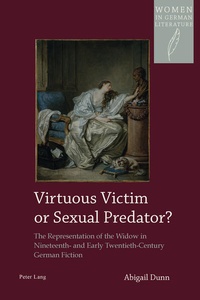
Virtuous Victim or Sexual Predator?
The Representation of the Widow in Nineteenth- and Early Twentieth-Century German Fiction
1st Edition
Published on 18. July 2013
Book
Paperback/Softback
VIII, 248 pages
978-3-0343-0776-5 (ISBN)
Description
'Was ist eine Witwe mehr als . ein aufgewärmtes Essen?'
According to politician and statesman Theodor Gottlieb von Hippel (1741-1796), widows were superfluous beings and second-hand goods, but they were also perceived by theologians and moralists of the nineteenth and early twentieth centuries as a threat due to their sexual experience and supposedly ungovernable lust.
This book analyses the overwhelmingly negative portrayal of the widow in nineteenth- and early twentieth-century German fiction. Male writers in the works discussed repeat the theory that, once deprived of their husbands, widows become sexually voracious. Indeed, the widow is often presented as a dangerous sexual predator who is prone to violence. Female authors, however, highlight the invisibility of the widow and portray her as a figure alienated from society and her family because she has internalized the ideas propounded by Hippel. The widow is depicted throughout as a figure to be at best re-educated and at worst to be feared and guarded against.
According to politician and statesman Theodor Gottlieb von Hippel (1741-1796), widows were superfluous beings and second-hand goods, but they were also perceived by theologians and moralists of the nineteenth and early twentieth centuries as a threat due to their sexual experience and supposedly ungovernable lust.
This book analyses the overwhelmingly negative portrayal of the widow in nineteenth- and early twentieth-century German fiction. Male writers in the works discussed repeat the theory that, once deprived of their husbands, widows become sexually voracious. Indeed, the widow is often presented as a dangerous sexual predator who is prone to violence. Female authors, however, highlight the invisibility of the widow and portray her as a figure alienated from society and her family because she has internalized the ideas propounded by Hippel. The widow is depicted throughout as a figure to be at best re-educated and at worst to be feared and guarded against.
More details
Persons
Abigail Dunn currently teaches English Language at the University of Bonn. She obtained a D.Phil in German from the University of Oxford in 2009.
Content
Contents: Widowhood in nineteenth-century Germany: Legal and social realities - Popular perceptions of widows - Representations of the faithless widow throughout German literature - The widow as a death-bringer - The incestuous widow - The virtuous widow - Women's representations of widowhood.