

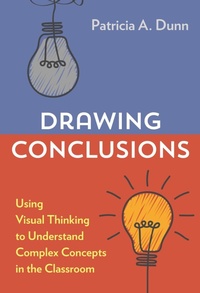
Drawing Conclusions
Using Visual Thinking to Understand Complex Concepts in the Classroom
Will be published approx. on 12. February 2021
Book
Hardback
128 pages
978-0-8077-6493-0 (ISBN)
Description
Drawing Conclusions explores the use of juxtaposed visual representations (JVRs) to help preservice teachers grapple with abstract concepts, theories, or complex controversies in education. Acting as both a learning tool and an intellectual spark, JVRs are two simple contrasted sketches that students produce on a divided sheet of paper. In these drawings, students attempt to visually represent contrasting ideas that the class is struggling to understand (such as code-meshing versus code-switching, descriptive versus prescriptive grammar, peer response versus peer editing). JVRs are powerful tools for the teacher education classroom because they employ active learning and scaffold pedagogical strategies, act as a low-stakes but important formative assessment tool, help students grapple with complex literary and critical theories, and aid in reorganizing and revising a long writing project.Book Features:
Offers a method for pushing students to higher-order thinking in just a few minutes, helping them analyze critical concepts in English education, writing studies, linguistics, literacy, English Language Arts, and related fields.
Outlines how to use JVRs to encourage students to think in a wider dimension, to use different parts of their brain, and to awaken different neurons.
Provides multiple examples of JVRs to help instructors adapt this intellectually stimulating heuristic to their own classrooms.
Offers a method for pushing students to higher-order thinking in just a few minutes, helping them analyze critical concepts in English education, writing studies, linguistics, literacy, English Language Arts, and related fields.
Outlines how to use JVRs to encourage students to think in a wider dimension, to use different parts of their brain, and to awaken different neurons.
Provides multiple examples of JVRs to help instructors adapt this intellectually stimulating heuristic to their own classrooms.
More details
Language
English
Place of publication
New York
United States
Target group
Professional and scholarly
Product notice
sewn/stitched
Cloth over boards
Dimensions
Height: 235 mm
Width: 162 mm
Thickness: 10 mm
Weight
254 gr
ISBN-13
978-0-8077-6493-0 (9780807764930)
Copyright in bibliographic data and cover images is held by Nielsen Book Services Limited or by the publishers or by their respective licensors: all rights reserved.
Schweitzer Classification
Person
Patricia A. Dunn is a professor of English at Stony Brook University.
Content
Contents
Introduction?1
Why Student-Produced Juxtaposed Visual Representations??2
Advantages of Juxtaposed Visual Representations?8
1.?Preparing to Juxtapose Visual Representations?13
Modeling the Process?13
Deepening Discussions?19
2.?Pathos, Perspective Shifts, and Metaphors?26
Pathos, Drama, and Stick Figures?27
Perspective Shifts?37
Metaphors?40
3.?Sketches as Formative Assessment?52
Teaching Troublesome Knowledge?54
Assessing Conceptual Understanding?56
Promoting Deeper Learning?63
4.?Grappling With Traditional Versus Contemporary/Critical Theory?74
Text-as-Shoe Metaphor?75
Readers' Awareness of Lenses?76
Print Versus Audio Texts?78
Problematic Canonical Texts?81
5.?Sketching as a Tool for Reorganization?88
Juxtaposing to Troubleshoot?88
Viewing Versus Discussing?93
Proposed Changes to the Process?100
6.?Student Responses to Juxtaposed Visual Representations?102
Analyzing Survey Results?103
Students' Comments?105
Conclusion?106
Appendix: Survey-Students' Views on Using Juxtaposed Visual Representations?107
References?110
Index?114
About the Author?120
Introduction?1
Why Student-Produced Juxtaposed Visual Representations??2
Advantages of Juxtaposed Visual Representations?8
1.?Preparing to Juxtapose Visual Representations?13
Modeling the Process?13
Deepening Discussions?19
2.?Pathos, Perspective Shifts, and Metaphors?26
Pathos, Drama, and Stick Figures?27
Perspective Shifts?37
Metaphors?40
3.?Sketches as Formative Assessment?52
Teaching Troublesome Knowledge?54
Assessing Conceptual Understanding?56
Promoting Deeper Learning?63
4.?Grappling With Traditional Versus Contemporary/Critical Theory?74
Text-as-Shoe Metaphor?75
Readers' Awareness of Lenses?76
Print Versus Audio Texts?78
Problematic Canonical Texts?81
5.?Sketching as a Tool for Reorganization?88
Juxtaposing to Troubleshoot?88
Viewing Versus Discussing?93
Proposed Changes to the Process?100
6.?Student Responses to Juxtaposed Visual Representations?102
Analyzing Survey Results?103
Students' Comments?105
Conclusion?106
Appendix: Survey-Students' Views on Using Juxtaposed Visual Representations?107
References?110
Index?114
About the Author?120