

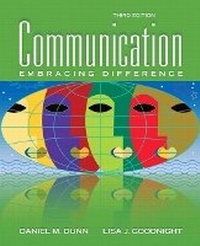
Communication
Embracing Difference
3rd Edition
Published on 19. May 2010
Book
Paperback/Softback
384 pages
978-0-205-68812-8 (ISBN)
Description
This third edition has continued its staple as a text that relates the student to the concepts. By describing basic communication theories in everyday, non-technical terms, the emphasis on practical situations in the book helps students to connect the examples to their daily lives.
Communication: Embracing Difference presents a clear format that stresses the importance of understanding and celebrating inter-relational differences within communication. Up-to-date examples of communication among interpersonal, small group, and public settings, allows the student to apply the concepts and theories learned, enabling them to become more confident and successful communicators. Emphasizing a target audience of a diverse population, the overall approach of this text resonates with the communicator of today.
Communication: Embracing Difference presents a clear format that stresses the importance of understanding and celebrating inter-relational differences within communication. Up-to-date examples of communication among interpersonal, small group, and public settings, allows the student to apply the concepts and theories learned, enabling them to become more confident and successful communicators. Emphasizing a target audience of a diverse population, the overall approach of this text resonates with the communicator of today.
More details
Edition
3rd edition
Language
English
Place of publication
New York
United States
Publishing group
Taylor & Francis Inc
Target group
College/higher education
Dimensions
Height: 232 mm
Width: 187 mm
Weight
513 gr
ISBN-13
978-0-205-68812-8 (9780205688128)
Copyright in bibliographic data is held by Nielsen Book Services Limited or its licensors: all rights reserved.
Schweitzer Classification
Other editions
New editions

Book
01/2013
4th Edition
Routledge
€141.12
Article is exhausted; no reprint
Previous edition
Book
03/2007
2nd Edition
Routledge
Unfortunately, price unknown
Article exhausted; check for reprint
Content
Table of Contents:
Unit I The Process of Communication
1 An Overview of Communication
The Communication Process
Functions of Communication
Types of Communication
Understanding Difference, Diversity, and Communication
2 Perception
The Process of Perception
Perceptions of Ourselves
Perceptions of Others
Developing Accurate Perceptions of Ourselves and Others
3 Listening
Hearing and Listening
Factors That Interfere with Listening
Effective Listening
4 Verbal Communication
The Nature of Language and Meaning
The Meaning of Words
Factors That Influence Our Language Use
Problems with Language
Improving Verbal Skills
5 Nonverbal Communication
The Nature of Nonverbal Communication
Types and Functions of Nonverbal Communication
Improving Nonverbal Communication
Unit II Interpersonal Communication
6 Understanding Ourselves and Others
The Nature of Interpersonal Relationships
Self-Disclosure within Relationships
Theoretical Explanations of Interpersonal Communication
Conflict within Relationships
Improving Our Efforts to Resolve Conflicts
7 Creating a Positive Communication Climate
Understanding Defense Mechanisms
Coping with Defensiveness
Stepping Back from Defensive Communication
8 Interviewing
Interview Questions
Organizing the Interview
Types of Interviews
The Employment Interview
Preparing for an Interview
Improving Your Interviewing Skills
9 Communicating in Small Groups
An Overview of Small-Group Communication
Types of Small Groups
Variables in Small-Group Communication
Participating in Small-Group Discussions
Decision-Making Methods
Communication Skills within Small Groups
10 Solving Problems Using Small Groups
Solving Problems as a Group
Types of Problem-Solving Formats
The Process of Problem Solving
Leadership
Effective Leadership Communication
Unit III Public Communication
11 Selecting a Speech Topic and Adapting
to the Audience
Selecting a Topic
Yourself
The Situation
The Audience
Demographic Factors
Audience Characteristics
Brainstorming
Adapting to the Audience
The Speech Purpose
Thesis Statement
12 Researching and Using Supporting
Material for Your Speech
Sources of Information
Finding Sources: The Library
Using the Internet: World Wide Web
Citing Sources
Forms of Support for Your Speech
Anecdotes and Stories
Presentational Aids
Using Presentational Aids
13 Organizing Your Speech
The Body
The Introduction
The Conclusion
Transitions
Preparing the Speech Outline
14 Delivering Your Speech
Oral and Written Communication
Understanding Speech Anxiety
Types of Delivery
Sharing Ideas
Using Your Body
Using Your Voice
Practicing Your Speech
15 The Informative Speech
The Nature of the Informative Speech
Informative Speech Topics
Organizing the Informative Speech
Methods of Presenting an Informative Speech
Sample Informative Student Speech
16 The Persuasive Speech
Developing a Persuasive Speech Objective
Topics for a Persuasive Speech
Organizing Your Persuasive Speech
Developing Persuasive Appeals
Techniques for Enhancing Your Credibility
Sample Student Persuasive Speech
Glossary
References
Index
Unit I The Process of Communication
1 An Overview of Communication
The Communication Process
Functions of Communication
Types of Communication
Understanding Difference, Diversity, and Communication
2 Perception
The Process of Perception
Perceptions of Ourselves
Perceptions of Others
Developing Accurate Perceptions of Ourselves and Others
3 Listening
Hearing and Listening
Factors That Interfere with Listening
Effective Listening
4 Verbal Communication
The Nature of Language and Meaning
The Meaning of Words
Factors That Influence Our Language Use
Problems with Language
Improving Verbal Skills
5 Nonverbal Communication
The Nature of Nonverbal Communication
Types and Functions of Nonverbal Communication
Improving Nonverbal Communication
Unit II Interpersonal Communication
6 Understanding Ourselves and Others
The Nature of Interpersonal Relationships
Self-Disclosure within Relationships
Theoretical Explanations of Interpersonal Communication
Conflict within Relationships
Improving Our Efforts to Resolve Conflicts
7 Creating a Positive Communication Climate
Understanding Defense Mechanisms
Coping with Defensiveness
Stepping Back from Defensive Communication
8 Interviewing
Interview Questions
Organizing the Interview
Types of Interviews
The Employment Interview
Preparing for an Interview
Improving Your Interviewing Skills
9 Communicating in Small Groups
An Overview of Small-Group Communication
Types of Small Groups
Variables in Small-Group Communication
Participating in Small-Group Discussions
Decision-Making Methods
Communication Skills within Small Groups
10 Solving Problems Using Small Groups
Solving Problems as a Group
Types of Problem-Solving Formats
The Process of Problem Solving
Leadership
Effective Leadership Communication
Unit III Public Communication
11 Selecting a Speech Topic and Adapting
to the Audience
Selecting a Topic
Yourself
The Situation
The Audience
Demographic Factors
Audience Characteristics
Brainstorming
Adapting to the Audience
The Speech Purpose
Thesis Statement
12 Researching and Using Supporting
Material for Your Speech
Sources of Information
Finding Sources: The Library
Using the Internet: World Wide Web
Citing Sources
Forms of Support for Your Speech
Anecdotes and Stories
Presentational Aids
Using Presentational Aids
13 Organizing Your Speech
The Body
The Introduction
The Conclusion
Transitions
Preparing the Speech Outline
14 Delivering Your Speech
Oral and Written Communication
Understanding Speech Anxiety
Types of Delivery
Sharing Ideas
Using Your Body
Using Your Voice
Practicing Your Speech
15 The Informative Speech
The Nature of the Informative Speech
Informative Speech Topics
Organizing the Informative Speech
Methods of Presenting an Informative Speech
Sample Informative Student Speech
16 The Persuasive Speech
Developing a Persuasive Speech Objective
Topics for a Persuasive Speech
Organizing Your Persuasive Speech
Developing Persuasive Appeals
Techniques for Enhancing Your Credibility
Sample Student Persuasive Speech
Glossary
References
Index