

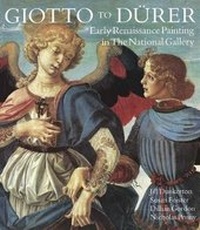
Giotto to Duerer
Early Renaissance Painting in the National Gallery
Published on 25. May 1994
Book
Paperback/Softback
408 pages
978-0-300-05082-0 (ISBN)
Description
This beautiful book provides a survey of European painting in northern and southern Europe between 1260 and 1510. It is based largely on the collection of early Renaissance paintings in the National Gallery in London, one of the finest and most comprehensive collections in the world.
In an extensive introduction the authors explain the background of religious belief and devotional practice for which many of the paintings were created and the secular requirements and ambitions that influenced them. They discuss the social context in which art was created and then displayed in the street, the palace, or the church, and they consider the role of the patron and the dealer. They describe the artist's workshop, consider the role of apprentices and assistants, discuss the influence of guilds and courts, and explore the reasons why new subjects and techniques were introduced and earlier traditions survived. They then supply the first full modern account of the materials and techniques of the early Renaissance artist, drawing on recent research to explain the preparation of panels, the application of gold leaf, and the use of tempera and oil paint.
The book also features a detailed examination of some seventy of the finest and best known paintings in the Gallery, including masterpieces by Duccio, Van Eyck, Mantegna, Piero della Francesca, Bouts, Bellini, Memling, Raphael, and Leonardo. The book is a stimulating and authoritative guide to the paintings in the Gallery-for those who can observe them in person and for those who must view them through the printed page.
Publication of this book coincides with the reopening of the Sainsbury Wing designed by Robert Venturi, in which the Early Renaissance Collection will be newly exhibited.
In an extensive introduction the authors explain the background of religious belief and devotional practice for which many of the paintings were created and the secular requirements and ambitions that influenced them. They discuss the social context in which art was created and then displayed in the street, the palace, or the church, and they consider the role of the patron and the dealer. They describe the artist's workshop, consider the role of apprentices and assistants, discuss the influence of guilds and courts, and explore the reasons why new subjects and techniques were introduced and earlier traditions survived. They then supply the first full modern account of the materials and techniques of the early Renaissance artist, drawing on recent research to explain the preparation of panels, the application of gold leaf, and the use of tempera and oil paint.
The book also features a detailed examination of some seventy of the finest and best known paintings in the Gallery, including masterpieces by Duccio, Van Eyck, Mantegna, Piero della Francesca, Bouts, Bellini, Memling, Raphael, and Leonardo. The book is a stimulating and authoritative guide to the paintings in the Gallery-for those who can observe them in person and for those who must view them through the printed page.
Publication of this book coincides with the reopening of the Sainsbury Wing designed by Robert Venturi, in which the Early Renaissance Collection will be newly exhibited.
More details
Language
English
Place of publication
United States
Target group
Professional and scholarly
College/higher education
Product notice
Paperback (trade)
Illustrations
200 duotones + 320 color illus.
Weight
1950 gr
ISBN-13
978-0-300-05082-0 (9780300050820)
Copyright in bibliographic data and cover images is held by Nielsen Book Services Limited or by the publishers or by their respective licensors: all rights reserved.
Schweitzer Classification
Content
Part 1 The uses of paintings: Western Europe 1250-1500; maps; Christian worship and imagery; civic, dynastic and domestic art. Part 2 The painter: range and status; the guilds; contracts and commissions. Part 3 The making of paintings: the workshop members; premises, tools and equipment; drawings and props; panels; frames; canvas painting; grounds; underdrawing; gilding; pigments; glue size paintings; egg tempera paintings; oil painting in the Netherlands; oil painting in Italy.