

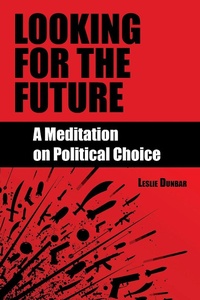
Looking for the Future
A Meditation on Political Choice
Published on 1. March 2012
Book
Paperback/Softback
76 pages
978-1-60306-201-5 (ISBN)
Description
We Americans approach-not a crossroads-but a branching of our political road where several destinations are possible. One requires surrendering power to what has become our de-facto governing or ruling class. Another takes us to an expanded democracy where the gap between the "have much" and the "have little" has been greatly reduced. In between are byways that eventually will trend one way or the other. The choices will be selected, in the way democracies have always selected, their paths, by the ongoing clash of economic interests. This book is a meditation about our nation, its ruling class now made up of what the book calls "warriors" and former President Eisenhower called "the military industrial complex," and the rich, about our incessant warring around the world, about the fateful political and Constitutional presence of the South, and about our American way of religion and its church. Leslie Dunbar's Looking for the Future is a memoir only to the extent that the author's fourscore and eleven years of experience give insight to the rumblings of discontent and the disparities of power and wealth that undermine our national unity. This is, finally, a meditation on prospects for that unity and fraternity among us.
More details
Language
English
Place of publication
Athens
United States
Publishing group
University of Georgia Press
Product notice
Paperback (trade)
Dimensions
Height: 229 mm
Width: 152 mm
Thickness: 5 mm
Weight
122 gr
ISBN-13
978-1-60306-201-5 (9781603062015)
Copyright in bibliographic data and cover images is held by Nielsen Book Services Limited or by the publishers or by their respective licensors: all rights reserved.
Schweitzer Classification
Other editions
Additional editions
E-Book
03/2012
NewSouth Books
€13.49
Available for download
Person
LESLIE W. DUNBAR, a native of West Virginia, was the director of the Field Foundation and the Southern Regional Council during the turmoil of the 1960s, and has been closely identified with the cause of Southern democracy. The author of several books, most recently, The Shame of Southern Politics, he lives in Washington, D.C.