

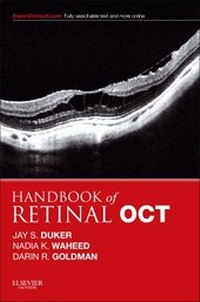
Handbook of Retinal OCT: Optical Coherence Tomography
Expert Consult: Online and Print
Published on 17. January 2014
Book
Paperback/Softback
190 pages
978-0-323-18884-5 (ISBN)
Description
With Handbook of Retinal OCT, you can master the latest imaging methods used to evaluate retinal disease, uveitis, and optic nerve disorders. Ideal at any stage of your career, this easy-to-use, clinically oriented handbook provides a quick, templated, and portable guide for the interpretation of Optical Coherence Tomography scans.
"... likely to become a well-thumbed primer for those wanting an easy-to-use, clinically-orientated volume on OCT." Reviewed by Eye News, March 2015
Locate answers quickly with templated chapters-each focused on one specific diagnosis or group of diagnoses with a particular OCT appearance.
Adopt the latest techniques for evaluating age-related macular degeneration, diabetic retinopathy, retinal vein occlusion, and much more.
See how the full spectrum of diseases presents through approximately 370 illustrations including the highest-quality spectral-domain OCT images available.
Recognize image patterns and get clear visual guidance from multiple arrows and labels used throughout to highlight the key details of each disease.
Access the full text online at Expert Consult.
"... likely to become a well-thumbed primer for those wanting an easy-to-use, clinically-orientated volume on OCT." Reviewed by Eye News, March 2015
Locate answers quickly with templated chapters-each focused on one specific diagnosis or group of diagnoses with a particular OCT appearance.
Adopt the latest techniques for evaluating age-related macular degeneration, diabetic retinopathy, retinal vein occlusion, and much more.
See how the full spectrum of diseases presents through approximately 370 illustrations including the highest-quality spectral-domain OCT images available.
Recognize image patterns and get clear visual guidance from multiple arrows and labels used throughout to highlight the key details of each disease.
Access the full text online at Expert Consult.
Reviews / Votes
"This publication would appeal to trainee ophthalmologists who need to use the OCT in daily practice, the specialist ophthalmic nurse, and all allied health professionals, including optometrists, orthoptists, ophthalmic medical photographers and retinal screeners, involved with OCT imaging. I have enjoyed perusing this handbook and it is easy to read from front-to-back or 'dip' into a relevant topic for key features on a broad range of retinal conditions presented in a consistent format." Reviewed by Eye News, March 2015More details
Language
English
Place of publication
Philadelphia
United States
Publishing group
Elsevier - Health Sciences Division
Target group
Professional and scholarly
Illustrations
Approx. 370 illustrations (200 in full color); Illustrations
Dimensions
Height: 229 mm
Width: 152 mm
Weight
440 gr
ISBN-13
978-0-323-18884-5 (9780323188845)
Copyright in bibliographic data and cover images is held by Nielsen Book Services Limited or by the publishers or by their respective licensors: all rights reserved.
Schweitzer Classification
Other editions
New editions
Jay S. Duker | Nadia K. Waheed | Darin Goldman
Handbook of Retinal OCT: Optical Coherence Tomography
Optical Coherence Tomography
Book
10/2021
2nd Edition
Elsevier
€122.50
Available immediately
Additional editions
Jay S. Duker | Nadia K. Waheed | Darin Goldman
Handbook of Retinal OCT: Optical Coherence Tomography E-Book
E-Book
12/2013
1st Edition
Saunders
€74.99
Available for download
Persons
Author
Director, New England Eye Center, Chairman and Professor of Ophthalmology, Tufts Medical Center, Tufts University School of Medicine, Boston, Massachusetts
Associate Professor of Ophthalmology, New England Eye Center, Tufts University School of Medicine, Boston, Massachusetts
Vitreoretinal Surgeon, Retina Group of Florida, Fort Lauderdale, FL, USA
Content
1.1. Scanning Principles
1.2. Basic Scan Patterns and OCT Output
2.1. OCT Interpretation
3.1. Artifacts on OCT
4.1. Normal Retinal Anatomy and Basic Pathologic Appearances
5.1. Basic Optic Nerve Scan Patterns and Output
6.1. Glaucoma
6.2. Optic Neuropathies and Papilledema
6.3. Congenital Optic Nerve Head Abnormalities
7.1. Dry Age-Related Macular Degeneration
8.1. Wet Age-Related Macular Degeneration
9.1. Posterior Staphyloma
9.2. Myopic Choroidal Neovascular Membrane
9.3. Myopic Macular Schisis
9.4. Dome-Shaped Macula
9.5. Myopic Tractional Retinal Detachment
10.1. Vitreomacular Adhesion and Vitreomacular Traction
10.2. Full-Thickness Macular Hole
10.3. Epiretinal Membrane
11.1. Postoperative Cystoid Macular Edema
11.2. Macular Telangiectasia
11.3. Uveitis
12.1. Central Serous Chorioretinopathy
12.2. Hydroxychloroquine Toxicity
12.3. Pattern Dystrophy
12.4. Oculocutaneous Albinism
12.5. Subretinal Perfluorocarbon
12.6. X-Linked Juvenile Retinoschisis
13.1. Non-Proliferative Diabetic Retinopathy
13.2. Diabetic Macular Edema
13.3. Proliferative Diabetic Retinopathy
14.1. Branch Retinal Vein Occlusion
14.2. Central Retinal Vein Occlusion
15.1. Branch Retinal Artery Occlusion
15.2. Central Retinal Artery Occlusion
15.3. Cilioretinal Artery Occlusion
16.1. Retinitis Pigmentosa
16.2. Stargardt Disease
16.3. Best Disease
16.4. Cone Dystrophy
17.1. Multifocal Choroiditis
17.2. Birdshot Chorioretinopathy
17.3. Serpiginous Choroiditis
17.4. Vogt-Koyanagi-Harada Disease
17.5. Sympathetic Ophthalmia
17.6. Posterior Scleritis
18.1. Toxoplasmic Chorioretinitis
18.2. Tuberculosis
18.3. Acute Syphilitic Posterior Placoid Chorioretinitis
18.4. Candida Albicans Endogenous Endophthalmitis
18.5. Acute Retinal Necrosis Syndrome
19.1. Commotio Retinae
19.2. Choroidal Rupture and Subretinal Hemorrhage
19.3. Valsalva Retinopathy
20.1. Laser Injury (Photothermal and Photomechanical)
20.2. Retinal Light Toxicity (Photochemical)
21.1. Choroidal Nevus
21.2. Choroidal Melanoma
21.3. Choroidal Hemangioma
22.1. Retinal Capillary Hemangioma
22.2. Retinoblastoma
23.1. Metastatic Choroidal Tumor
23.2. Vitreoretinal Lymphoma
24.1. Retinal Detachment
25.1. Retinoschisis
26.1. Lattice Degeneration
1.2. Basic Scan Patterns and OCT Output
2.1. OCT Interpretation
3.1. Artifacts on OCT
4.1. Normal Retinal Anatomy and Basic Pathologic Appearances
5.1. Basic Optic Nerve Scan Patterns and Output
6.1. Glaucoma
6.2. Optic Neuropathies and Papilledema
6.3. Congenital Optic Nerve Head Abnormalities
7.1. Dry Age-Related Macular Degeneration
8.1. Wet Age-Related Macular Degeneration
9.1. Posterior Staphyloma
9.2. Myopic Choroidal Neovascular Membrane
9.3. Myopic Macular Schisis
9.4. Dome-Shaped Macula
9.5. Myopic Tractional Retinal Detachment
10.1. Vitreomacular Adhesion and Vitreomacular Traction
10.2. Full-Thickness Macular Hole
10.3. Epiretinal Membrane
11.1. Postoperative Cystoid Macular Edema
11.2. Macular Telangiectasia
11.3. Uveitis
12.1. Central Serous Chorioretinopathy
12.2. Hydroxychloroquine Toxicity
12.3. Pattern Dystrophy
12.4. Oculocutaneous Albinism
12.5. Subretinal Perfluorocarbon
12.6. X-Linked Juvenile Retinoschisis
13.1. Non-Proliferative Diabetic Retinopathy
13.2. Diabetic Macular Edema
13.3. Proliferative Diabetic Retinopathy
14.1. Branch Retinal Vein Occlusion
14.2. Central Retinal Vein Occlusion
15.1. Branch Retinal Artery Occlusion
15.2. Central Retinal Artery Occlusion
15.3. Cilioretinal Artery Occlusion
16.1. Retinitis Pigmentosa
16.2. Stargardt Disease
16.3. Best Disease
16.4. Cone Dystrophy
17.1. Multifocal Choroiditis
17.2. Birdshot Chorioretinopathy
17.3. Serpiginous Choroiditis
17.4. Vogt-Koyanagi-Harada Disease
17.5. Sympathetic Ophthalmia
17.6. Posterior Scleritis
18.1. Toxoplasmic Chorioretinitis
18.2. Tuberculosis
18.3. Acute Syphilitic Posterior Placoid Chorioretinitis
18.4. Candida Albicans Endogenous Endophthalmitis
18.5. Acute Retinal Necrosis Syndrome
19.1. Commotio Retinae
19.2. Choroidal Rupture and Subretinal Hemorrhage
19.3. Valsalva Retinopathy
20.1. Laser Injury (Photothermal and Photomechanical)
20.2. Retinal Light Toxicity (Photochemical)
21.1. Choroidal Nevus
21.2. Choroidal Melanoma
21.3. Choroidal Hemangioma
22.1. Retinal Capillary Hemangioma
22.2. Retinoblastoma
23.1. Metastatic Choroidal Tumor
23.2. Vitreoretinal Lymphoma
24.1. Retinal Detachment
25.1. Retinoschisis
26.1. Lattice Degeneration