

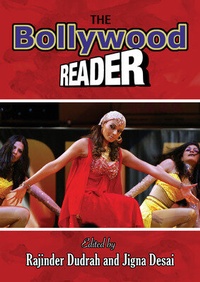
The Bollywood Reader
Published on 16. October 2008
Book
Paperback/Softback
384 pages
978-0-335-22212-4 (ISBN)
Description
"From its historical roots through to the contemporary moment, the collection of essays, written by eminent scholars in the field, demonstrate so clearly how Indian cinema is more than the sum of its parts. An essential text for anyone wishing to understand properly the full complexities of Hindi cinema."
Professor Susan Hayward, University of Exeter, UK"We are finally at a point when the study of Bollywood is a fully fledged field in Film Studies."
Professor Dina Iordanova, University of St. Andrews, Scotland"The Bollywood Reader extends the discursive boundaries of Indian popular cinema in interesting and complex ways. In putting together this volume, the editors have performed magnificently."
Professor Wimal Dissanayake, University of Hawaii, USA
What is Bollywood cinema? How does it operate as an industry? Who are the audiences of Bollywood cinema?
These are just some of the questions addressed in this lively and fascinating guide to the cultural, social and political significance of popular Hindi cinema, which outlines the history and structure of the Bombay film industry, and its impact on global popular culture. Including a wide-ranging selection of essays from key voices in the field, the Reader charts the development of the scholarship on popular Hindi cinema, with an emphasis on understanding the relationship between cinema and colonialism, nationalism, and globalization. Features include:
Comprehensive introductory essay Landmark essays by key scholars in the field Glossary of key terms Timeline of key events in Indian cinema Further reading section
The authors address the issues of capitalism, nationalism, Orientalism and modernity through understandings of race, class, gender and sexuality, religion, politics and diaspora as depicted in Indian popular films. The Bollywood Reader is captivating reading for film, media and cultural studies students and scholars with an interest in Bollywood cinema.
Professor Susan Hayward, University of Exeter, UK"We are finally at a point when the study of Bollywood is a fully fledged field in Film Studies."
Professor Dina Iordanova, University of St. Andrews, Scotland"The Bollywood Reader extends the discursive boundaries of Indian popular cinema in interesting and complex ways. In putting together this volume, the editors have performed magnificently."
Professor Wimal Dissanayake, University of Hawaii, USA
What is Bollywood cinema? How does it operate as an industry? Who are the audiences of Bollywood cinema?
These are just some of the questions addressed in this lively and fascinating guide to the cultural, social and political significance of popular Hindi cinema, which outlines the history and structure of the Bombay film industry, and its impact on global popular culture. Including a wide-ranging selection of essays from key voices in the field, the Reader charts the development of the scholarship on popular Hindi cinema, with an emphasis on understanding the relationship between cinema and colonialism, nationalism, and globalization. Features include:
Comprehensive introductory essay Landmark essays by key scholars in the field Glossary of key terms Timeline of key events in Indian cinema Further reading section
The authors address the issues of capitalism, nationalism, Orientalism and modernity through understandings of race, class, gender and sexuality, religion, politics and diaspora as depicted in Indian popular films. The Bollywood Reader is captivating reading for film, media and cultural studies students and scholars with an interest in Bollywood cinema.
More details
Language
English
Place of publication
Milton Keynes
United Kingdom
Target group
College/higher education
Dimensions
Height: 240 mm
Width: 170 mm
Thickness: 17 mm
Weight
528 gr
ISBN-13
978-0-335-22212-4 (9780335222124)
Copyright in bibliographic data and cover images is held by Nielsen Book Services Limited or by the publishers or by their respective licensors: all rights reserved.
Schweitzer Classification
Persons
Rajinder Dudrah is Head of Drama and Senior Lecturer in Screen Studies at the University of Manchester, UK.
Jigna Desai is Associate Professor in the Gender, Women, and Sexuality Studies Department and the Asian American Studies Program at the University of Minnesota, USA.
Jigna Desai is Associate Professor in the Gender, Women, and Sexuality Studies Department and the Asian American Studies Program at the University of Minnesota, USA.
Content
Acknowledgments
Contributors
Introduction
1. The Essential Bollywood.
Part I: Theoretical Frameworks
2. 'Indian Cinema: Pleasures and Popularity'
3. 'Towards a Theoretical Critique of Bombay Cinema'
4. 'Ideology of the Hindi Film: A Historical Construction'
5. '"In the throes of change: exhibition, production and distribution" in Indian Popular Cinema: Industry, Ideology and Consciousness'
6. 'Secret Politics Essay' excerpted from The Secret Politics of Our Desires: Innocence, Culpability and Indian Popular Cinema.
7. 'The National-Heroic Image' from National Identity in Indian Popular Cinema: 1947-1987.
Part II: Recent Trajectories
8. 'Avenging Women in Indian Cinema'
9. "Figuring Mother India: The Face of Nargis," in India Traffic: Identities in Question in Colonial and Postcolonial India
10. "What is Behind Film Censorship?: The Khalnayak Debates."
11. "The Home and the Nation: Consuming Culture and Politics in Roja" in Pleasure and the Nation: The History, Politics and Consumption of Public Culture in India.
12. "Inside and Out: Song and Dance in Bollywood Cinema."
13. 'Invisible Representation: The Oral Contours of a National Popular Cinema'
14. "Imagining the family: an Ethnography of Viewing Hum Aapke Hain Kaun." Pleasure and the Nation: The History, Politics and Consumption of Public Culture in India.
Part III: Bollywood Abroad and Beyond15. 'The "Bollywoodization" of the Indian Cinema: Cultural Nationalism in a Global Arena'
16. "Bollywood and the Frictions of Global Mobility" from Media on the Move: Global Flow and Contra-Flow.
17. 'Itineraries of Indian Cinema: African Videos, Bollywood and Global Media' in Multiculturalism, Postcolonialism and Transnational Media.
18. 'Ever Since You've Discovered the Video, I've Had No Peace': Diasporic Spectators Talk Back to Indian Media.
19. 'Queer as Desis: Secret Politics of Gender and Sexuality in Bollywood Films in Diasporic Urban Ethnoscapes' from Bollywood: Sociology Goes to the Movies.
20. 'On the Cinematic Assemblage and the Case of Bollywood: Some Theses' (previously unpublished chapter specifically commissioned for this Reader).
Select Keywords
Select Timeline
Further Reading
Contributors
Introduction
1. The Essential Bollywood.
Part I: Theoretical Frameworks
2. 'Indian Cinema: Pleasures and Popularity'
3. 'Towards a Theoretical Critique of Bombay Cinema'
4. 'Ideology of the Hindi Film: A Historical Construction'
5. '"In the throes of change: exhibition, production and distribution" in Indian Popular Cinema: Industry, Ideology and Consciousness'
6. 'Secret Politics Essay' excerpted from The Secret Politics of Our Desires: Innocence, Culpability and Indian Popular Cinema.
7. 'The National-Heroic Image' from National Identity in Indian Popular Cinema: 1947-1987.
Part II: Recent Trajectories
8. 'Avenging Women in Indian Cinema'
9. "Figuring Mother India: The Face of Nargis," in India Traffic: Identities in Question in Colonial and Postcolonial India
10. "What is Behind Film Censorship?: The Khalnayak Debates."
11. "The Home and the Nation: Consuming Culture and Politics in Roja" in Pleasure and the Nation: The History, Politics and Consumption of Public Culture in India.
12. "Inside and Out: Song and Dance in Bollywood Cinema."
13. 'Invisible Representation: The Oral Contours of a National Popular Cinema'
14. "Imagining the family: an Ethnography of Viewing Hum Aapke Hain Kaun." Pleasure and the Nation: The History, Politics and Consumption of Public Culture in India.
Part III: Bollywood Abroad and Beyond15. 'The "Bollywoodization" of the Indian Cinema: Cultural Nationalism in a Global Arena'
16. "Bollywood and the Frictions of Global Mobility" from Media on the Move: Global Flow and Contra-Flow.
17. 'Itineraries of Indian Cinema: African Videos, Bollywood and Global Media' in Multiculturalism, Postcolonialism and Transnational Media.
18. 'Ever Since You've Discovered the Video, I've Had No Peace': Diasporic Spectators Talk Back to Indian Media.
19. 'Queer as Desis: Secret Politics of Gender and Sexuality in Bollywood Films in Diasporic Urban Ethnoscapes' from Bollywood: Sociology Goes to the Movies.
20. 'On the Cinematic Assemblage and the Case of Bollywood: Some Theses' (previously unpublished chapter specifically commissioned for this Reader).
Select Keywords
Select Timeline
Further Reading