

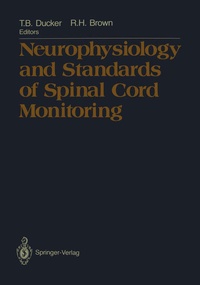
Neurophysiology and Standards of Spinal Cord Monitoring
Published on 27. September 2011
Book
Paperback/Softback
VIII, 388 pages
978-1-4612-8359-1 (ISBN)
Description
Standards.- Standardization of Evoked Potential Recording.- Clinical Neurophysiology of Neural Stimulation.- Ascending Recordings.- Human Spinal Cord Potentials (SCPs): Ascending Recording Variations - an Update.- Evaluation of Segmental Spinal Evoked Potentials with Topographic Computer Display and Dipole.- Intraspinal SEPs Recorded from the Vicinity of the Dorsal Root Entry Zone.- Interpretation of Anterior and Posterior Spinal SEPs During Scoliosis Surgery.- Experimental Ascending Evoked Potentials in Spinal Cord Injury.- Effects of Spinal Cord Compression on Repetitive Impulse Conduction of Ascending Fibers in the Dorsal Column.- The Effect of Chymopapain on Nerve Impulse Transmission in the Rat.- Diagnosis of Cervical Myelopathy Using Segmental Evoked Spinal Cord Potentials Obtained by Stimulating Finger Surface.- Descending Recordings.- Spinal Cord Potentials (SCPs) Produced by Descending Volleys in the Rat.- Intradural Spinal Recordings (Particular Reference to Invasive Methods).- Corticospinal Direct Response to Stimulation of the Exposed Motor Cortex in Humans.- Usefulness of Motor Evoked Potentials (Pyramidal D-Response) for Assessment of Spinal Cord Injury.- Spinal Cord Potentials (SCPs) Produced by Descending Volleys in Man.- Anesthesia Influence on Recordings.- Effects of Anesthetic Drugs on Spinal Cord Monitoring: An Update.- Sites, Rates and Filters that Best Eliminate Background Noise and Variability during Cortical Evoked Potentials in Spinal Cord Monitoring.- Effect of Isoflurane on Human Median Nerve Evoked Potentials.- Evoked Potential Monitoring of Anesthetic and Operative Manipulation.- Effects of Intravenous Anesthetic Induction Agents on Somatosensory Evoked Potentials: Thiopental, Fentanyl, and Etomidate.- Augmentation of Somatosensory Evoked Potential Waves in Patients with Cervical Spinal Stenosis.- Brain and Spinal Cord Monitoring by Multispatial and Multimodal Evoked Potentials during Aortic Surgery.- Anesthesia Influence on Recording: Summary.- Operative Data.- Criteria for Detection and Pathological Significance of Response Decrement during Spinal Cord Monitoring.- Real-Time Intraoperative Monitoring during Neurosurgical and Neuroradiological Procedures.- Clinical Study of Spinal Cord Evoked Potentials.- True and False Positive Amplitude Attenuations during Cortical Evoked Potential Spinal Cord Monitoring.- Cortical and Spinal Intraoperative Recordings in Uneventful Monitoring and in Cases with Neurologic Changes.- Direct Recording of Spinal Evoked Potentials to Peripheral Nerve Stimulation by a Specially Modified Electrode.- Intraoperative Somatosensory Evoked Potential Monitoring: The Rochester Experience.- Somatosensory Evoked Potentials (SEP) Intraoperative Monitoring during Cranial Vertebral Compression and Instability.- Variability of Epidural SEP from Below and Above Spinal Cord Lesions ¿ The Effect of the Lesion on Spinal SEP.- Acute Evoked Potential Changes in Operative Treatment: A Summary.- Continuous, Chronic Changes in Spinal Cord Evoked Potentials.- Somatosensory Evoked Potentials in Chronic Spinal Cord Injury: An Update.- Continuous Somatosensory Evoked Potential Monitoring in the Neurointensive Care Unit.- A Comparison of Dermatomal and Major Nerve Evoked Responses with Clinical Diagnosis in Acute Spinal Injury.- Evoked Spinal Cord Action Potentials in Syringomyelia Level Diagnosis and Spinal Cord Monitoring.- Somatosensory Evoked Potential Recordings in Neurotrauma Patients and Value of SEPs in Diagnosing Conversion Disorders.- Somatosensory Evoked Potentials in the Diagnosis and Prognosis of Multiple Spinal Meningiomas.- Use of Somatosensory Evoked Potentials to Monitor Spinal Cord Ischemia during Surgery on the Thoracic and Thoraco-Abdominal Aorta.- The Effect of Spinal Cord Blood Flow on Evoked Potentials.- Continuous, Chronic Changes in Evoked Potentials: Summary.- Conclusions.- Orthopaedic Review and Summary.- Overview of Fundamental and Clinical Aspects of Monitoring the Spinal Cord during Spinal Cord Surgery.
More details
Edition
Softcover reprint of the original 1st ed. 1988
Language
English
Place of publication
New York
United States
Target group
Professional and scholarly
Research
Illustrations
VIII, 388 p.
Dimensions
Height: 254 mm
Width: 178 mm
Thickness: 22 mm
Weight
750 gr
ISBN-13
978-1-4612-8359-1 (9781461283591)
DOI
10.1007/978-1-4612-3804-1
Schweitzer Classification
Other editions
Additional editions

Thomas B. Ducker | Richard H. Brown
Neurophysiology and Standards of Spinal Cord Monitoring
E-Book
12/2012
Springer
€96.29
Available for download
Thomas B. Ducker | Richard H. Brown
Neurophysiology and Standards of Spinal Cord Monitoring
Conference : Papers
Book
11/1988
Springer
€85.55
Article exhausted; check different version
Content
Standards.- Standardization of Evoked Potential Recording.- Clinical Neurophysiology of Neural Stimulation.- Ascending Recordings.- Human Spinal Cord Potentials (SCPs): Ascending Recording Variations - an Update.- Evaluation of Segmental Spinal Evoked Potentials with Topographic Computer Display and Dipole.- Intraspinal SEPs Recorded from the Vicinity of the Dorsal Root Entry Zone.- Interpretation of Anterior and Posterior Spinal SEPs During Scoliosis Surgery.- Experimental Ascending Evoked Potentials in Spinal Cord Injury.- Effects of Spinal Cord Compression on Repetitive Impulse Conduction of Ascending Fibers in the Dorsal Column.- The Effect of Chymopapain on Nerve Impulse Transmission in the Rat.- Diagnosis of Cervical Myelopathy Using Segmental Evoked Spinal Cord Potentials Obtained by Stimulating Finger Surface.- Descending Recordings.- Spinal Cord Potentials (SCPs) Produced by Descending Volleys in the Rat.- Intradural Spinal Recordings (Particular Reference to Invasive Methods).- Corticospinal Direct Response to Stimulation of the Exposed Motor Cortex in Humans.- Usefulness of Motor Evoked Potentials (Pyramidal D-Response) for Assessment of Spinal Cord Injury.- Spinal Cord Potentials (SCPs) Produced by Descending Volleys in Man.- Anesthesia Influence on Recordings.- Effects of Anesthetic Drugs on Spinal Cord Monitoring: An Update.- Sites, Rates and Filters that Best Eliminate Background Noise and Variability during Cortical Evoked Potentials in Spinal Cord Monitoring.- Effect of Isoflurane on Human Median Nerve Evoked Potentials.- Evoked Potential Monitoring of Anesthetic and Operative Manipulation.- Effects of Intravenous Anesthetic Induction Agents on Somatosensory Evoked Potentials: Thiopental, Fentanyl, and Etomidate.- Augmentation of Somatosensory Evoked Potential Waves in Patients with Cervical Spinal Stenosis.- Brain and Spinal Cord Monitoring by Multispatial and Multimodal Evoked Potentials during Aortic Surgery.- Anesthesia Influence on Recording: Summary.- Operative Data.- Criteria for Detection and Pathological Significance of Response Decrement during Spinal Cord Monitoring.- Real-Time Intraoperative Monitoring during Neurosurgical and Neuroradiological Procedures.- Clinical Study of Spinal Cord Evoked Potentials.- True and False Positive Amplitude Attenuations during Cortical Evoked Potential Spinal Cord Monitoring.- Cortical and Spinal Intraoperative Recordings in Uneventful Monitoring and in Cases with Neurologic Changes.- Direct Recording of Spinal Evoked Potentials to Peripheral Nerve Stimulation by a Specially Modified Electrode.- Intraoperative Somatosensory Evoked Potential Monitoring: The Rochester Experience.- Somatosensory Evoked Potentials (SEP) Intraoperative Monitoring during Cranial Vertebral Compression and Instability.- Variability of Epidural SEP from Below and Above Spinal Cord Lesions - The Effect of the Lesion on Spinal SEP.- Acute Evoked Potential Changes in Operative Treatment: A Summary.- Continuous, Chronic Changes in Spinal Cord Evoked Potentials.- Somatosensory Evoked Potentials in Chronic Spinal Cord Injury: An Update.- Continuous Somatosensory Evoked Potential Monitoring in the Neurointensive Care Unit.- A Comparison of Dermatomal and Major Nerve Evoked Responses with Clinical Diagnosis in Acute Spinal Injury.- Evoked Spinal Cord Action Potentials in Syringomyelia Level Diagnosis and Spinal Cord Monitoring.- Somatosensory Evoked Potential Recordings in Neurotrauma Patients and Value of SEPs in Diagnosing Conversion Disorders.- Somatosensory Evoked Potentials in the Diagnosis andPrognosis of Multiple Spinal Meningiomas.- Use of Somatosensory Evoked Potentials to Monitor Spinal Cord Ischemia during Surgery on the Thoracic and Thoraco-Abdominal Aorta.- The Effect of Spinal Cord Blood Flow on Evoked Potentials.- Continuous, Chronic Changes in Evoked Potentials: Summary.- Conclusions.- Orthopaedic Review and Summary.- Overview of Fundamental and Clinical Aspects of Monitoring the Spinal Cord during Spinal Cord Surgery.