

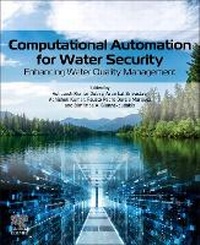
Computational Automation for Water Security
Enhancing Water Quality Management
Published on 22. May 2025
Book
Paperback/Softback
498 pages
978-0-443-33321-7 (ISBN)
Description
Computational Automation for Water Security: Enhancing Water Quality Management is a comprehensive and insightful guide which explores the challenges posed by inefficient and outdated practices, presenting innovative solutions to enhance decision-making, optimizing water treatment processes, and ultimately improving environmental outcomes. Through the coverage of advanced computational techniques, such as data analysis, machine learning, and optimization strategies, readers will gain a deep understanding of how computational automation can revolutionize decision-making. This book is an invaluable resource for professionals, researchers, and policymakers seeking to stay at the forefront of water quality management practices, harnessing the power of computational automation for a cleaner, healthier future.
More details
Language
English
Place of publication
Philadelphia
United States
Target group
Professional and scholarly
Dimensions
Height: 235 mm
Width: 191 mm
Weight
450 gr
ISBN-13
978-0-443-33321-7 (9780443333217)
Copyright in bibliographic data and cover images is held by Nielsen Book Services Limited or by the publishers or by their respective licensors: all rights reserved.
Schweitzer Classification
Other editions
Additional editions
Ashutosh Kumar Dubey | Arun Lal Srivastav | Abhishek Kumar
Computational Automation for Water Security
Enhancing Water Quality Management
E-Book
02/2025
Elsevier
€162.99
Available for download
Persons
Ashutosh Kumar Dubey is an Associate Professor in the Department of Computer Science and Engineering at Chitkara University, Himachal Pradesh, India. He is also a Postdoctoral Fellow of the Ingenium Research Group Lab, Universidad
de Castilla-La Mancha, Ciudad Real, Spain. Dr. Arun Lal Srivastav is an Associate Professor in the Department of Applied Sciences at Chitkara University, Himachal Pradesh, India. Abhishek Kumar is Assistant Director and Professor in the Department of Computer Science and Engineering at Chandigarh University, Punjab, India. He holds a Ph.D. in Computer Science from the University of Madras and is currently a Post-Doctoral Fellow with the Ingenium Research Group, Universidad de Castilla-La Mancha, Ciudad Real, Spain. He received his M.Tech in Computer Science and Engineering and B.Tech in Information Technology from Rajasthan Technical University, Kota, India. He has over thirteen years of academic teaching experience. His research interests include artificial intelligence, computer vision, image processing, data mining, machine learning, and renewable energy systems. He has authored and edited several books with leading international publishers and serves as a reviewer for reputed journals. Fausto Pedro Garcia Marquez works as a Professor and as Director of the Ingenium Research Group at the Universidad De Castilla-La Mancha, Spain. He is an Honorary Senior Research Fellow at Birmingham University, UK, and a Lecturer at the Postgraduate European Institute. He has published numerous papers and books with international publishers of repute, and has been involved as a principal investigator in numerous international projects. His main interests are: Artificial Intelligence, Maintenance, Management, Renewable Energy, Transport, Advanced Analytics, and Data Science. Dr. Dimitrios A. Giannakoudakis obtained his PhD at the City University of New York, New York City, United States (February 2017). Nowadays, he serves as an assistant professor at the University Marie Curie Sklodowska (UMCS), Lublin, Poland. His research is focused on the development of composite porous nanomaterials for (photo)(sono)(piezo)catalytic technologies for biomass valorization and (micro)plastics upcycling to green chemicals, as well as for air and water purification, linking physicochemical properties to performance and involved mechanisms. He coauthored more than 140 articles, 1 monograph, 7 edited books, and 17 book chapters with over 7000 citations. Since 2021, he has been included in the Top 2% Most Influential Scientists worldwide (Stanford list, Elsevier).
de Castilla-La Mancha, Ciudad Real, Spain. Dr. Arun Lal Srivastav is an Associate Professor in the Department of Applied Sciences at Chitkara University, Himachal Pradesh, India. Abhishek Kumar is Assistant Director and Professor in the Department of Computer Science and Engineering at Chandigarh University, Punjab, India. He holds a Ph.D. in Computer Science from the University of Madras and is currently a Post-Doctoral Fellow with the Ingenium Research Group, Universidad de Castilla-La Mancha, Ciudad Real, Spain. He received his M.Tech in Computer Science and Engineering and B.Tech in Information Technology from Rajasthan Technical University, Kota, India. He has over thirteen years of academic teaching experience. His research interests include artificial intelligence, computer vision, image processing, data mining, machine learning, and renewable energy systems. He has authored and edited several books with leading international publishers and serves as a reviewer for reputed journals. Fausto Pedro Garcia Marquez works as a Professor and as Director of the Ingenium Research Group at the Universidad De Castilla-La Mancha, Spain. He is an Honorary Senior Research Fellow at Birmingham University, UK, and a Lecturer at the Postgraduate European Institute. He has published numerous papers and books with international publishers of repute, and has been involved as a principal investigator in numerous international projects. His main interests are: Artificial Intelligence, Maintenance, Management, Renewable Energy, Transport, Advanced Analytics, and Data Science. Dr. Dimitrios A. Giannakoudakis obtained his PhD at the City University of New York, New York City, United States (February 2017). Nowadays, he serves as an assistant professor at the University Marie Curie Sklodowska (UMCS), Lublin, Poland. His research is focused on the development of composite porous nanomaterials for (photo)(sono)(piezo)catalytic technologies for biomass valorization and (micro)plastics upcycling to green chemicals, as well as for air and water purification, linking physicochemical properties to performance and involved mechanisms. He coauthored more than 140 articles, 1 monograph, 7 edited books, and 17 book chapters with over 7000 citations. Since 2021, he has been included in the Top 2% Most Influential Scientists worldwide (Stanford list, Elsevier).
Editor
Department of Computer Science and Engineering, Institute of Engineering and Technology, Chitkara University, India
Chitkara University, Himachal Pradesh, Solan, India
Chandigarh University, Punjab, India
Professor, Universidad De Castilla-La Mancha, Spain
Assistant Professor, University Marie Curie Sklodowska (UMCS), Lublin, Poland
Content
About the Editors
Preface
1. Introduction to Computational Automation in Water Quality Management
2. Real Time Water Quality Monitoring Systems
3. Automated Water Data Sampling: Enhancing Efficiency and Accuracy in Hydrological Analysis
4. Role of Data Processing and Analysis in water quality management
5. Machine Learning and Artificial Intelligence Applications in Automating Water Quality Monitoring, Analysis and Management
6. Significance of Automation in Water Treatment Processes
7. Real-time Control Systems for Water Supply chain and management
8. Integration of Automation and Internet of Things (IoT) for water security
9. Cybersecurity and Data Privacy in Automated Systems used in water quality management.
10. Cost-Benefit Analysis of Automation in Water Quality Management
11. Automation in Water Distribution Networks
12. Remote Sensing and Satellite Imagery for Water Quality Assessment
13. Case Studies: Successful Implementation of Automation for Water Quality Assessment
14. Future Trends and Emerging Technologies in water quality management
15. Challenges and Ethical Considerations in water Automation
Preface
1. Introduction to Computational Automation in Water Quality Management
2. Real Time Water Quality Monitoring Systems
3. Automated Water Data Sampling: Enhancing Efficiency and Accuracy in Hydrological Analysis
4. Role of Data Processing and Analysis in water quality management
5. Machine Learning and Artificial Intelligence Applications in Automating Water Quality Monitoring, Analysis and Management
6. Significance of Automation in Water Treatment Processes
7. Real-time Control Systems for Water Supply chain and management
8. Integration of Automation and Internet of Things (IoT) for water security
9. Cybersecurity and Data Privacy in Automated Systems used in water quality management.
10. Cost-Benefit Analysis of Automation in Water Quality Management
11. Automation in Water Distribution Networks
12. Remote Sensing and Satellite Imagery for Water Quality Assessment
13. Case Studies: Successful Implementation of Automation for Water Quality Assessment
14. Future Trends and Emerging Technologies in water quality management
15. Challenges and Ethical Considerations in water Automation