

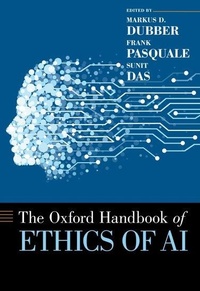
Oxford Handbook of Ethics of AI
Published on 22. October 2021
Book
Paperback/Softback
896 pages
978-0-19-760144-0 (ISBN)
Description
This volume tackles a quickly-evolving field of inquiry, mapping the existing discourse as part of placing current developments in historical context; at the same time, breaking new ground in taking on novel subjects and pursuing fresh approaches.
The term "A.I." is used to refer to a broad range of phenomena, from machine learning and data mining to artificial general intelligence. The recent advent of more sophisticated AI systems, which function with partial or full autonomy and are capable of tasks which require learning and 'intelligence', presents difficult ethical questions, and has drawn concerns from many quarters about individual and societal welfare, democratic decision-making, moral agency, and the prevention of harm. This work ranges from explorations of normative constraints on specific applications of machine learning algorithms today-in everyday medical practice, for instance-to reflections on the (potential) status of AI as a form of consciousness with attendant rights and duties and, more generally still, on the conceptual terms and frameworks necessarily to understand tasks requiring intelligence, whether "human" or "A.I."
The term "A.I." is used to refer to a broad range of phenomena, from machine learning and data mining to artificial general intelligence. The recent advent of more sophisticated AI systems, which function with partial or full autonomy and are capable of tasks which require learning and 'intelligence', presents difficult ethical questions, and has drawn concerns from many quarters about individual and societal welfare, democratic decision-making, moral agency, and the prevention of harm. This work ranges from explorations of normative constraints on specific applications of machine learning algorithms today-in everyday medical practice, for instance-to reflections on the (potential) status of AI as a form of consciousness with attendant rights and duties and, more generally still, on the conceptual terms and frameworks necessarily to understand tasks requiring intelligence, whether "human" or "A.I."
Reviews / Votes
The ethics of AI is a dynamic field, and so anythingwritten on the topic is likely to be out of date by the time it is published. Thanks to the acumen of its editors, however, the Oxford Handbook of Ethics of AI will remain relevant despite these shifting conceptual and methodological sands. * Fabio Tollon, Department of Philosophy, Bielefeld University, Germany, Prometheus *More details
Language
English
Place of publication
New York
United States
Target group
College/higher education
Product notice
Paperback (trade)
Unsewn / adhesive bound
Dimensions
Height: 249 mm
Width: 176 mm
Thickness: 62 mm
Weight
1520 gr
ISBN-13
978-0-19-760144-0 (9780197601440)
Copyright in bibliographic data and cover images is held by Nielsen Book Services Limited or by the publishers or by their respective licensors: all rights reserved.
Schweitzer Classification
Other editions
Additional editions
Markus D. Dubber | Frank Pasquale | Sunit Das
The Oxford Handbook of Ethics of AI
E-Book
06/2020
1st Edition
OUP eBook
€19.99
Available for download
Markus D. Dubber | Frank Pasquale | Sunit Das
The Oxford Handbook of Ethics of AI
E-Book
06/2020
1st Edition
OUP eBook
€19.99
Available for download
Persons
Markus Dubber leads an interdisciplinary initiative, "Ethics of AI in Context," as director of the University of Toronto's Centre for Ethics, which facilitates collaboration among a diverse group of university and non-university scholars and researchers from a wide range of backgrounds and perspectives. He also has extensive editorial experience, including as co-editor of several Oxford Handbooks and editor-in-chief of Oxford Handbooks Online (Law).
Frank Pasquale (School of Law, University of Maryland) has published extensively on the law, policy, and ethics of artificial intelligence and cognate fields (including algorithmic accountability, machine learning, and big data). He has served on the Council on Big Data, Ethics, and Society, the Academic Council of the AINow Institute, and the National Committee on Vital and Health Statistics. His 2015 book The Black Box Society developed a social theory of reputation, search, and finance, while proposing pragmatic reforms to improve the information economy.
Sunit Das (University of Toronto, Medicine) has conducted research on the role of AI in medicine as a neurosurgeon at Toronto's St. Michael's Hospital, a neuroscientist in the Keenan Research Centre for Biomedical Science, and faculty affiliate of the Ethics of AI Lab at the Centre for Ethics, University of Toronto.
Frank Pasquale (School of Law, University of Maryland) has published extensively on the law, policy, and ethics of artificial intelligence and cognate fields (including algorithmic accountability, machine learning, and big data). He has served on the Council on Big Data, Ethics, and Society, the Academic Council of the AINow Institute, and the National Committee on Vital and Health Statistics. His 2015 book The Black Box Society developed a social theory of reputation, search, and finance, while proposing pragmatic reforms to improve the information economy.
Sunit Das (University of Toronto, Medicine) has conducted research on the role of AI in medicine as a neurosurgeon at Toronto's St. Michael's Hospital, a neuroscientist in the Keenan Research Centre for Biomedical Science, and faculty affiliate of the Ethics of AI Lab at the Centre for Ethics, University of Toronto.
Author
Professor of Law & Criminology and Director of the Centre for EthicsProfessor of Law & Criminology and Director of the Centre for Ethics, University of Toronto
Piper & Marbury Professor of LawPiper & Marbury Professor of Law, University of Maryland
Associate Professor in the Department of SurgeryAssociate Professor in the Department of Surgery, University of Toronto
Content
Part I. Introduction & Overview 1. The Artificial Intelligence of Ethics of AI: An Introductory Overview Joanna Bryson
2. The Ethics of Ethics of AI: Mapping the Field Thomas Powers, Delaware & Jean-Gabriel Ganascia 3. Ethics of AI in Context: Society & Culture Judith Donath Part II. Frameworks & Modes 4. Why Industry Self-regulation Will Not Deliver 'Ethical AI': A Call for Legally Mandated Techniques of 'Human Rights by Design' Karen Yeung, Andrew Howes and Ganna Pogrebna
5. Private Sector AI: Ethics and Incentives Tom Slee
6. Normative Modes: Codes & Standards Paula Boddington
7. Normative Modes: Professional Ethics Urs Gasser Part III. Concepts & Issues 8. Fairness and the Concept of 'Bias' Safiya Umoja Noble
9. Accountability in Computer Systems Joshua Kroll
10. Transparency Nick Diakopoulos
11. Responsibility Virginia Dignum
12. The Concept of Handoff as a Model for Ethical Analysis and Design Helen Nissenbaum & Deirdre Mulligan
13. Race and Gender Timnit Gebru
14. The Future of Work in the Age of AI: Displacement, Augmentation, or Control? Karen Levy & Pegah Moradi
15. The Rights of Artificial Intelligences John Basl and Joseph Bowen
16. The Singularity: Sobering up About Merging with AI Susan Schneider
17. Do Sentient AIs Have Rights? If So, What Kind? Mark Kingwell
18. Autonomy Michael Wheeler
19. Troubleshooting AI and Consent Meg Leta Jones
20. Is Human Judgment Necessary?
Norman Spaulding
21. Sexuality John Danaher IV. Perspectives & Approaches 22. Computer Science Benjamin Kuipers
23. Engineering Jason Millar
24. Designing Robots Ethically Without Designing Ethical Robots: A Perspective from Cognitive Science Ron Chrisley
25. Economics Anton Korinek
26. Statistics Martin Wells
27. Automating Origination: Perspectives from the Humanities Avery Slater
28. Philosophy David Gunkel
29. The Complexity of Otherness: Anthropological contributions to robots and AI Kathleen Richardson
30. Calculative Composition: The Ethics of Automating Design Shannon Mattern
31. Global South Chinmayi Arun
32. East Asia Danit Gal
33. Artificial Intelligence and Inequality in the Middle East: The Political Economy of Inclusion Nagla Rizk
34. Europe's struggle to set global AI standards Andrea Renda Part V. Cases & Applications 35. The Ethics of Artificial Intelligence in Transportation Bryant Walker Smith
36. Military Jai Galliott
37. The Ethics of AI in Biomedical Research, Medicine and Public Health Effy Vayena & Alessandro Blasimme
38. Law: Basic Questions Harry Surden
39. Law: Criminal Law Chelsea Barabas
40. Law: Public Law & Policy: Notice, Predictability, and Due Process Kiel Brennan-Marquez
41. Law: Immigration & Refugee Law Petra Molnar
42. Education Elana Zeide
43. Algorithms and the Social Organization of Work Ifeoma Ajunwa
44. Smart City Ethics Goodman
2. The Ethics of Ethics of AI: Mapping the Field Thomas Powers, Delaware & Jean-Gabriel Ganascia 3. Ethics of AI in Context: Society & Culture Judith Donath Part II. Frameworks & Modes 4. Why Industry Self-regulation Will Not Deliver 'Ethical AI': A Call for Legally Mandated Techniques of 'Human Rights by Design' Karen Yeung, Andrew Howes and Ganna Pogrebna
5. Private Sector AI: Ethics and Incentives Tom Slee
6. Normative Modes: Codes & Standards Paula Boddington
7. Normative Modes: Professional Ethics Urs Gasser Part III. Concepts & Issues 8. Fairness and the Concept of 'Bias' Safiya Umoja Noble
9. Accountability in Computer Systems Joshua Kroll
10. Transparency Nick Diakopoulos
11. Responsibility Virginia Dignum
12. The Concept of Handoff as a Model for Ethical Analysis and Design Helen Nissenbaum & Deirdre Mulligan
13. Race and Gender Timnit Gebru
14. The Future of Work in the Age of AI: Displacement, Augmentation, or Control? Karen Levy & Pegah Moradi
15. The Rights of Artificial Intelligences John Basl and Joseph Bowen
16. The Singularity: Sobering up About Merging with AI Susan Schneider
17. Do Sentient AIs Have Rights? If So, What Kind? Mark Kingwell
18. Autonomy Michael Wheeler
19. Troubleshooting AI and Consent Meg Leta Jones
20. Is Human Judgment Necessary?
Norman Spaulding
21. Sexuality John Danaher IV. Perspectives & Approaches 22. Computer Science Benjamin Kuipers
23. Engineering Jason Millar
24. Designing Robots Ethically Without Designing Ethical Robots: A Perspective from Cognitive Science Ron Chrisley
25. Economics Anton Korinek
26. Statistics Martin Wells
27. Automating Origination: Perspectives from the Humanities Avery Slater
28. Philosophy David Gunkel
29. The Complexity of Otherness: Anthropological contributions to robots and AI Kathleen Richardson
30. Calculative Composition: The Ethics of Automating Design Shannon Mattern
31. Global South Chinmayi Arun
32. East Asia Danit Gal
33. Artificial Intelligence and Inequality in the Middle East: The Political Economy of Inclusion Nagla Rizk
34. Europe's struggle to set global AI standards Andrea Renda Part V. Cases & Applications 35. The Ethics of Artificial Intelligence in Transportation Bryant Walker Smith
36. Military Jai Galliott
37. The Ethics of AI in Biomedical Research, Medicine and Public Health Effy Vayena & Alessandro Blasimme
38. Law: Basic Questions Harry Surden
39. Law: Criminal Law Chelsea Barabas
40. Law: Public Law & Policy: Notice, Predictability, and Due Process Kiel Brennan-Marquez
41. Law: Immigration & Refugee Law Petra Molnar
42. Education Elana Zeide
43. Algorithms and the Social Organization of Work Ifeoma Ajunwa
44. Smart City Ethics Goodman