


The Politics of the Anthropocene
Published on 13. December 2018
Book
Hardback
208 pages
978-0-19-880961-6 (ISBN)
Description
The Politics of the Anthropocene is a sophisticated yet accessible treatment of how human institutions, practices, and principles need to be re-thought in response to the challenges of the Anthropocene, the emerging epoch of human-induced instability in the Earth system and its life-support capacities. However, the world remains stuck with practices and modes of thinking that were developed in the Holocene - the epoch of around 12,000 years of unusual
stability in the Earth system, toward the end of which modern institutions such as states and capitalist markets arose. These institutions persist despite their potentially catastrophic failure to respond to the challenges of the Anthropocene, foremost among them a rapidly changing climate and accelerating
biodiversity loss. The pathological trajectories of these institutions need to be disrupted by advancing ecological reflexivity: the capacity of structures, systems, and sets of ideas to question their own core commitments, and if necessary change themselves, while listening and responding effectively to signals from the Earth system.
This book envisages a world in which humans are no longer estranged from the Earth system but engage with it in a more productive relationship. We can still pursue democracy, social justice, and sustainability - but not as before. In future, all politics should be first and foremost a politics of the Anthropocene. The arguments are developed in the context of issues such as climate change, biodiversity, and global efforts to address sustainability.
stability in the Earth system, toward the end of which modern institutions such as states and capitalist markets arose. These institutions persist despite their potentially catastrophic failure to respond to the challenges of the Anthropocene, foremost among them a rapidly changing climate and accelerating
biodiversity loss. The pathological trajectories of these institutions need to be disrupted by advancing ecological reflexivity: the capacity of structures, systems, and sets of ideas to question their own core commitments, and if necessary change themselves, while listening and responding effectively to signals from the Earth system.
This book envisages a world in which humans are no longer estranged from the Earth system but engage with it in a more productive relationship. We can still pursue democracy, social justice, and sustainability - but not as before. In future, all politics should be first and foremost a politics of the Anthropocene. The arguments are developed in the context of issues such as climate change, biodiversity, and global efforts to address sustainability.
More details
Language
English
Place of publication
Oxford
United Kingdom
Target group
College/higher education
Dimensions
Height: 241 mm
Width: 165 mm
Thickness: 19 mm
Weight
474 gr
ISBN-13
978-0-19-880961-6 (9780198809616)
Copyright in bibliographic data and cover images is held by Nielsen Book Services Limited or by the publishers or by their respective licensors: all rights reserved.
Schweitzer Classification
Other editions
Additional editions
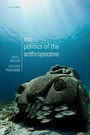
John S. Dryzek | Jonathan Pickering
The Politics of the Anthropocene
Book
12/2018
Oxford University Press
€43.50
Shipment within 15-20 days
John S. Dryzek | Jonathan Pickering
The Politics of the Anthropocene
E-Book
12/2018
1st Edition
OUP eBook
€28.99
Available for download
Persons
John S. Dryzek is Australian Research Council Laureate Fellow and Centenary Professor in the Centre for Deliberative Democracy and Global Governance at the Institute for Governance and Policy Analysis, University of Canberra. He is best known for his contributions in democratic theory and practice and environmental politics. He is co-editor of The Oxford Handbook of Deliberative Democracy (2018) and The Oxford Handbook of Climate Change and
Society (2011), and the author of many books, including The Politics of the Earth (3rd edition, Oxford University Press, 2013).
Jonathan Pickering is a Postdoctoral Fellow in the Centre for Deliberative Democracy and Global Governance at the Institute for Governance and Policy Analysis, University of Canberra. His research focuses on global environmental governance, climate ethics and policy, and deliberative democracy. His research has been published in a range of journals including Climate Policy, Ecological Economics, Global Environmental Politics, International Environmental
Agreements, and World Development.
Society (2011), and the author of many books, including The Politics of the Earth (3rd edition, Oxford University Press, 2013).
Jonathan Pickering is a Postdoctoral Fellow in the Centre for Deliberative Democracy and Global Governance at the Institute for Governance and Policy Analysis, University of Canberra. His research focuses on global environmental governance, climate ethics and policy, and deliberative democracy. His research has been published in a range of journals including Climate Policy, Ecological Economics, Global Environmental Politics, International Environmental
Agreements, and World Development.
Author
Australian Research Council Laureate Fellow and Centenary Professor Centre for Deliberative Democracy and Global GovernanceAustralian Research Council Laureate Fellow and Centenary Professor Centre for Deliberative Democracy and Global Governance, Institute for Governance and Policy Analysis, University of Canberra
Postdoctoral Fellow, Centre for Deliberative Democracy and Global GovernancePostdoctoral Fellow, Centre for Deliberative Democracy and Global Governance, Institute for Governance and Policy Analysis, University of Canberra
Content
1: Anthropocene: The Good, the Bad, and the Inescapable 2: Governance in the Holocene 3: Governance in the Anthropocene 4: Planetary Justice 5: Sustainability 6: Who Will Form the Anthropocene? 7: Democratic Anthropocene 8: Conclusion: A Practical Politics of the Anthropocene