

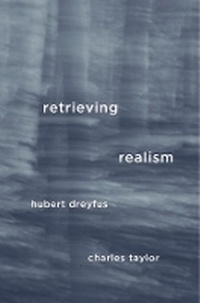
Retrieving Realism
Published on 11. June 2015
Book
Hardback
184 pages
978-0-674-96751-9 (ISBN)
Description
"Compact and engaging, Retrieving Realism is more approachable than its weighty subject matter might predict...[An] adventurous combination of arguments and mixing of philosophical cultures." -Boston Review
"A picture held us captive," writes Wittgenstein in the Philosophical Investigations, describing the powerful image of mind that underlies the modern epistemological tradition from Descartes onward. Retrieving Realism offers a radical critique of the Cartesian epistemic picture that has captivated philosophy for too long and restores a realist view affirming our direct access to the everyday world and to the physical universe.
According to Descartes, knowledge exists in the form of ideas in the mind that purportedly represent the world. This "mediational" epistemology-internal ideas mediating external reality-continues to exert a grip on Western thought, and even philosophers such as Quine, Rorty, and Davidson who have claimed to refute Descartes remain imprisoned within its regime. As Hubert Dreyfus and Charles Taylor show, knowledge consists of much more than the explicit representations we formulate. We gain knowledge of the world through bodily engagement with it-by handling things, moving among them, responding to them-and these forms of knowing cannot be understood in mediational terms. Dreyfus and Taylor also contest Descartes's privileging of the individual mind, arguing that much of our understanding of the world is necessarily shared.
Once we deconstruct Cartesian mediationalism, the problems that Hume, Kant, and many of our contemporaries still struggle with-trying to prove the existence of objects beyond our representations-fall away, as does the motivation for nonrealist doctrines. We can then begin to describe the background everyday world we are absorbed in and the universe of natural kinds discovered by science.
"A picture held us captive," writes Wittgenstein in the Philosophical Investigations, describing the powerful image of mind that underlies the modern epistemological tradition from Descartes onward. Retrieving Realism offers a radical critique of the Cartesian epistemic picture that has captivated philosophy for too long and restores a realist view affirming our direct access to the everyday world and to the physical universe.
According to Descartes, knowledge exists in the form of ideas in the mind that purportedly represent the world. This "mediational" epistemology-internal ideas mediating external reality-continues to exert a grip on Western thought, and even philosophers such as Quine, Rorty, and Davidson who have claimed to refute Descartes remain imprisoned within its regime. As Hubert Dreyfus and Charles Taylor show, knowledge consists of much more than the explicit representations we formulate. We gain knowledge of the world through bodily engagement with it-by handling things, moving among them, responding to them-and these forms of knowing cannot be understood in mediational terms. Dreyfus and Taylor also contest Descartes's privileging of the individual mind, arguing that much of our understanding of the world is necessarily shared.
Once we deconstruct Cartesian mediationalism, the problems that Hume, Kant, and many of our contemporaries still struggle with-trying to prove the existence of objects beyond our representations-fall away, as does the motivation for nonrealist doctrines. We can then begin to describe the background everyday world we are absorbed in and the universe of natural kinds discovered by science.
Reviews / Votes
Compact and engaging, Retrieving Realism is more approachable than its weighty subject matter might predict...[An] adventurous combination of arguments and mixing of philosophical cultures. -- Peter Godfrey-Smith * Boston Review * This book is a spirited defense of a sensible yet profound idea all too often ignored in mainstream philosophy, namely, that our grip on the world is deeply rooted in contingent interpretations and practices, but that those modes of access to reality do not preclude our-sometimes-coming to see it as it really is 'in itself.' Retrieving Realism is a passionate plea that we cannot escape seeing ourselves as being in direct contact with a world that vastly transcends us. -- Taylor Carman, Barnard College Two major philosophers are joining forces in order to offer an alternative account to the prevailing picture of the human mind and its cognitive powers. The book will obviously be on the reading list of all who seriously concern themselves with issues in contemporary philosophy when it is, like here, at its best. -- Vincent Descombes, Ecole des Hautes Etudes en Sciences Sociales, ParisMore details
Language
English
Place of publication
Cambridge, Mass
United States
Target group
College/higher education
Professional and scholarly
Dimensions
Height: 235 mm
Width: 156 mm
Thickness: 19 mm
Weight
408 gr
ISBN-13
978-0-674-96751-9 (9780674967519)
Copyright in bibliographic data and cover images is held by Nielsen Book Services Limited or by the publishers or by their respective licensors: all rights reserved.
Schweitzer Classification
Other editions
Additional editions
Hubert Dreyfus
Retrieving Realism
E-Book
06/2015
1st Edition
Harvard University Press
€38.94
Available for download
Persons
Hubert Dreyfus is Professor Emeritus of Philosophy at the University of California, Berkeley. Charles Taylor is Professor Emeritus in the Department of Philosophy at McGill University. Author of The Language Animal, Sources of the Self, The Ethics of Authenticity, and A Secular Age, he has received many honors, including the Templeton Prize, the Berggruen Prize, and membership in the Order of Canada.