

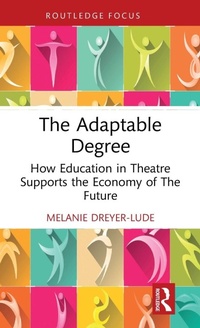
The Adaptable Degree
How Education in Theatre Supports the Economy of The Future
1st Edition
Published on 20. September 2024
Book
Hardback
102 pages
978-1-032-85826-5 (ISBN)
Description
This book utilized a mixed-methods research study of the career experiences of theatre graduates in the U.S. to provide data on employment patterns and job satisfaction.
With a population of over 1,000 participants, this study examined where graduates were working, how their careers had changed over time, which skills acquired with their theatre degree were being used in current employment, and whether they believed their course of study was worth the financial investment, given their current circumstances. Evidence from this study revealed that a theatre degree provided many of the skills the employment market is currently seeking and that theatre graduates were gainfully employed in multiple sectors of the economy.
This important data-based, field-specific information will aid chairs, deans, provosts, politicians, students and parents in deicision-making at a time when arts and humanities departments across the country are under the threat of elimination.
With a population of over 1,000 participants, this study examined where graduates were working, how their careers had changed over time, which skills acquired with their theatre degree were being used in current employment, and whether they believed their course of study was worth the financial investment, given their current circumstances. Evidence from this study revealed that a theatre degree provided many of the skills the employment market is currently seeking and that theatre graduates were gainfully employed in multiple sectors of the economy.
This important data-based, field-specific information will aid chairs, deans, provosts, politicians, students and parents in deicision-making at a time when arts and humanities departments across the country are under the threat of elimination.
More details
Series
Language
English
Place of publication
London
United Kingdom
Publishing group
Taylor & Francis Ltd
Target group
College/higher education
Professional and scholarly
Academic
Illustrations
22 s/w Abbildungen, 22 s/w Zeichnungen, 9 s/w Tabellen
9 Tables, black and white; 22 Line drawings, black and white; 22 Illustrations, black and white
Dimensions
Height: 222 mm
Width: 145 mm
Thickness: 10 mm
Weight
285 gr
ISBN-13
978-1-032-85826-5 (9781032858265)
Copyright in bibliographic data and cover images is held by Nielsen Book Services Limited or by the publishers or by their respective licensors: all rights reserved.
Schweitzer Classification
Other editions
Additional editions
Book
05/2026
1st Edition
Routledge
€31.50
Shipment within 10-20 days
E-Book
09/2024
1st Edition
Routledge
€31.49
Available for download
E-Book
09/2024
1st Edition
Routledge
€31.49
Available for download
Person
Melanie Dreyer-Lude is an American theatre artist/scholar specializing in international theatre collaboration and multidisciplinary projects. She is a professor in the Department of Drama at the University of Alberta and lives and works in Edmonton, Alberta, Canada.
Content
Acknowledgements
Introduction
Chapter 1: Passion versus practicality
Do I need a college degree?
The reality of being an arts grad
What employers want
Passion can lead to prosperity
What the survey told us
In summary
Chapter 2: Patterns of employment
Four employment scenarios
The trajectory of a career in the arts
Seeking employment in a shifting job market
Where are arts grads working?
The Creative Trident redefined
What the survey told us
In summary
Chapter 3: Skills for all professions
A graduate who shifted careers
The predominance of shifting careers
The importance of transferable skills
How theatre training delivers
What theatre training looks like
What the survey told us
In summary
Chapter 4: Value versus expense
The loss of public faith
The student as a customer
Earning potential as a decision-maker
The cost of an education
The neoliberal paradigm
The challenge of performance indicators
The reality of program cuts
Politicians and the academy
What the survey told us
In summary
Chapter 5: Changing the message
The academy must adapt
The challenges we face
What an arts degree already offers
Expanding our curriculum
How other sectors benefit from arts education
The threat to theatre departments
Our training focus must shift
Recommendations for change
What the graduates in this study told us
In summary
Methodology
Introduction
Research framework
Research design
Sampling strategy
Data collection
Data analysis
Limitations and assumptions
Recommendations for future research
Jobs listed by survey participants
Index
Introduction
Chapter 1: Passion versus practicality
Do I need a college degree?
The reality of being an arts grad
What employers want
Passion can lead to prosperity
What the survey told us
In summary
Chapter 2: Patterns of employment
Four employment scenarios
The trajectory of a career in the arts
Seeking employment in a shifting job market
Where are arts grads working?
The Creative Trident redefined
What the survey told us
In summary
Chapter 3: Skills for all professions
A graduate who shifted careers
The predominance of shifting careers
The importance of transferable skills
How theatre training delivers
What theatre training looks like
What the survey told us
In summary
Chapter 4: Value versus expense
The loss of public faith
The student as a customer
Earning potential as a decision-maker
The cost of an education
The neoliberal paradigm
The challenge of performance indicators
The reality of program cuts
Politicians and the academy
What the survey told us
In summary
Chapter 5: Changing the message
The academy must adapt
The challenges we face
What an arts degree already offers
Expanding our curriculum
How other sectors benefit from arts education
The threat to theatre departments
Our training focus must shift
Recommendations for change
What the graduates in this study told us
In summary
Methodology
Introduction
Research framework
Research design
Sampling strategy
Data collection
Data analysis
Limitations and assumptions
Recommendations for future research
Jobs listed by survey participants
Index