

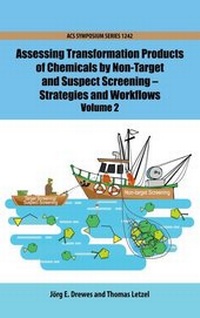
Assessing Transformation Products of Chemicals by Non-Target and Suspect Screening
Strategies and Workflows Volume 2
Published on 26. April 2018
Book
Hardback
224 pages
978-0-8412-3195-5 (ISBN)
Description
The identification and quantification of the widespread occurrence of trace organic chemicals at minute concentrations in the aqueous environment impacted by human activities is a result of rapid advances in environmental analytical chemistry. The body of knowledge regarding the characterization, fate and transport of these chemicals of emerging concern (CECs) in the natural water environment and engineered water treatment processes, as well as their toxicity, has
grown substantially over the last two decades. Recently, the focus in the environmental chemistry community has shifted from these CEC parent compounds to the fate, transport, and toxicity of transformation products, which are generated through abiotic and biotic mechanisms in natural systems and
during engineered advanced water treatment processes.
This two-part book focuses on the studies and recent advancements towards the development of more harmonized strategies and workflows using non-target and suspects screening methods, including suitable bioassay approaches to assess the overall relevance of transformation products. Volume II addresses the fate and transport of transformation products in engineered systems, assessing their toxicity, commercial strategies in non-target and suspects screening, and concludes with developments
towards harmonized strategies and workflows. This book is ideal for environmental scientists and engineers, particularly chemists, environmental engineers, public health officials, regulators, other chemistry-related professionals, and students.
grown substantially over the last two decades. Recently, the focus in the environmental chemistry community has shifted from these CEC parent compounds to the fate, transport, and toxicity of transformation products, which are generated through abiotic and biotic mechanisms in natural systems and
during engineered advanced water treatment processes.
This two-part book focuses on the studies and recent advancements towards the development of more harmonized strategies and workflows using non-target and suspects screening methods, including suitable bioassay approaches to assess the overall relevance of transformation products. Volume II addresses the fate and transport of transformation products in engineered systems, assessing their toxicity, commercial strategies in non-target and suspects screening, and concludes with developments
towards harmonized strategies and workflows. This book is ideal for environmental scientists and engineers, particularly chemists, environmental engineers, public health officials, regulators, other chemistry-related professionals, and students.
More details
Series
Language
English
Place of publication
New York
United States
Target group
Professional and scholarly
Illustrations
79
Dimensions
Height: 230 mm
Width: 162 mm
Thickness: 19 mm
Weight
530 gr
ISBN-13
978-0-8412-3195-5 (9780841231955)
Copyright in bibliographic data and cover images is held by Nielsen Book Services Limited or by the publishers or by their respective licensors: all rights reserved.
Schweitzer Classification
Persons
Prof. Dr. Joerg E. Drewes is the Chair Professor of Urban Water Systems Engineering at the Technical University of Munich (TUM), Germany. Previously, he served as Full Professor of Civil and Environmental Engineering at the Colorado School of Mines, U.S.A. (2001-2013) and Director of Research for the National Science Foundation Engineering Research Center on Reinventing the Nation's Urban Water Infrastructure. Dr. Drewes has published more than 300 journal
papers, book contributions, and conference proceedings.
Prof. Dr. Thomas Letzel is an analytical chemist with almost 20 years of professional experience in the field of analytical screening techniques using liquid and gas phase chromatography with mass spectrometric detection. Prof. Letzel is head of the Analytical Research Group at the Chair of Urban Water Systems Engineering at the Technical University of Munich (TUM), Germany. Dr. Letzel is author and co-author of more than 150 journal papers, book contributions, conference proceedings, and three
books.
papers, book contributions, and conference proceedings.
Prof. Dr. Thomas Letzel is an analytical chemist with almost 20 years of professional experience in the field of analytical screening techniques using liquid and gas phase chromatography with mass spectrometric detection. Prof. Letzel is head of the Analytical Research Group at the Chair of Urban Water Systems Engineering at the Technical University of Munich (TUM), Germany. Dr. Letzel is author and co-author of more than 150 journal papers, book contributions, conference proceedings, and three
books.
Editor
Chair Professor of Urban Water Systems EngineeringChair Professor of Urban Water Systems Engineering, Technical University of Munich
Head of the Analytical Research Group, Urban Water Systems EngineeringHead of the Analytical Research Group, Urban Water Systems Engineering, Technical University of Munich
Content
Preface
Fate and Transport of Transformation Products in Engineered Systems
1. Accurate Mass Screening and Data Evaluation Approaches for Ozonation By-Products in Wastewater Treatment Plant Effluents
2. Target Analysis, Suspected-Target, and Non-Target Screening for Evaluation and Comparison of Full-Scale Ozonation at Three Wastewater Treatment Plants
3. Application of Non-Target Analysis with LC-HRMS for the Monitoring of Raw and Potable Water: Strategy and Results
Assessing Toxicity of Transformation Products in Natural and Engineered Systems
4. Bioanalytical Approaches in Assessing Transformation Products
5. The Utility of Exposure and Effect-Based Analysis in the Ecotoxicological Assessment of Transformation Products
Commercial Strategies in Non?Target and Suspected Target Screening of Water Samples
6. A Comprehensive Workflow for Target, Suspect, and Non-Target Screening by LC/MS Demonstrated for the Identification of CECs in Effluents from Waste Water Treatment Plants
7. Commercial Strategies in Non-Target and Suspected Target Screening of Water Samples
8. Target, Suspected-Target, and Non-Target LC-MS(/MS) Screening: New (Practical) Strategies for CECs in Water Bodies
9. Screening Solution Using the Software Platform UNIFI: An Integrated Workflow by Waters
Towards Harmonized Strategies and Workflows
10. Holistic and Detailed View on Workflow Strategies Applied in This Book
Appendix
Editors' Biographies
Indexes
Fate and Transport of Transformation Products in Engineered Systems
1. Accurate Mass Screening and Data Evaluation Approaches for Ozonation By-Products in Wastewater Treatment Plant Effluents
2. Target Analysis, Suspected-Target, and Non-Target Screening for Evaluation and Comparison of Full-Scale Ozonation at Three Wastewater Treatment Plants
3. Application of Non-Target Analysis with LC-HRMS for the Monitoring of Raw and Potable Water: Strategy and Results
Assessing Toxicity of Transformation Products in Natural and Engineered Systems
4. Bioanalytical Approaches in Assessing Transformation Products
5. The Utility of Exposure and Effect-Based Analysis in the Ecotoxicological Assessment of Transformation Products
Commercial Strategies in Non?Target and Suspected Target Screening of Water Samples
6. A Comprehensive Workflow for Target, Suspect, and Non-Target Screening by LC/MS Demonstrated for the Identification of CECs in Effluents from Waste Water Treatment Plants
7. Commercial Strategies in Non-Target and Suspected Target Screening of Water Samples
8. Target, Suspected-Target, and Non-Target LC-MS(/MS) Screening: New (Practical) Strategies for CECs in Water Bodies
9. Screening Solution Using the Software Platform UNIFI: An Integrated Workflow by Waters
Towards Harmonized Strategies and Workflows
10. Holistic and Detailed View on Workflow Strategies Applied in This Book
Appendix
Editors' Biographies
Indexes