


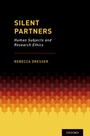
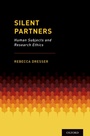
Silent Partners
Human Subjects and Research Ethics
Published on 22. November 2018
Book
Paperback/Softback
322 pages
978-0-19-092918-3 (ISBN)
Description
When is a human study ethical? For years, science and society have struggled with this question. Experts have put great effort into developing ethical principles and rules that adequately protect and respect volunteers in studies aimed at improving human health. But experts have missed something important. They have created a research ethics system without the help of people who know what it is like to be a research subject. This is a serious omission.
Experienced research subjects can make valuable contributions to research ethics. People who have been in studies have information about the experience that other people can overlook. Their experience as subjects gives them special insights into ethics, too. Experienced subjects also know about problems that can lead people to refuse to join studies, or drop out before studies are complete.
Scientists and ethicists often speak of subjects as partners in research, but the reality is quite different. Experienced subjects are rarely appointed to the advisory groups that create guidelines for ethical research, or to the committees that review individual studies to determine whether they meet ethical and regulatory standards.
A large body of work describes the perceptions and viewpoints of people who have participated in research. But experts rarely use this material to guide improvements in human subject protection. Although subjects have the power to decide whether to participate in a study, they have little control over anything else that goes on in research.
Silent Partners moves research subjects to the forefront. It examines what research participation is like for healthy volunteers and patients. It explains why subjects' voices should influence research ethics. Silent Partners shows how experienced research subjects can become real-not just symbolic-partners in research.
Experienced research subjects can make valuable contributions to research ethics. People who have been in studies have information about the experience that other people can overlook. Their experience as subjects gives them special insights into ethics, too. Experienced subjects also know about problems that can lead people to refuse to join studies, or drop out before studies are complete.
Scientists and ethicists often speak of subjects as partners in research, but the reality is quite different. Experienced subjects are rarely appointed to the advisory groups that create guidelines for ethical research, or to the committees that review individual studies to determine whether they meet ethical and regulatory standards.
A large body of work describes the perceptions and viewpoints of people who have participated in research. But experts rarely use this material to guide improvements in human subject protection. Although subjects have the power to decide whether to participate in a study, they have little control over anything else that goes on in research.
Silent Partners moves research subjects to the forefront. It examines what research participation is like for healthy volunteers and patients. It explains why subjects' voices should influence research ethics. Silent Partners shows how experienced research subjects can become real-not just symbolic-partners in research.
Reviews / Votes
There is an enormous literature related to research subjects' views and experiences. Dresser has provided a valuable volume drawing on insights from this literature. ... Certainly a book I am happy to recommend. * Erich von Dietze, Metapsychology * Some omissions are so obvious it takes a special person to see them. An authority on medical ethics and someone who has suffered and recovered from a serious illness, no one is in a better position than Rebecca Dresser to identify the absence of the research subject's voice in clinical trials. Her sometimes painfully honest and always intellectually acute analysis opens up a new conversation about the way we conduct human experiments."- Jonathan Moreno, David and Lyn Silfen University Professor of Ethics, Perelman School of Medicine, University of Pennsylvania Rebecca Dresser has for years been a leading legal and ethical scholar on human subject research. Building on her own experience as a cancer survivor, her book is a powerful and forceful argument to give human subjects themselves a central role in the research, particularly as new kinds of medical research, as with genetics, come to the fore. She makes her case with a sharp eye for nuance and troublesome dilemmas, adding to the power of the book."- Daniel Callahan, President Emeritus, The Hastings Center Some omissions are so obvious it takes a special person to see them. An authority on medical ethics and someone who has suffered and recovered from a serious illness, no one is in a better position than Rebecca Dresser to identify the absence of the research subject's voice in clinical trials. Her sometimes painfully honest and always intellectually acute analysis opens up a new conversation about the way we conduct human experiments." - Jonathan Moreno, David and Lyn Silfen University Professor of Ethics, Perelman School of Medicine, University of Pennsylvania [P]rovides a thorough review of the ways clinical researchers can ignore the perspectives of research participants, the resulting negative effects, and some of the ways the situation can be improved."- Norman M. Goldfarb is Managing Director of First Clinical Research LLC Much scholarly writing seems like a bare tree festooned with strings of citations. Dresser's argument flows on its own, and the reader can travel on its currents; the references help guide the flowwithout demanding notice. What this accomplishes is straightforward: it makes the book accessible and potentially interesting to many audiences, from institutional review board (IRB) reading groups to students at many levels to clinicians learning to be investigators. * Nancy M.P King, IRB: Ethics and Human Research, October 2017 *More details
Language
English
Place of publication
New York
United States
Target group
College/higher education
Professional and scholarly
Dimensions
Height: 210 mm
Width: 140 mm
Thickness: 19 mm
Weight
443 gr
ISBN-13
978-0-19-092918-3 (9780190929183)
Copyright in bibliographic data and cover images is held by Nielsen Book Services Limited or by the publishers or by their respective licensors: all rights reserved.
Schweitzer Classification
Other editions
Additional editions
E-Book
10/2016
1st Edition
OUP eBook
€29.99
Available for download
E-Book
10/2016
1st Edition
OUP eBook
€29.99
Available for download
Person
Rebecca Dresser has taught medical and law students about legal and ethical issues in biomedical research, end-of-life care, genetics, and related topics since 1983. From 2002-2009, she was a member of the President's Council on Bioethics and from 2011-2015, a member of the National Institutes of Health Recombinant DNA Advisory Committee. She is the author of When Science Offers Salvation (2001), editor of Malignant (2012), and co-editor of The Human Use of Animals (1998, 2nd ed. 2008) all published by Oxford University Press.
Content
Contents
Preface
1 Subject Perspectives: The Missing Element in Research Ethics
2 Personal Knowledge and Study Participation
3 The Everyday Ethics of Human Research
4 The Hidden World of Subjects: Rule-Breaking in Clinical Trials
5 Participants as Partners in Genetic Research
6 Terminally Ill Patients and the "Right to Try" Experimental Drugs
7 Embedded Ethics in Developing Country Research
8 Research Subjects as Literary Subjects
9 How to Hear Subjects
Index
Preface
1 Subject Perspectives: The Missing Element in Research Ethics
2 Personal Knowledge and Study Participation
3 The Everyday Ethics of Human Research
4 The Hidden World of Subjects: Rule-Breaking in Clinical Trials
5 Participants as Partners in Genetic Research
6 Terminally Ill Patients and the "Right to Try" Experimental Drugs
7 Embedded Ethics in Developing Country Research
8 Research Subjects as Literary Subjects
9 How to Hear Subjects
Index