

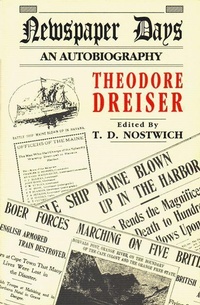
Newspaper Days
An Autobiography
Published on 29. April 2010
Book
Paperback/Softback
771 pages
978-1-57423-138-0 (ISBN)
Description
During Christmas 1891, Dreiser, age twenty-one and miserable as a bill collector in Chicago, decided to find a job as a reporter: "I conceived of newspapers as wonderlands in which all concerned were prosperous and happy. . . I was also determined to shake off the garments of the commonplace in which I seemed swathed and step forth into the public arena, where I could be seen and understood for what I was-a writer." He at last found a slot at the Chicago Daily Globe, helping cover the 1892 Democratic National Convention.
This, in turn, led to jobs with newspapers in St. Louis, Toledo, Cleveland, Buffalo, and Pittsburgh-a scraping, unremunerative, eight-year journey through bustling railroad towns, with New York and Pulitzer's World the final terminal. He started as a reporter, but found greater success as a feature writer, where he was better able to bend fact toward fiction. He specialized in lowlife stories, the research for which was a working education in the brutalities of life: "The police courts, the jails, the houses of ill repute, trade failures and trickery-it was all a grand magnificent spectacle:" a pageant of human weakness, wickedness, and survival through cunning and courage. "Everywhere I looked I found a terrifying desire for lust or pleasure or wealth, accompanied by a heartlessness which was freezing to the soul, or a dogged resignation to deprivation and misery." He covered lynchings, streetcar strikes, robberies and murders-all of it testing his abilities as an observer and awakening the novelist within. It was the school that would prepare him for Sister Carrie (1900), Jennie Gerhardt (1911), and An American Tragedy (1925). First published in 1922 in what the editor calls an "expurgated abridgment," Newspaper Days is here published in an edition based on Dreiser's original typescript.
This, in turn, led to jobs with newspapers in St. Louis, Toledo, Cleveland, Buffalo, and Pittsburgh-a scraping, unremunerative, eight-year journey through bustling railroad towns, with New York and Pulitzer's World the final terminal. He started as a reporter, but found greater success as a feature writer, where he was better able to bend fact toward fiction. He specialized in lowlife stories, the research for which was a working education in the brutalities of life: "The police courts, the jails, the houses of ill repute, trade failures and trickery-it was all a grand magnificent spectacle:" a pageant of human weakness, wickedness, and survival through cunning and courage. "Everywhere I looked I found a terrifying desire for lust or pleasure or wealth, accompanied by a heartlessness which was freezing to the soul, or a dogged resignation to deprivation and misery." He covered lynchings, streetcar strikes, robberies and murders-all of it testing his abilities as an observer and awakening the novelist within. It was the school that would prepare him for Sister Carrie (1900), Jennie Gerhardt (1911), and An American Tragedy (1925). First published in 1922 in what the editor calls an "expurgated abridgment," Newspaper Days is here published in an edition based on Dreiser's original typescript.
More details
Language
English
Place of publication
Jaffrey, NH
United Kingdom
Publishing group
David R. Godine Publisher Inc
Product notice
Paperback (trade)
Illustrations
Illustrations
Dimensions
Height: 227 mm
Width: 150 mm
Thickness: 56 mm
Weight
1111 gr
ISBN-13
978-1-57423-138-0 (9781574231380)
Copyright in bibliographic data and cover images is held by Nielsen Book Services Limited or by the publishers or by their respective licensors: all rights reserved.
Schweitzer Classification
Persons
Theodore Dreiser was one of the most influential American authors of his generation. His novels and nonfiction narratives, which he began publishing in his thirties, were controversial for their gritty realism, sexual frankness, and sympathy for the plight of underrepresented people.
Theodore Daniel Nostwich was a foremost authority on Theodore Dresier. He taught at Iowa State University.
Theodore Daniel Nostwich was a foremost authority on Theodore Dresier. He taught at Iowa State University.