

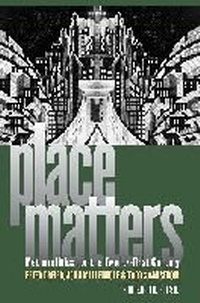
Place Matters
Metropolitics for the Twenty-First Century
3rd Edition
Will be published approx. on 30. August 2014
Book
Paperback/Softback
448 pages
978-0-7006-1927-6 (ISBN)
Description
How can the United States create the political will to address our major urban problems-poverty, unemployment, crime, traffic congestion, toxic pollution, education, energy consumption, and housing, among others? That's the basic question addressed by the new edition of this award-winning book. Thoroughly revised and updated for its third edition, Place Matters examines the major trends and problems shaping our cities and suburbs, explores a range of policy solutions to address them, and looks closely at the potential political coalitions needed to put the country's "urban crisis" back on the public agenda.
The problem of rising inequality is at the centre of Place Matters. During the past several decades, the standard of living for the American middle class has stagnated, the number of poor people has reached its highest level since the 1960s, and the super-rich have dramatically increased their share of the nation's wealth and income. At the same time, Americans have grown further apart in terms of where they live, work, and play. This trend-economic segregation-no longer simply reflects the racial segregation between white suburbs and minority cities. In cities and suburbs alike, poor, middle class, and wealthy Americans now live in separate geographic spaces.
The authors have updated the case studies and examples used to illustrate the book's key themes, incorporated the latest Census data, and drawn on exit polls and other data to examine the voting patterns and outcomes of the 2012 elections. They have expanded their discussion of how American cities are influenced by and influence global economic and social forces and how American cities compare with their counterparts in other parts of the world. And they draw upon the latest research and case studies not only to examine the negative impacts of income inequality and economic segregation but also assess the efforts that civic and community groups, unions, business, and government are making to tackle them.
Fully up to date and far richer and more provocative, this new version surpasses its previous editions and will continue to be an essential volume for all who study urban politics and care about our cities.
The problem of rising inequality is at the centre of Place Matters. During the past several decades, the standard of living for the American middle class has stagnated, the number of poor people has reached its highest level since the 1960s, and the super-rich have dramatically increased their share of the nation's wealth and income. At the same time, Americans have grown further apart in terms of where they live, work, and play. This trend-economic segregation-no longer simply reflects the racial segregation between white suburbs and minority cities. In cities and suburbs alike, poor, middle class, and wealthy Americans now live in separate geographic spaces.
The authors have updated the case studies and examples used to illustrate the book's key themes, incorporated the latest Census data, and drawn on exit polls and other data to examine the voting patterns and outcomes of the 2012 elections. They have expanded their discussion of how American cities are influenced by and influence global economic and social forces and how American cities compare with their counterparts in other parts of the world. And they draw upon the latest research and case studies not only to examine the negative impacts of income inequality and economic segregation but also assess the efforts that civic and community groups, unions, business, and government are making to tackle them.
Fully up to date and far richer and more provocative, this new version surpasses its previous editions and will continue to be an essential volume for all who study urban politics and care about our cities.
More details
Series
Edition
Third Edition
Language
English
Place of publication
Kansas
United States
Target group
College/higher education
Professional and scholarly
Edition type
New edition
Dimensions
Height: 231 mm
Width: 154 mm
Thickness: 27 mm
Weight
701 gr
ISBN-13
978-0-7006-1927-6 (9780700619276)
Copyright in bibliographic data and cover images is held by Nielsen Book Services Limited or by the publishers or by their respective licensors: all rights reserved.
Schweitzer Classification
Other editions
Additional editions
Peter Dreier | John Mollenkopf | Todd Swanstrom
Place Matters
Metropolitics for the Twenty-First Century
E-Book
02/2024
3rd Edition
University Press of Kansas
€36.99
Available for download
Persons
Peter Dreier is Dr. E.P. Clapp Distinguished Professor of Politics and director of the Urban and Environmental Policy Program at Occidental College, USA.
John Mollenkopf is Distinguished Professor of Political Science and Sociology and director of the Center for Urban Research at CUNY Graduate Center, USA.
Todd Swanstrom is Des Lee Endowed Professor of Community Collaboration and Public Policy Administration at Saint Louis University, USA.
John Mollenkopf is Distinguished Professor of Political Science and Sociology and director of the Center for Urban Research at CUNY Graduate Center, USA.
Todd Swanstrom is Des Lee Endowed Professor of Community Collaboration and Public Policy Administration at Saint Louis University, USA.