

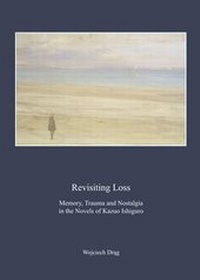
Revisiting Loss
Memory, Trauma and Nostalgia in the Novels of Kazuo Ishiguro
Published on 7. July 2014
Book
Hardback
220 pages
978-1-4438-6057-4 (ISBN)
Description
Loss is the core experience which determines the identity of Kazuo Ishiguro's narrators and shapes their subsequent lives. Whether a traumatic ordeal, an act of social degradation, a failed relationship or a loss of home, the painful event serves as a sharp dividing line between the earlier, meaningful past and the period afterwards, which is infused with a sense of lack, dissatisfaction and nostalgia. Ishiguro's narrators have been unable to confine their loss to the past and remain preoccupied by its legacy, which ranges from suppressed guilt to a keen sense of failure or disappointment. Their immersion in the past finds expression in the narratives which they weave in order to articulate, justify or merely understand their experiences. Their reconstructions of the past are interpreted as exercises in misremembering and self-deception which enable them to sustain their illusions and save them from despair. Revisiting Loss is the first book-length study of memory encompassing Ishiguro's entire novelistic output. It adopts a highly interdisciplinary approach, combining a selection of philosophical (Jacques Derrida, Paul Ricoeur, and Jean Starobinski) and psychological perspectives (Sigmund Freud, Frederic Bartlett, Jacques Lacan, and Daniel L. Schacter). The book offers a thoroughly researched critical survey drawing on all published critical monographs and collections of academic articles on Ishiguro's work.
Reviews / Votes
'Wojciech Drag's monograph is an informative and thorough work on the nature of trauma and its (un)narratability, while it is also a sensitive analysis of the intricate connections between Ishiguro's novels and the untold signs of loss.'Anna PetnehaziUniversity of DebrecenHungarian Journal of English and American Studies, 23:1 (2017)'Kazuo Ishiguro is one of today's finest and most human of writers, and his fiction is fuelled by the intricacies memory plays in our lives and identities. Wojciech Drag's study is an incisive analysis of the complex problems surrounding memory, history and trauma which Ishiguro's narratives put to the reader. Drag's comprehensive theoretical account of memory is impressive to say the least, whilst the textual analysis is original and insightful. This book is a welcome addition to Ishiguro scholarship, and should find the wide academic readership it deserves.'Sebastian GroesSenior Lecturer in English Literature, University of Roehampton; co-editor of Kazuo Ishiguro: Contemporary Critical Perspectives'This well-researched study offers a new perspective on the relations between the experience of trauma and the workings of memory. Drawing on theoretical approaches to loss and trauma, Wojciech Drag traces the fates of Ishiguro's anguished protagonists torn between conflicting urges: to forget and to remember, to know and not to know, to come to terms with the loss and to forever nurse their wound.'Krystyna StamirowskaProfessor of English Literature, Jagiellonian University, CracowMore details
Edition
Unabridged edition
Language
English
Place of publication
Newcastle upon Tyne
United Kingdom
Target group
College/higher education
Professional and scholarly
Edition type
Unabridged edition
Product notice
With dust jacket
Dimensions
Height: 212 mm
Width: 148 mm
ISBN-13
978-1-4438-6057-4 (9781443860574)
Copyright in bibliographic data and cover images is held by Nielsen Book Services Limited or by the publishers or by their respective licensors: all rights reserved.
Schweitzer Classification
Other editions
Additional editions

E-Book
07/2014
1st Edition
Cambridge Scholars Publishing
€128.89
Available for download
Person
Wojciech Drag holds a PhD in English Literature and is currently a Lecturer at Wroclaw University in Poland. Most of his publications have focused on the contemporary novel, particularly on the work of Kazuo Ishiguro, Julian Barnes, John Banville and J. M. Coetzee.