

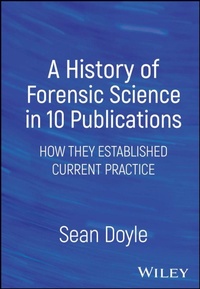
A History of Forensic Science in 10 Publications
How They Established Current Practice
1st Edition
Will be published approx. on 1. January 2026
Book
Hardback
320 pages
978-1-394-17076-0 (ISBN)
Description
Explores the foundations of forensic science through its most influential and transformative publications
A History of Forensic Science in 10 Publications offers a unique and essential account of how forensic science has evolved into the complex, multidisciplinary field it is today. Unlike dramatized portrayals in popular media, this book provides a grounded, scholarly perspective on the real-world development of forensic practice through a detailed examination of ten pivotal publications. Author Sean Doyle, a highly respected practitioner with nearly five decades of experience in the field, charts the intellectual and scientific journey that has shaped modern forensic science-from early procedural texts to contemporary debates around interpretation, bias, and standardization.
Each chapter situates a landmark publication within its broader historical, scientific, and legal context, tracing its influence on subsequent research, professional standards, and the justice system. Doyle demonstrates how these works have sparked methodological shifts, provoked philosophical debates, prompted regulatory reforms, and led the way to current practices. The book's clear and engaging analytical narrative offers a structured way to understand how forensic science has been, and continues to be shaped by its literature.
Filling a critical gap in scholarship by focusing on the foundational texts that have informed both practice and policy, A History of Forensic Science in 10 Publications:
Integrates historical, scientific, and legal perspectives into a unified narrative of forensic development
Highlights lesser-known yet pivotal works that are often overlooked in current curricula and literature
Connects foundational publications to contemporary practices such as probabilistic genotyping and forensic genealogy
Discusses the evolving principles behind forensic interpretation, objectivity, and standardization
Demonstrates how scientific literature has influenced legal outcomes, regulatory frameworks, and public understanding
Organized into thematic chapter groupings that guide readers through related developments and incremental research, A History of Forensic Science in 10 Publications: How They Established Current Practice is ideal for undergraduate students in forensic science, criminal justice, and criminology programs, as well as educators, legal professionals, and general readers interested in the science behind crime-solving.
A History of Forensic Science in 10 Publications offers a unique and essential account of how forensic science has evolved into the complex, multidisciplinary field it is today. Unlike dramatized portrayals in popular media, this book provides a grounded, scholarly perspective on the real-world development of forensic practice through a detailed examination of ten pivotal publications. Author Sean Doyle, a highly respected practitioner with nearly five decades of experience in the field, charts the intellectual and scientific journey that has shaped modern forensic science-from early procedural texts to contemporary debates around interpretation, bias, and standardization.
Each chapter situates a landmark publication within its broader historical, scientific, and legal context, tracing its influence on subsequent research, professional standards, and the justice system. Doyle demonstrates how these works have sparked methodological shifts, provoked philosophical debates, prompted regulatory reforms, and led the way to current practices. The book's clear and engaging analytical narrative offers a structured way to understand how forensic science has been, and continues to be shaped by its literature.
Filling a critical gap in scholarship by focusing on the foundational texts that have informed both practice and policy, A History of Forensic Science in 10 Publications:
Integrates historical, scientific, and legal perspectives into a unified narrative of forensic development
Highlights lesser-known yet pivotal works that are often overlooked in current curricula and literature
Connects foundational publications to contemporary practices such as probabilistic genotyping and forensic genealogy
Discusses the evolving principles behind forensic interpretation, objectivity, and standardization
Demonstrates how scientific literature has influenced legal outcomes, regulatory frameworks, and public understanding
Organized into thematic chapter groupings that guide readers through related developments and incremental research, A History of Forensic Science in 10 Publications: How They Established Current Practice is ideal for undergraduate students in forensic science, criminal justice, and criminology programs, as well as educators, legal professionals, and general readers interested in the science behind crime-solving.
More details
Language
English
Place of publication
New York
United States
Target group
Professional and scholarly
Product notice
sewn/stitched
Cloth over boards
Dimensions
Height: 244 mm
Width: 170 mm
Thickness: 19 mm
Weight
708 gr
ISBN-13
978-1-394-17076-0 (9781394170760)
Copyright in bibliographic data and cover images is held by Nielsen Book Services Limited or by the publishers or by their respective licensors: all rights reserved.
Schweitzer Classification
Other editions
Additional editions
E-Book
11/2025
1st Edition
Wiley-ISTE
€75.99
Available for download
E-Book
11/2025
1st Edition
Wiley-ISTE
€75.99
Available for download
Person
Sean Doyle is a forensic scientist with extensive expertise in forensic chemistry, explosives, and crime scene investigation. He began his career at the UK Laboratory of the Government Chemist and later led casework and research at the Forensic Explosives Laboratory under the UK Ministry of Defence. He now directs Linked Forensic Consultants Ltd in New Zealand. An active lecturer and member of international forensic standards committees, Doyle has made significant contributions to forensic science practice and education.
Content
About the Author
Acknowledgements
List of Abbreviations
Terms, Definitions and Explanations
Introduction: The History of Forensic Science in 10 Publications
Chapter 1 The Handbook
Chapter 2 The Exchange Principle
Chapter 3 Ontogeny
Chapter 4 DNA
Chapter 5 Fallacies
Chapter 6 Interpreting Evidence
Chapter 7 ISO/IEC 17025
Chapter 8 Observer Effects
Chapter 9 NAS Report
Chapter 10 The Sydney Declaration
Conclusion
Index
Acknowledgements
List of Abbreviations
Terms, Definitions and Explanations
Introduction: The History of Forensic Science in 10 Publications
Chapter 1 The Handbook
Chapter 2 The Exchange Principle
Chapter 3 Ontogeny
Chapter 4 DNA
Chapter 5 Fallacies
Chapter 6 Interpreting Evidence
Chapter 7 ISO/IEC 17025
Chapter 8 Observer Effects
Chapter 9 NAS Report
Chapter 10 The Sydney Declaration
Conclusion
Index