

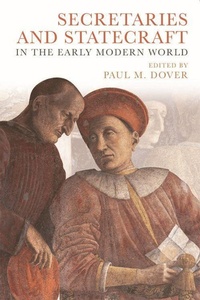
Secretaries and Statecraft in the Early Modern World
Published on 1. August 2017
Book
Paperback/Softback
320 pages
978-1-4744-2844-6 (ISBN)
Description
One of the prominent themes of the political history of the 16th and 17th centuries is the waxing influence officials in the exercise of state power, particularly in international relations, as it became impossible for monarchs to stay on top of the increasingly complex demands of ruling. Encompassing a variety of cultural and institutional settings, these essays examine how state secretaries, prime ministers and favourites managed diplomatic personnel and the information flows they generated. They explore how these officials balanced domestic matters with external concerns, and service to the monarch and state with personal ambition.
By opening various perspectives on policy-making at the level just below the monarch, this volume offers up rich opportunities for comparative history and a new take on the diplomatic history of the period.
By opening various perspectives on policy-making at the level just below the monarch, this volume offers up rich opportunities for comparative history and a new take on the diplomatic history of the period.
Reviews / Votes
Secretaries and Statecraft in the Early Modern World convincingly demonstrates the complexity of diplomatic action, the power of bureaucrats, and the challenges of the information explosion between the later fifteenth through eighteenth centuries. It embraces global history to show that the approaches and even some of the conclusions of the 'new diplomatic history' are applicable beyond the European continent. Additionally, each essay is carefully constructed, thoughtful, and convincing, while the book's focus remains consistent throughout. -- Brian Jeffrey Maxson, East Tennessee State University * Journal of Early Modern History * New governing institutions made the early modern centuries an age of secretaries and ministers as well as rulers. This impressive, wide-ranging and notably well edited collection of essays by leading specialists, rescues this key development from previous neglect and will be essential reading for anyone who teaches or studies this period. -- Hamish Scott, University of GlasgowMore details
Language
English
Place of publication
Edinburgh
United Kingdom
Target group
Professional and scholarly
Product notice
Paperback (trade)
Unsewn / adhesive bound
Illustrations
2 black and white tables
Dimensions
Height: 231 mm
Width: 155 mm
Thickness: 23 mm
Weight
544 gr
ISBN-13
978-1-4744-2844-6 (9781474428446)
Copyright in bibliographic data and cover images is held by Nielsen Book Services Limited or by the publishers or by their respective licensors: all rights reserved.
Schweitzer Classification
Person
Paul Dover is Associate Professor of History at Kennesaw State University. He has published widely on the political, diplomatic and cultural history of late medieval and early modern Europe.
Content
About the Contributors
1. Introduction: the Age of SecretariesPaul M. Dover
2. Records, Politics and Diplomacy: Secretaries and Chanceries in Renaissance Italy (1350-1520 ca.)Isabella Lazzarini
3. Mercurino di Gattinara (1465-1530): Imperial Chancellor, Strategist of EmpireRebecca Ard Boone
4. 'This continuous writing': the Paper Chancellery of Berhard Cles, Megan K. Williams
5. Parables and Dark Sentences: the Correspondence of Sir William Cecil and William Maitland, 1559-1573Rayne Allinson
5. Axel Oxenstierna and Swedish Diplomacy in the Seventeenth CenturyErik Thomson
6. Statecraft and the Role of the Diplomat in Ducal Savoy: the Career of Alessandro Scaglia (1592-1641)Toby Osborne
7. Richelieu, Mazarin and Italy, 1635-1659: Statesmanship in ContextDavid Parrott
8. The Learned Ideal of the Mughal Wazir: the Life and Intellectual World of Prime Minister Afzal Khan Shirazi (d. 1639)Raveev Kinra
9. Reconsidering State and Constituency in Seventeenth-Century Safavid Iran: the Wax and Wane of the MunshiColin Mitchell
10. Choreographers of Power: Grigorii Kotoshikhin, State Secretaries, and the Muscovite Royal Wedding RitualRussell E. Martin
11. Eberhard von Danckelman and Brandenburg's Foreign Policy, 1699-1697Daniel Riches
12. Chancellor of State: Prince Wenzel Anton Kaunitz, the Habsburg Foreign Office and Foreign Policy in the Era of Enlightened AbsolutismFranz A.J. Szabo
Index
1. Introduction: the Age of SecretariesPaul M. Dover
2. Records, Politics and Diplomacy: Secretaries and Chanceries in Renaissance Italy (1350-1520 ca.)Isabella Lazzarini
3. Mercurino di Gattinara (1465-1530): Imperial Chancellor, Strategist of EmpireRebecca Ard Boone
4. 'This continuous writing': the Paper Chancellery of Berhard Cles, Megan K. Williams
5. Parables and Dark Sentences: the Correspondence of Sir William Cecil and William Maitland, 1559-1573Rayne Allinson
5. Axel Oxenstierna and Swedish Diplomacy in the Seventeenth CenturyErik Thomson
6. Statecraft and the Role of the Diplomat in Ducal Savoy: the Career of Alessandro Scaglia (1592-1641)Toby Osborne
7. Richelieu, Mazarin and Italy, 1635-1659: Statesmanship in ContextDavid Parrott
8. The Learned Ideal of the Mughal Wazir: the Life and Intellectual World of Prime Minister Afzal Khan Shirazi (d. 1639)Raveev Kinra
9. Reconsidering State and Constituency in Seventeenth-Century Safavid Iran: the Wax and Wane of the MunshiColin Mitchell
10. Choreographers of Power: Grigorii Kotoshikhin, State Secretaries, and the Muscovite Royal Wedding RitualRussell E. Martin
11. Eberhard von Danckelman and Brandenburg's Foreign Policy, 1699-1697Daniel Riches
12. Chancellor of State: Prince Wenzel Anton Kaunitz, the Habsburg Foreign Office and Foreign Policy in the Era of Enlightened AbsolutismFranz A.J. Szabo
Index