

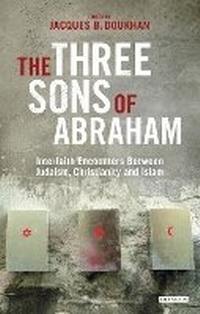
The Three Sons of Abraham
Interfaith Encounters Between Judaism, Christianity and Islam
Published on 24. January 2014
Book
Hardback
256 pages
978-1-78076-743-7 (ISBN)
Description
Jews, Christians and Muslims all trace their history and spiritual raison d'etre to their common tribal ancestor, Abraham. Their religious identities are interrelated and even dependent on each other. Jesus lived as a Jew and Christianity was born in the heart of Judaism. Early Christianity was inherently Jewish, referring to the same scriptures-the Tanach, later called the "Old Testament"-and holding to the same messianic promises. Mohammed, the prophet of Islam, knew both Christianity and Judaism. The Qur'an contains material indebted to the Old Testament and Jewish tradition, as well as stories and teachings from the New Testament; and Mohammed himself met Jews and Christians alike during his lifetime. Furthermore, the three religions share many fundamental ideas and beliefs. They testify to the same memory of Abraham; value the same divine law; urge the same ideal of righteousness; and proclaim the same hope of peace for the earth and salvation for humankind. Despite this shared heritage, the three Abrahamic faiths have sometimes been more closely identified not for what they offer to save the world but for what they bring to destabilise it.
It is one of the depressing paradoxes of religion- supposedly a force for good-that it is all too frequently the occasion for conflict instead of peace, generosity and better treatment of one's neighbor. The contributors to this volume start from the premise that there is a price to be paid by the "sons of Abraham": whether Jews, Muslims or Christians. And that is the cost of learning how to be brothers through mutual and attentive engagement. Mature interfaith discussion offers respect for a shared heritage while also recognising points of distinctiveness. This book explores what articulating such regardful difference, as well as commonality, might mean for the future of faith relations. Including provocative reflections by Elie Wiesel, Irving Greenberg, Hans Kung and others, the book makes a vital contribution to dialogue. In its searching analysis of issues of peace, justice, hope and forgiveness, it will engage all students and scholars of interfaith studies.
It is one of the depressing paradoxes of religion- supposedly a force for good-that it is all too frequently the occasion for conflict instead of peace, generosity and better treatment of one's neighbor. The contributors to this volume start from the premise that there is a price to be paid by the "sons of Abraham": whether Jews, Muslims or Christians. And that is the cost of learning how to be brothers through mutual and attentive engagement. Mature interfaith discussion offers respect for a shared heritage while also recognising points of distinctiveness. This book explores what articulating such regardful difference, as well as commonality, might mean for the future of faith relations. Including provocative reflections by Elie Wiesel, Irving Greenberg, Hans Kung and others, the book makes a vital contribution to dialogue. In its searching analysis of issues of peace, justice, hope and forgiveness, it will engage all students and scholars of interfaith studies.
Reviews / Votes
'The interviews and reflections in this volume are nothing less than essential reading for anyone concerned about the challenges to and possibilities for greater peace between Christians, Muslims and Jews.' Gregory A. Barker, Senior Lecturer in Religious Studies, The University of Wales, Trinity Saint David 'Jews, Christians and Muslims have usually defined themselves against each other. This book dares to think differently - and to explore the implications of a different question. How can the three versions of the prophetic tradition that originates with Abraham be thought together - in complementary rather than competitive terms? This sensitive, incisive yet always accessible volume addresses one of the great issues of our time, one from which the broader dialogue of religions and cultures can only benefit. In extending what is often referred to as the "Judaeo-Christian tradition" into the world of Islam the writers propose an admirably generous alternative to the destructive sibling rivalry which has so painfully driven the "Sons of Abraham" apart.' Michael Barnes, SJ, Professor of Interreligious Relations, Heythrop College, London 'This book has a vitality that comes out of living encounters between scholars from the three religious traditions. It usefully contains not only discussions of important texts, but interviews too with key participants about what dialogue means for them personally. The individual essays admirably carry out the aim of the book, that Jews, Christians and Muslims should "define themselves along with each other and not against each other. they should also run the risk of looking at each other's face". The Three Sons of Abraham can be warmly recommended not only to specialists, but to anyone who wants to enter into a subject that is so crucial for our time.' Richard Harries (Baron Harries of Pentregarth), formerly Professor of Divinity, Gresham College, London, and Bishop of Oxford (1987-2006)More details
Language
English
Place of publication
United Kingdom
Publishing group
Bloomsbury Publishing PLC
Target group
College/higher education
Dimensions
Height: 216 mm
Width: 138 mm
Weight
440 gr
ISBN-13
978-1-78076-743-7 (9781780767437)
Copyright in bibliographic data and cover images is held by Nielsen Book Services Limited or by the publishers or by their respective licensors: all rights reserved.
Schweitzer Classification
Person
Jacques B Doukhan is Professor of Hebrew and Old Testament Exegesis, and the Director of the Institute of Jewish-Christian Studies, at Andrews University, Berrien Springs, Michigan. His books include Hebrew for Theologians: A Textbook for the Study of Biblical Hebrew in Relation to Hebrew Thinking and Israel and the Church: Two Voices for the Same God.
Content
Foreword :Jacques B. Doukhan v
Thinking of Each Other: The Quest for Truth 1
"For the Sake of Peace (Mipnei Darchei Shalom)": Rabbinic Attitudes toward Gentiles,Christians, and Muslims :Mordechai Arad-3
The Family of Abraham: Irving Greenberg (Interview) -25
The Fight Against Prejudice : David Rosen (Interview) - 33
The Qur'anic Concept of Ta'ruf: Recognizing the Other : A. Rashied Omar-47
The Remnant of Abraham: Jon Paulien- 53
The Monotheistic Truth :Hans Kueng (Interview)- 77
II.Talking to Each Other: The Quest for Love 85
Obstacles to Inter-Religious Dialogue: John Graz- 88
The Hospitality of Abraham: Reflections on a Levinassian Approach to Inter-Faith Dialogue : Abigail Doukhan-97 Righteousness, a Common Core Value among World Religions: A Pathway for Dialogue and Witness : Ganoune Diop- 112
The Aqedah at the "Crossroad": Its Significance in the Jewish-Christian-Muslim Dialogue : Jacques B. Doukhan-140.....
The Need for Dialogue : Khaleel Mohamed (Interview)- 156
The Structure of Dialogue : Rolf Rendtorff (Interview)-160
The Adventure of Dialogue: Elie Wiesel (Interview)-177
III.Forgiving Each Other: The Quest for Peace-186
We Must Save Peace : Sholmo Elbaz -189
Violence and Peace from Islamic Perspective: An Analytical Study of Textual Evidences : Ismail Abdullah - 194Religio-Political Tensions in the World : Jane Sabes -216
Forgiving the Perpetrator : Solomon Schimmel (Interview)-222
The Grace of Forgiveness : Lourdes E. Morales- Gudmundson (Interview) - 238
About the Authors
Thinking of Each Other: The Quest for Truth 1
"For the Sake of Peace (Mipnei Darchei Shalom)": Rabbinic Attitudes toward Gentiles,Christians, and Muslims :Mordechai Arad-3
The Family of Abraham: Irving Greenberg (Interview) -25
The Fight Against Prejudice : David Rosen (Interview) - 33
The Qur'anic Concept of Ta'ruf: Recognizing the Other : A. Rashied Omar-47
The Remnant of Abraham: Jon Paulien- 53
The Monotheistic Truth :Hans Kueng (Interview)- 77
II.Talking to Each Other: The Quest for Love 85
Obstacles to Inter-Religious Dialogue: John Graz- 88
The Hospitality of Abraham: Reflections on a Levinassian Approach to Inter-Faith Dialogue : Abigail Doukhan-97 Righteousness, a Common Core Value among World Religions: A Pathway for Dialogue and Witness : Ganoune Diop- 112
The Aqedah at the "Crossroad": Its Significance in the Jewish-Christian-Muslim Dialogue : Jacques B. Doukhan-140.....
The Need for Dialogue : Khaleel Mohamed (Interview)- 156
The Structure of Dialogue : Rolf Rendtorff (Interview)-160
The Adventure of Dialogue: Elie Wiesel (Interview)-177
III.Forgiving Each Other: The Quest for Peace-186
We Must Save Peace : Sholmo Elbaz -189
Violence and Peace from Islamic Perspective: An Analytical Study of Textual Evidences : Ismail Abdullah - 194Religio-Political Tensions in the World : Jane Sabes -216
Forgiving the Perpetrator : Solomon Schimmel (Interview)-222
The Grace of Forgiveness : Lourdes E. Morales- Gudmundson (Interview) - 238
About the Authors