

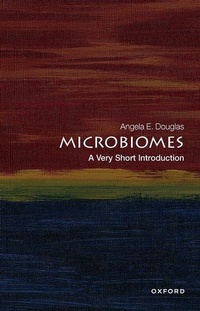
Microbiomes
A Very Short Introduction
Published on 24. November 2022
Book
Paperback/Softback
160 pages
978-0-19-887085-2 (ISBN)
Description
Very Short Introductions: Brilliant, Sharp, Inspiring
The term 'microbiomes' encapsulates an important scientific breakthrough of recent years. This is the realization that humans, other animals, and plants harbour communities of microorganisms which are mostly beneficial but can occasionally cause or exacerbate disease. Our quickly developing understanding of microbiomes is being translated into novel microbial therapies for human disease and is contributing to sustainable practices in agriculture and food production. On the flipside, there is a growing concern that some claims for microbiomes, especially in relation to human health, far exceed the scientific data.
This Very Short Introduction is an essential guide to the fast-moving discipline of microbiome science. It accessibly distills the key facts about our resident microbiomes, explains how and why our health and wellbeing depend on them, and provides readers with the fundamental knowledge they need to judge the reliability of claims about microbiome-based applications.
ABOUT THE SERIES: The Very Short Introduction series from Oxford University Press contains hundreds of titles in almost every subject area. These pocket-sized books are the perfect way to get ahead in a new subject quickly. Our expert authors combine facts, analysis, perspective, new ideas, and enthusiasm to make interesting and challenging topics highly readable.
The term 'microbiomes' encapsulates an important scientific breakthrough of recent years. This is the realization that humans, other animals, and plants harbour communities of microorganisms which are mostly beneficial but can occasionally cause or exacerbate disease. Our quickly developing understanding of microbiomes is being translated into novel microbial therapies for human disease and is contributing to sustainable practices in agriculture and food production. On the flipside, there is a growing concern that some claims for microbiomes, especially in relation to human health, far exceed the scientific data.
This Very Short Introduction is an essential guide to the fast-moving discipline of microbiome science. It accessibly distills the key facts about our resident microbiomes, explains how and why our health and wellbeing depend on them, and provides readers with the fundamental knowledge they need to judge the reliability of claims about microbiome-based applications.
ABOUT THE SERIES: The Very Short Introduction series from Oxford University Press contains hundreds of titles in almost every subject area. These pocket-sized books are the perfect way to get ahead in a new subject quickly. Our expert authors combine facts, analysis, perspective, new ideas, and enthusiasm to make interesting and challenging topics highly readable.
More details
Series
Language
English
Place of publication
Oxford
United Kingdom
Dimensions
Height: 169 mm
Width: 112 mm
Thickness: 15 mm
Weight
119 gr
ISBN-13
978-0-19-887085-2 (9780198870852)
Copyright in bibliographic data and cover images is held by Nielsen Book Services Limited or by the publishers or by their respective licensors: all rights reserved.
Schweitzer Classification
Other editions
Additional editions
E-Book
11/2022
1st Edition
OUP eBook
€9.49
Available for download
E-Book
11/2022
1st Edition
OUP eBook
€9.49
Available for download
Person
Angela E. Douglas is the Emerita Daljit S. and Elaine Sarkaria Professor of Insect Physiology and Toxicology at Cornell University. She is the author of several books on microbiomes and beneficial microorganisms, including Fundamentals of Microbiome Science: How Microbes Shape Animal Biology (2018) and Insect Associations with Beneficial Microorganisms (forthcoming), as well as many research articles.
Content
Acknowledgements
List of illustrations
1: Living with microbes
2: How to get and keep a microbiome
3: Microbiomes, nutrition, and metabolic health
4: Microbiomes, the brain, and behaviour
5: Microbiomes and infectious disease
6: Plant microbiomes in agriculture and food production
7: Microbial therapies and healthy microbiomes
Glossary
Further reading
List of illustrations
1: Living with microbes
2: How to get and keep a microbiome
3: Microbiomes, nutrition, and metabolic health
4: Microbiomes, the brain, and behaviour
5: Microbiomes and infectious disease
6: Plant microbiomes in agriculture and food production
7: Microbial therapies and healthy microbiomes
Glossary
Further reading